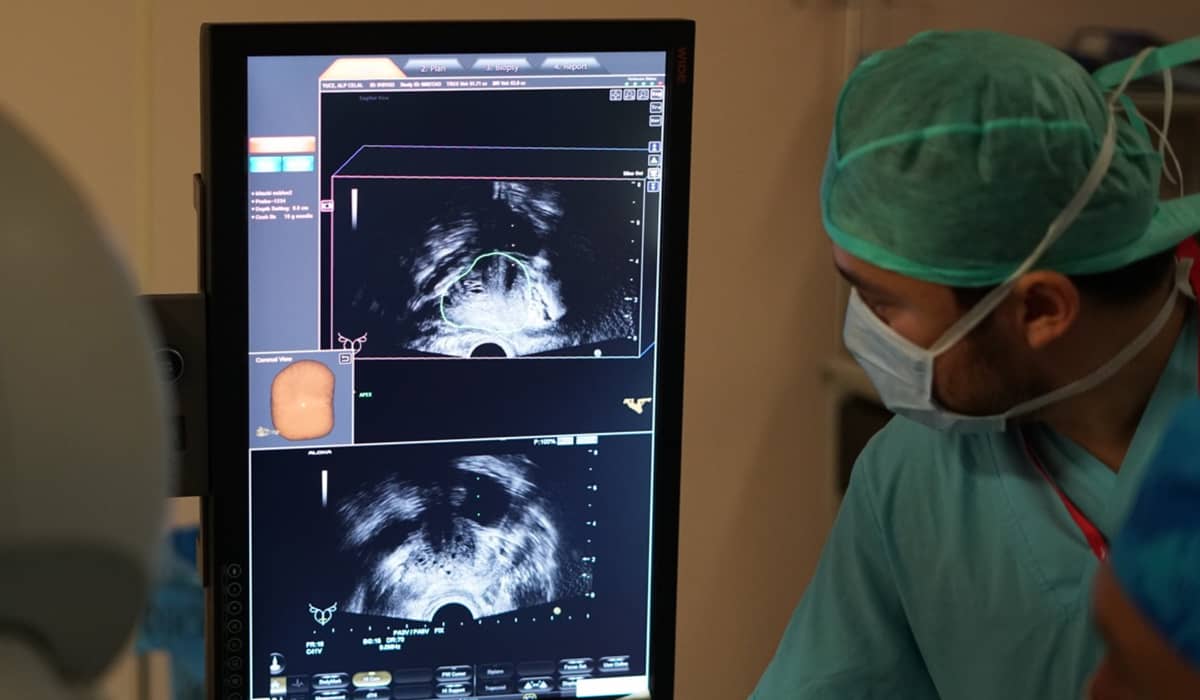
“Your biopsy result shows cancer.” The moment you hear this sentence, time may seem to stop, your ears may ring, and you may not remember most of what the doctor says afterwards. This is a completely natural reaction. Almost everyone who receives a new cancer diagnosis experiences fear, shock, anger and uncertainty all at once in the first days.
We have prepared this article especially for patients who have just received a prostate cancer diagnosis and for their families. The first and most important message we want to give you is this: a prostate cancer diagnosis is usually not an emergency. You have time to make the right decision. There is no need to panic or to pressure yourself with thoughts like “I must have surgery tomorrow.” Below, we explain the calm and sensible steps you can take after your diagnosis, one by one.
First, Take a Breath: Why Is a Prostate Cancer Diagnosis Usually Not Urgent?
Unlike many other cancers, prostate cancer is mostly a slow-growing disease. When the diagnosis is made at an early stage, the tumour generally grows over years; it is not expected to change significantly within days or a few weeks. For this reason, taking a few weeks to complete detailed tests, review the results and discuss treatment options is safe for most patients.
The scientific evidence is reassuring as well. In the ProtecT trial from the United Kingdom, in which about 1,600 men were followed for 15 years, the rate of death from prostate cancer among patients diagnosed with localised disease remained low, at around 3 percent. In other words, for most men whose disease is detected early through PSA testing, the real picture is far more optimistic than it feels when the news is first heard.
Of course, not every diagnosis is the same. In high-risk or spreading disease, the treatment plan needs to be made more quickly. But even here, “quickly” does not mean hours; it means a well-organised, planned few weeks. Your doctor will tell you which group your disease falls into after reviewing your test results.
Understanding the Diagnosis: What Is in Your Report?
To make sound decisions, you first need to understand the details of your diagnosis. Always ask for a copy of your biopsy report and ask your doctor about the following:
- PSA level: the amount of prostate-specific antigen in your blood. On its own it does not establish a diagnosis, but it is important in determining the risk group. For details, see our article what is the PSA test.
- Gleason score / ISUP grade: shows how aggressive the cancer may be, based on how the cells look under the microscope. ISUP 1 is the lowest grade and ISUP 5 the highest.
- Number and percentage of positive biopsy cores: in how many samples, and in how much of each sample, cancer was found.
- Clinical stage: whether the tumour is confined to the prostate; this is determined by examination and imaging.
When this information is put together, the disease is usually placed in one of the low, intermediate or high risk groups. Treatment options are largely shaped by this risk group.
Staging: Which Additional Tests May Be Needed?
After the diagnosis, some additional tests may be requested to see how far the disease extends. They are not necessary for every patient and are planned according to your risk group:
- Multiparametric prostate MRI: shows the location and size of the tumour within the prostate and whether it extends beyond the capsule. If it was not done before the biopsy, it may be requested.
- PSMA PET-CT: a modern imaging method that sensitively shows whether the disease has spread to lymph nodes or bones, especially in intermediate- and high-risk groups. For more, read our article PSMA PET in prostate cancer.
- Bone scan or CT: may be used as an alternative when PSMA PET is not available.
Do not worry if test appointments take a few days or weeks. This time is an investment in a correct treatment plan and does not negatively affect the outcome in low- to intermediate-risk disease.
Treatment Options: There Is No Single “Right” Answer, Only the One That Suits You
Prostate cancer treatment is not a process where everyone receives the same prescription. Two patients with the same diagnosis may choose different paths depending on their age, general health, the characteristics of the disease and their own priorities. The main options are:
- Active surveillance: in low-risk disease, instead of immediate treatment, close follow-up is carried out with regular PSA tests, MRI and, when necessary, repeat biopsy. If the disease shows signs of progression, treatment is started. This approach protects against the side effects of unnecessary treatment. Details: active surveillance in prostate cancer.
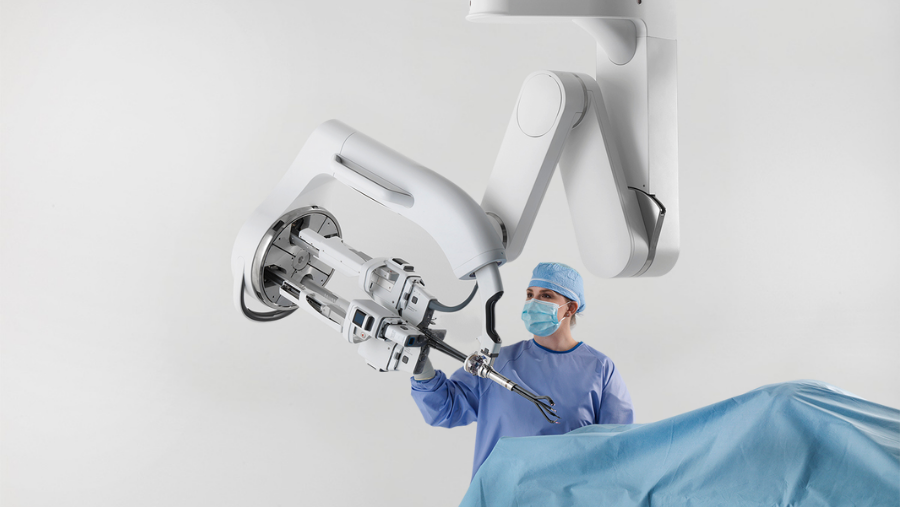
- Robotic radical prostatectomy: the complete surgical removal of the prostate. Robotic systems aim for less bleeding, a shorter hospital stay and faster recovery. Details: robotic surgery for prostate cancer.
- Radiotherapy: radiation treatment, given together with hormone therapy in some patients.
- Focal therapies: methods such as HIFU or NanoKnife target only the tumour area in selected patients.
- Systemic treatments: in disease that has spread, hormone therapy and newer-generation drugs come into play.
The best way to decide which path suits you is to discuss it with your doctor once all results are available. For a general framework of the process, our article on the prostate cancer treatment period may also guide you.
Preparing for Your Appointment: Write Down Your Questions

It is very common to forget much of what you hear in the first consultations after a diagnosis. Going prepared both reassures you and makes it easier to reach the right decision:
- Write your questions down in advance on paper or on your phone.
- Bring your spouse, child or a trusted relative; a second pair of ears is very valuable.
- Take notes or, with permission, record the important explanations.
- Do not hesitate to ask again about a term you did not understand.
Some example questions: “Which risk group is my disease in?”, “Do I need treatment right away, or is active surveillance an option?”, “What are the possible effects of each treatment on urinary control and sexual function?”, “How will follow-up work after treatment?”, “How much time do I have to decide?”
Getting a Second Opinion Is Your Right
Especially when you have to choose between surgery, radiotherapy and active surveillance, getting a second opinion from another specialist is a very common and sensible practice. A good doctor is not offended when a patient asks for a second opinion. In some cases, having the pathology slides re-examined by an experienced uropathologist may change the Gleason score and therefore the treatment decision.
When seeking a second opinion, bring your biopsy report, your pathology slides (if needed), your MRI and PET images on CD or in digital form, and all your PSA results in date order.
Be Careful When Searching Online
Reading online for hours after a diagnosis is a very natural impulse. However, individual stories shared on forums do not reflect the characteristics of your disease and often cause unnecessary fear. When looking for information, choose reliable sources: the patient information pages of the European Association of Urology (EAU), national cancer institutes and content recommended by your doctor are healthier choices. If something you read confuses you, ask your doctor at your next appointment.
Managing Your Emotions and Getting Support

A cancer diagnosis affects not only the body but also the mind. Sleeplessness, loss of appetite, racing thoughts and anxiety are common in the first weeks. To cope with them:
- Share your feelings with those close to you; you do not have to carry everything alone.
- If anxiety clearly affects your daily life, do not hesitate to seek support from a psychologist or psychiatrist.
- Keep up habits such as daily walks, regular sleep and balanced nutrition; they have a positive effect on both your mood and your readiness for treatment.
- If you would like to learn from patients who have been through the same process, choose support groups recommended by your doctor.
You can find our advice on long-term quality of life in our article living with prostate cancer.
When Should You Contact Your Doctor Without Waiting?
Staying calm after a diagnosis is important; however, some symptoms require faster assessment. Contact your doctor without waiting for your appointment in the following situations:
- Inability to pass urine, or obvious blood and clots in the urine
- New, persistent bone or lower back pain
- Weakness or numbness in the legs, or loss of bladder or bowel control
- Unexplained weight loss and marked fatigue
Frequently Asked Questions
I have been diagnosed with prostate cancer. Do I need surgery immediately?
For most patients, no. First your risk group is determined, additional tests are done if needed, and treatment options are discussed. In low-risk disease, even active surveillance may be a suitable option.
Will waiting a few weeks to decide make my disease progress?
In low- and intermediate-risk prostate cancer, a few weeks spent on tests and decision-making generally does not negatively affect the outcome. In high-risk disease, planning is done more quickly. Your doctor will determine the appropriate timeframe for you.
Should I change my lifestyle after the diagnosis?
Stopping smoking, staying active, maintaining a healthy weight and eating a balanced diet support both your general health and your readiness for treatment. They do not replace treatment, but they contribute to recovery.
Are the men in my family also at risk?
Men with a first-degree relative (father, brother) with prostate cancer have a higher risk. Your brothers and sons are advised to consult a urologist about PSA testing from the appropriate age.
Conclusion
Receiving a new cancer diagnosis can be one of the hardest moments of your life. But in most cases prostate cancer is a disease that should be managed not in a hurry, but with knowledge and calm. Understand your report, complete the necessary tests, ask your questions, get a second opinion if needed, and make your decision together with your doctor by considering the option that suits you best. Remember: you are not alone on this path, and you have time to make the right decision.
Clinical Note
This article was written and medically reviewed by Prof. Dr. Murat Binbay, a urologist with more than 25 years of experience and over 1,500 robotic operations. The assessments reflect current international guideline recommendations together with our own clinical practice.
The information here is for general guidance only. Because every patient's history, imaging findings and comorbidities differ, a treatment decision can only be made after an examination. You can reach us through our contact page, or read more about our physician on the about us page.
Sources
- European Association of Urology — Prostate Cancer Guidelines
- Hamdy FC et al. — ProtecT: Fifteen-Year Outcomes after Monitoring, Surgery, or Radiotherapy for Prostate Cancer (NEJM, 2023)
- National Cancer Institute (NIH) — Prostate Cancer
Last reviewed: 29 September 2026 · Reviewed by: Prof. Dr. Murat Binbay, Urology and Robotic Surgery Specialist
Let Prof. Dr. Murat Binbay's team review your case
If you read this far, you probably have questions. Fill in the two-minute digital consultation form and we will get back to you within 24 hours.
- Answer within 24 hours
- Your data stays confidential

Urology and Robotic Surgery Specialist · 25+ years of experience
Last medically reviewed:
 Önceki Yazı
Prostat Kanseri Nasıl Teşhis Edilir? Adım Adım Güncel Tanı Yöntemleri
Önceki Yazı
Prostat Kanseri Nasıl Teşhis Edilir? Adım Adım Güncel Tanı Yöntemleri
 Sonraki Yazı
Who Is Single Port Robotic Surgery Suitable For and How Does It Differ From MultiPort?
Sonraki Yazı
Who Is Single Port Robotic Surgery Suitable For and How Does It Differ From MultiPort?
Yorumlar
Yorum Yazın
Henüz yorum yapılmamış. İlk yorumu siz yapın!