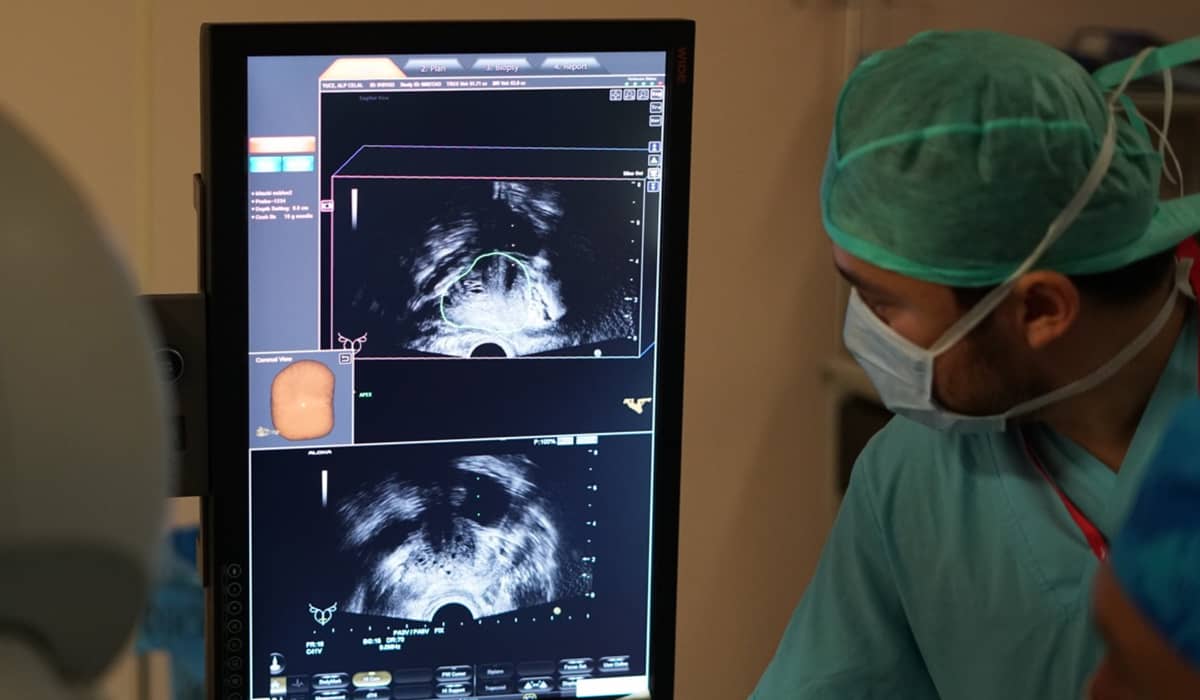
PSMA PET is an examination method carried out in men diagnosed with prostate cancer in order to understand how far the prostate cancer has spread in the body.
Uro-oncology specialist Prof. Dr. Murat Binbay and Nuclear Medicine Specialist Assoc. Prof. Dr. Serkan KUYUMCU answered questions about PSMA PET used in the diagnosis of prostate cancer.
Ga68-PSMA PET Imaging
This imaging technique, based on the radioactive substance gallium68, is the most advanced technology of recent years. This method, also known as gallium68 labelled positron emission tomography, is applied by being made into a compound that attaches to the cancerous cells in the prostate.
In the Ga68-PSMA PET imaging technique used in nuclear medicine, low doses of the radioactive substance gallium68 are combined with PSMA molecules that can attach to cancer cells. The resulting compound is given into the patient's body.
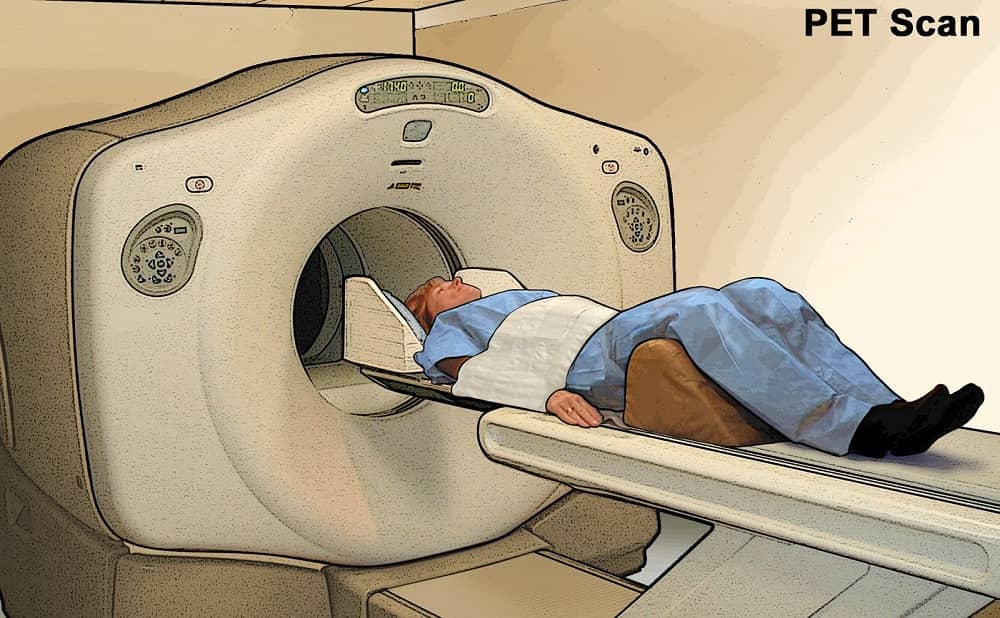
Thanks to the positron emission tomography-PET device, the cancer cells in the patient's body are detected. Because the radioactive substance given to the patient is injected in very low doses, it has no harm to human health.
In patients in the intermediate-high risk group in terms of prostate cancer (patients with a Gleason score > 7), it is an imaging method sensitive enough to detect metastases even in situations where PSA (prostate specific antigen) levels are low. Most importantly, it can detect even very small lesions at an early stage depending on the density of prostate cancer cells.
QUESTIONS AND ANSWERS
Who should PSMA PET be performed on?
PSMA PET is applied to patients diagnosed with prostate cancer by prostate biopsy and at intermediate-high risk in terms of metastasis, with the aim of determining the stage of the cancer.
PSMA PET is applied to patients who have received treatment because of prostate cancer and whose PSA levels have started to rise after treatment, with the aim of determining the sites of metastasis.
What is its accuracy rate?
The sensitivity of the PSMA PET test in detecting lymph node and bone metastases in prostate cancer patients is above 95%. The sensitivity of the PSMA PET test in detecting bone metastases is far superior to bone scintigraphy.
When does the PSMA PET test give a false negative result?
If the prostate cancer has jumped to somewhere (metastasis) and the PSMA PET test does not show these metastasis sites; this situation is called a false negative result. The false negative rates of the PSMA PET test are quite low.
A false negative result can be obtained on the PSMA PET test in the following possibilities:
- In very small millimetre-sized lymph node metastases of prostate cancer
- In non-adenocarcinoma subtypes of prostate cancer
- In patients with prostate cancer who are taking hormone medicines and who have not developed resistance to these medicines
When does the PSMA PET test give a false positive result?
Infections or cancers in the body other than the prostate can cause false positive findings on PSMA PET imaging. However, the medical centre where the investigation is carried out and the experience of the nuclear medicine physician assessing the report are important for correct reporting.
On PSMA PET imaging carried out in a reliable centre, false positive results are easily eliminated as a result of the nuclear medicine physician assessing the patient well together with their clinical findings.
How is preparation done before having the PSMA PET test?
The necessary preparations before the test are quite easy. Fasting is not essential. In necessary situations, oral (by mouth) contrast agent is given to patients before the scan.
How long does performing the PSMA PET test take?
An injection of the radioactive substance is given to the patient in the nuclear medicine PET unit. The patient who has been injected waits in a room of their own until the time of the scan.
1 hour after the injection is given, the patient is taken for the scan. The scan lasts approximately 15-20 minutes.
Does the PSMA PET test have side effects?
PSMA PET has no known side effect.
Because contrast agent is not given to patients intravenously, there is no obstacle to patients with a contrast allergy having PSMA PET.
Can patients with kidney failure and on dialysis also have this test?
PSMA PET can also be applied safely in patients with kidney failure and on dialysis.
Do people who have the PSMA PET test emit radiation to the people around them?
The half-life of the radioactive substance required for the PSMA PET scan is 1 hour.
After the patient comes to the nuclear medicine clinic, the very low dose of radioactive substance given intravenously will have been largely eliminated in the time that passes until the patient leaves the unit.
As a general precaution it is recommended that they stay away from small children and pregnant women for 4 hours after the injection.
Is the brand of the PSMA PET test device or the physician's experience important?
The PET device on which the PSMA PET test is performed being a product of the latest technology, the synthesis of the radioactive substance, the dose given to the patient and the imaging protocols can show differences between centres.
The most important factor affecting the accuracy of the PSMA PET test is the experience of the nuclear medicine physician assessing the results of the investigation.
A PSMA PET test performed with the correct indication in a large centre being assessed by an experienced physician will ensure that the PSMA PET test results in the highest diagnostic accuracy and reliability.
Clinical Note
This article was written and medically reviewed by Prof. Dr. Murat Binbay, a urologist with more than 25 years of experience and over 1,500 robotic operations. The assessments reflect current international guideline recommendations together with our own clinical practice.
The information here is for general guidance only. Because every patient's history, imaging findings and comorbidities differ, a treatment decision can only be made after an examination. You can reach us through our contact page, or read more about our physician on the about us page.
Sources
- European Association of Urology — Prostate Cancer Guidelines
- National Cancer Institute (NIH) — Prostate Cancer
- Türk Üroloji Derneği — Güncel Kılavuzlar
Last reviewed: 8 September 2026 · Reviewed by: Prof. Dr. Murat Binbay, Urology and Robotic Surgery Specialist
Let Prof. Dr. Murat Binbay's team review your case
If you read this far, you probably have questions. Fill in the two-minute digital consultation form and we will get back to you within 24 hours.
- Answer within 24 hours
- Your data stays confidential

Urology and Robotic Surgery Specialist · 25+ years of experience
Last medically reviewed:
 Önceki Yazı
HIFU: Prostate Cancer Treatment Without Surgery
Önceki Yazı
HIFU: Prostate Cancer Treatment Without Surgery
 Sonraki Yazı
Surgery to Create an Artificial Bladder From the Intestine
Sonraki Yazı
Surgery to Create an Artificial Bladder From the Intestine
Yorumlar
Yorum Yazın
Henüz yorum yapılmamış. İlk yorumu siz yapın!