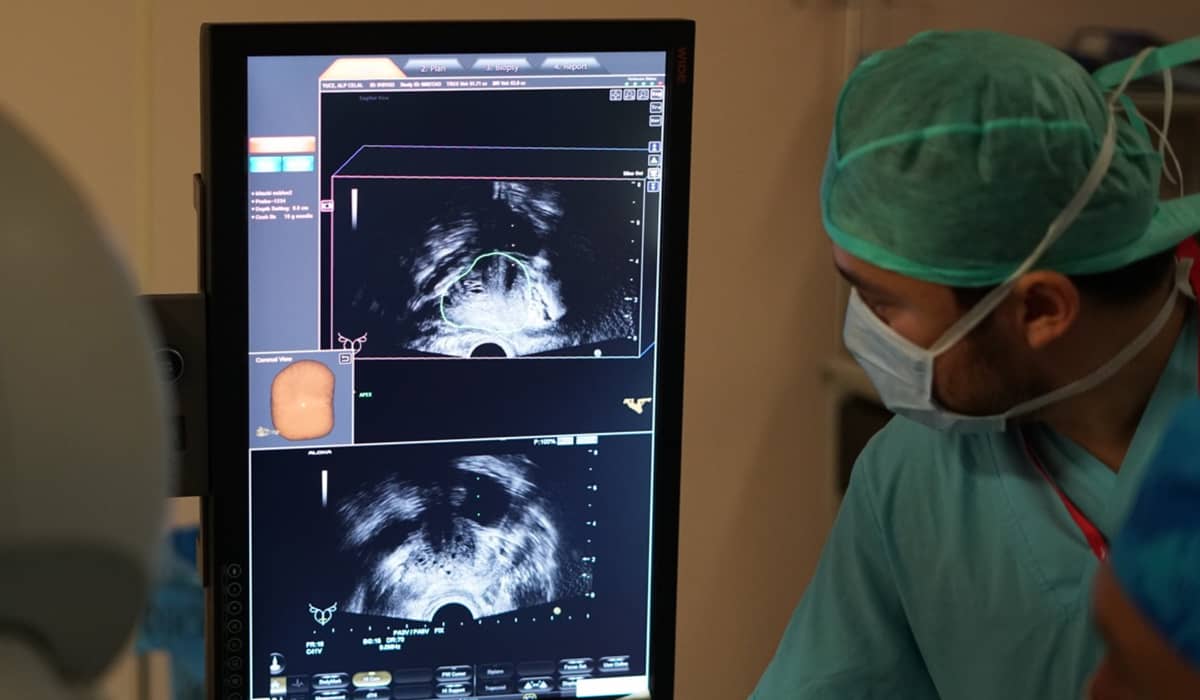
Prostate cancer is one of the most frequently seen types of cancer in men and generally shows a slowly progressing course. It may not be necessary to resort immediately to aggressive treatments such as surgery or radiotherapy in every patient diagnosed with prostate cancer. Some tumours, particularly cancers in the low-risk group, can be monitored for many years without progressing. It is at this point that active surveillance, an approach that is being increasingly preferred in modern urology, comes to the fore.
Active surveillance is a treatment strategy developed with the aim of avoiding the burden of unnecessary treatment in cases of prostate cancer that show no tendency to progress or that follow a very slow course. With this method, patients are closely followed with regular tests and check-ups; treatments such as surgery or radiotherapy are applied only when signs of the cancer progressing are seen. In this way both the patient's quality of life is preserved and treatment-related side effects (urinary incontinence, erection problems, etc.) are minimised.
What Is Active Surveillance?
Active surveillance is a "close follow-up focused" treatment approach applied in situations where the risk of prostate cancer progressing is low. The fundamental aim here is to act according to the biological behaviour of the disease instead of applying surgery or radiotherapy as standard to all patients.
In this protocol treatment is not started immediately for the patient; the course of the cancer is monitored with PSA (prostate specific antigen) measurements carried out at regular intervals, digital rectal examination (DRE) and periodic prostate biopsies.
If during the follow-up process a meaningful increase in PSA levels, a rise in the grade of the cancer on biopsy (for example an increase in the Gleason score) or a tendency of the tumour to spread is detected, the treatment plan is reassessed and active treatment is begun.
Which Patients Is Active Surveillance Suitable For?
Active surveillance is suitable only for prostate cancer patients who meet certain criteria. It is generally preferred in individuals with the following characteristics:
- A PSA level below 10 ng/mL,
- A Gleason score of 6 (ISUP grade 1),
- Situations in which the tumour is limited to the prostate capsule (stage T1 or T2a),
- Cancer being detected in a limited number of samples on biopsy,
- The patient's general state of health and life expectancy being high.
In patients meeting these criteria, a stable course can be achieved for many years without the need for aggressive treatment. However, in high-risk or rapidly progressing tumours active surveillance is not appropriate; in this situation surgery or radiotherapy is preferred directly.
How Is the Active Surveillance Process Applied?
Active surveillance is carried out within the framework of a specific protocol and the patient's condition is assessed regularly. The follow-up process generally includes the following check-ups:
- PSA test: carried out at intervals of 3 to 6 months. The rate of increase and the density of PSA are carefully followed.
- Digital rectal examination (DRE): carried out at least once a year.
- Prostate biopsy: repeated within 12-18 months after diagnosis, and subsequently can be carried out every 2-3 years according to the risk situation.
- Multiparametric MRI: in necessary situations the volume and location of the tumour are assessed.
These data are brought together in order to understand the biological behaviour of the tumour. If the cancer shows a stable course, active surveillance is continued. In situations where progression is detected, the treatment plan is changed towards surgery (radical prostatectomy) or radiotherapy.
The Advantages of Active Surveillance
Active surveillance offers many advantages in prostate cancer treatment both medically and in terms of quality of life. With this method:
- Unnecessary surgical interventions are avoided.
- The risk of side effects such as urinary incontinence or loss of erection decreases.
- Patients can maintain an active life.
- It is ensured that treatment is begun at the appropriate time according to the biological behaviour of the cancer.
For this reason active surveillance is accepted as a "standard treatment option", particularly in low-risk prostate cancers.
The Difference Between Active Surveillance and Watchful Waiting
Active surveillance is often confused with the "watchful waiting" strategy. However, these two approaches are different from one another.
- Active surveillance is a strategy ready for treatment; if the disease progresses, intervention is made rapidly.
- Watchful waiting, on the other hand, is generally applied in patients of advanced age or in poor general condition. Here the aim is to focus not on the cancer but on the patient's survival time and comfort.
Active surveillance is a medically more "proactive" approach and involves the obligation of regular follow-up.
Points to Be Aware Of in the Follow-Up Process
In the active surveillance process the patient's adherence to treatment is very important. Neglecting check-ups can lead to a delay in noticing the progression of the disease. The following precautions in patients' lifestyle can be beneficial:
- Balanced and low-fat nutrition,
- Regular physical activity,
- Avoiding the consumption of cigarettes and alcohol,
- Attending doctor's check-ups on time.
Although these supportive measures do not directly change the biological behaviour of the cancer, they affect the general state of health positively.
Active surveillance is a modern approach showing that, in low-risk prostate cancer patients, the disease can be kept safely under control without being unnecessarily exposed to treatment. When carried out together with correct patient selection, regular follow-up and an experienced urology team, active surveillance can preserve quality of life without adversely affecting long-term survival rates.
Follow-up programmes managed by physicians specialised in advanced-level prostate surgery and diagnostic biopsy techniques, such as urology specialist Prof. Dr. Murat Binbay, are among the most important factors determining the success of this method.
Clinical Note
This article was written and medically reviewed by Prof. Dr. Murat Binbay, a urologist with more than 25 years of experience and over 1,500 robotic operations. The assessments reflect current international guideline recommendations together with our own clinical practice.
The information here is for general guidance only. Because every patient's history, imaging findings and comorbidities differ, a treatment decision can only be made after an examination. You can reach us through our contact page, or read more about our physician on the about us page.
Sources
- European Association of Urology — Prostate Cancer Guidelines
- National Cancer Institute (NIH) — Prostate Cancer
- Türk Üroloji Derneği — Güncel Kılavuzlar
Last reviewed: 8 September 2026 · Reviewed by: Prof. Dr. Murat Binbay, Urology and Robotic Surgery Specialist
Let Prof. Dr. Murat Binbay's team review your case
If you read this far, you probably have questions. Fill in the two-minute digital consultation form and we will get back to you within 24 hours.
- Answer within 24 hours
- Your data stays confidential

Urology and Robotic Surgery Specialist · 25+ years of experience
Last medically reviewed:
 Önceki Yazı
Measures That Can Be Taken to Prevent Kidney Stones From Forming Again
Önceki Yazı
Measures That Can Be Taken to Prevent Kidney Stones From Forming Again
 Sonraki Yazı
da Vinci Single-Port (SP) Robotic Surgery
Sonraki Yazı
da Vinci Single-Port (SP) Robotic Surgery
Yorumlar
Yorum Yazın
Henüz yorum yapılmamış. İlk yorumu siz yapın!