Published: 18.04.2021 | Last updated: 13.10.2026
This content has been medically reviewed and updated by Prof. Dr. Murat Binbay.
“This content is for informational purposes only; diagnosis and treatment are planned after a medical examination.”
Bladder cancer surgery is not a single operation. Two different paths are followed depending on how deep the cancer has grown into the bladder wall. Tumours that have not reached the muscle layer are removed through the urethra without any incision (TURBT). In tumours that have grown into the muscle layer, the whole bladder is removed and a new route is created for urine to leave the body (radical cystectomy). Today, in experienced centres, radical cystectomy can be performed robotically through a few small incisions.
On this page we explain which operation is chosen for which patient, how the operations are performed and how long they take, how urine is passed after the bladder is removed, and what recovery looks like.
Bladder Cancer Surgery at a Glance
| TURBT (closed surgery) | Robotic radical cystectomy | |
|---|---|---|
| What is done? | The tumour is removed through the urethra; the bladder is preserved | The bladder is removed together with the surrounding lymph nodes and nearby reproductive organs |
| For whom? | The first operation for every newly diagnosed patient; the treatment itself for tumours that have not reached the muscle layer | Tumours that have invaded the muscle layer, and high-risk superficial tumours that do not respond to treatment |
| Incision | None | 6 holes of about 1 cm in the abdomen |
| Anaesthesia | Spinal or general | General |
| Operation time | A short procedure, depending on the size and number of tumours | About 8 hours when a new bladder (neobladder) is created |
| Urinary catheter | Usually 1 day (up to 3 days if needed) | Depends on the urinary diversion method |
| Hospital stay | Usually 1 day | About 5–6 days |
| Return to daily life | 2–3 days | 6–8 weeks for strenuous activities |
Who Needs Bladder Cancer Surgery?
The most important question in choosing the operation is whether the cancer has reached the muscle layer of the bladder wall. The answer comes from the pathological examination of the tissue removed during the first TURBT, which is performed for diagnosis. That is why the first step in every patient with a bladder tumour is TURBT.
| Cancer status | Stage | Treatment approach |
|---|---|---|
| Not invading the muscle (superficial) – low risk | Ta, low grade, small single tumour | TURBT and a single dose of chemotherapy into the bladder within 24 hours; regular cystoscopy follow-up |
| Not invading the muscle – intermediate risk | Ta, multiple or recurrent tumours | TURBT followed by a course of chemotherapy or BCG into the bladder |
| Not invading the muscle – high risk | T1, high-grade tumour or carcinoma in situ (CIS) | A second TURBT (re-TURBT) and BCG into the bladder; radical cystectomy for patients who do not respond to BCG or are at very high risk |
| Invading the muscle | T2–T4a, no distant spread | Chemotherapy before surgery in suitable patients, followed by radical cystectomy; bladder-sparing treatment in selected patients |
| Spread to distant organs | Metastatic disease | Drug treatments come first (chemotherapy, immunotherapy and new targeted drugs) |
Most bladder cancers are early-stage tumours that have not reached the muscle layer at diagnosis. In these patients the bladder is preserved. For detailed information on symptoms, diagnosis and staging, see our bladder cancer page.
TURBT: Closed Bladder Tumour Surgery
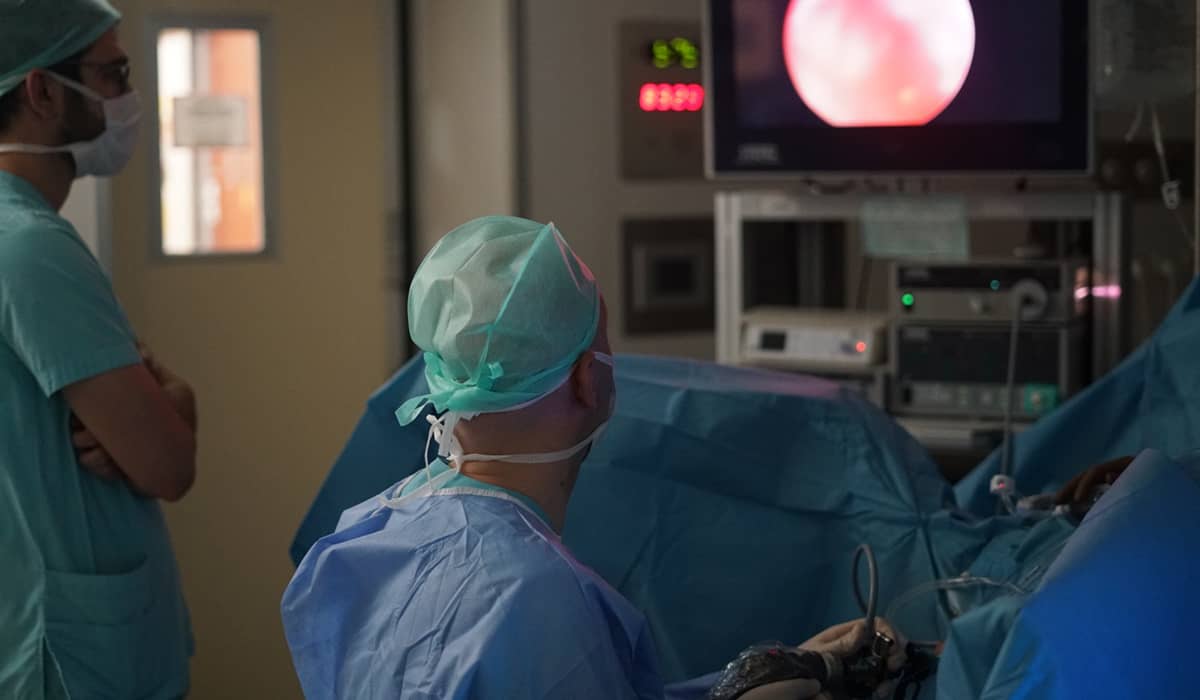
TURBT (transurethral resection of bladder tumour) means reaching the inside of the bladder through the urethra with a camera system about 1 cm thick (a resectoscope) and removing the tumour. There is no incision in the abdomen. The operation serves both diagnosis and treatment: the tumour is removed and the tissue is sent to pathology to determine the type and grade of the cancer and whether it has reached the muscle layer.
- Anaesthesia: Usually spinal anaesthesia; general anaesthesia if needed.
- Chemotherapy into the bladder: In suitable patients, a single dose of medication is given into the bladder within the first 24 hours after surgery to reduce the risk of recurrence.
- Catheter and hospital stay: The catheter is usually removed the next day; most patients stay in hospital for 1 day and return to daily life within 2–3 days.
- Second TURBT (re-TURBT): For high-risk tumours, or if the muscle layer was not adequately sampled in the first operation, a second TURBT is performed within 2–6 weeks.
- BCG therapy: In high-risk superficial tumours, BCG is given into the bladder weekly to reduce the risk of recurrence and progression, followed by maintenance doses at set intervals.
For preparation, the steps of the procedure and possible complications, see our article on TURBT surgery.
Radical Cystectomy: Complete Removal of the Bladder
Radical cystectomy is the standard surgical treatment for bladder cancer that has invaded the muscle layer. In this operation the bladder is removed together with the lymph nodes in the pelvis. Removing the lymph nodes is important both for staging the cancer accurately and for clearing any possible spread.
| In men | In women | |
|---|---|---|
| Organs removed | Bladder, prostate, seminal vesicles and pelvic lymph nodes | Bladder, pelvic lymph nodes; usually the uterus, ovaries and part of the front wall of the vagina |
| Organ preservation | Preservation of the erectile nerves in suitable patients | Preservation of the uterus, ovaries and vagina in selected patients |
| Effect on sex life | No ejaculation; if the nerves can be preserved, erections may return over time | Vaginal shortening and menopausal symptoms may occur; organ-sparing surgery reduces these effects |
Chemotherapy before surgery: For muscle-invasive cancer, international guidelines recommend cisplatin-based chemotherapy before surgery for patients whose kidney function and general condition allow it. This treatment improves long-term results after surgery. The decision is made together with the oncology team.
For more details, see our radical cystectomy page.
How Is Robotic Bladder Cancer Surgery Performed?
- Planning: The extent of the cancer is assessed with CT, MRI and, if needed, PET-CT. If chemotherapy is given before surgery, the operation is scheduled a few weeks after it ends. The urinary diversion method is decided together with the patient.
- Anaesthesia and preparation: The operation is performed under general anaesthesia.
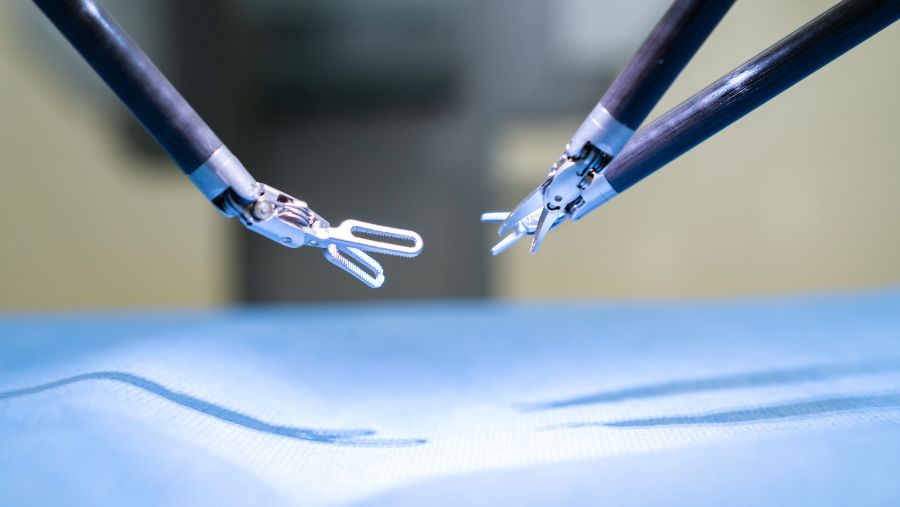
- Docking the robot: Six thin tubes (trocars) of about 1 cm are placed in the abdomen and the robotic arms are attached. The surgeon sits at a console in the same room and controls every movement; the robot never moves on its own.
- Removing the bladder: The bladder is removed together with the prostate and seminal vesicles in men, and with the necessary reproductive organs in women. Nerves and organs are preserved in suitable patients.
- Lymph node removal: The lymph nodes in the pelvis are removed and sent to pathology.
- Creating a new urinary route: A section of the small intestine is used to create either a new bladder (neobladder) or an ileal conduit (stoma with a bag), and the ureters coming from the kidneys are connected to it.
- Closure: The removed tissue is taken out in a bag, a drain is placed and the incisions are closed.
How Is Urine Passed After the Bladder Is Removed?
After the bladder is removed, a new route is created for urine to leave the body. The two most common methods are a new bladder made from the intestine (neobladder) and an ileal conduit (stoma with a bag). Both use a section of the small intestine.
| Neobladder (orthotopic new bladder) | Ileal conduit (stoma with a bag) | |
|---|---|---|
| How is it made? | A new bladder is made from about 45–50 cm of small intestine and connected to the urethra | A short section of small intestine is connected to the ureters and brought out through the skin of the abdomen as an opening (stoma) |
| Passing urine | Urine is passed through the normal route | Urine flows continuously into a bag attached to the abdomen |
| External bag | None | Yes; the bag is changed every 2–3 days |
| Urinary control | Daytime leakage about 4%; night-time leakage occurs in about 20–30% of patients | No control needed; urine collects in the bag |
| Suitable for | Patients without cancer in the urethra, with adequate kidney function and able to follow a regular voiding schedule | Older patients, those with low kidney function or a risk of cancer in the urethra, or when a shorter operation is needed |
| Operation time | Longer | Shorter |
| Things to know | The capacity of the new bladder increases over time; some patients may occasionally need to self-catheterise | Stoma care; skin problems and bag leaks |
Because it allows patients to pass urine normally without an external bag, a neobladder is the first choice in suitable patients. An ileal conduit is a reliable and widely used method, and a neobladder is not suitable for every patient. The decision depends on the patient's general health, the extent of the cancer and the patient's preference. For details, see our article on creating a new bladder from the intestine.
How Long Does Bladder Cancer Surgery Take?
- TURBT: A short closed procedure whose length depends on the size and number of tumours.
- Robotic radical cystectomy with neobladder: About 8 hours.
- Robotic radical cystectomy with ileal conduit: Shorter than surgery with a neobladder, because no new bladder needs to be shaped.
Radical cystectomy is one of the longest and most complex operations in urology. It is not a single procedure but three separate stages performed one after another: removing the bladder, removing the lymph nodes and creating a new urinary route from the intestine. Shaping a neobladder by stitching the intestine takes particular time. The length of the operation is not a sign of a problem; it reflects the care each stage requires.
Robotic vs Open Radical Cystectomy
| Robotic radical cystectomy | Open radical cystectomy | |
|---|---|---|
| Incision | 6 holes of about 1 cm | A long incision extending below the navel |
| View | 3D, magnified | Direct view |
| Blood loss | Less | More; blood transfusion needed more often |
| Pain and wound healing | Less pain, fewer wound problems | More pain, risk of wound infection and hernia |
| Exposure of the bowel | The bowel stays inside the abdomen | The bowel is exposed throughout the operation |
| Operation time | Longer | Shorter |
| Cancer control | Similar to open surgery in experienced hands | Standard method |
The magnified view of the robotic system gives the surgeon an advantage in removing lymph nodes deep in the pelvis and in preserving nerves. For the general advantages of the robotic system, see our robotic surgery page.
Risks of Bladder Cancer Surgery
TURBT is generally a safe procedure. Its main risks are blood in the urine, urinary tract infection and, rarely, perforation of the bladder wall. Most of these problems resolve by keeping the catheter in for a few more days.
Radical cystectomy, on the other hand, is one of the largest operations in urology, and its complication rate is higher than that of other urological operations. It is therefore important that it is performed by an experienced surgical and anaesthesia team. The main risks are:
- Slow return of bowel function: Because the bowel is used, it may take a few days for it to start working again after surgery.
- Infection: Urinary tract and wound infections are among the most common problems.
- Urine leakage and narrowing: Leakage, or later narrowing, may occur where the ureters are connected to the bowel.
- Bleeding and blood clots: Bleeding is reduced with robotic surgery; preventive medication is used against blood clots.
- Metabolic changes: Because bowel tissue is in contact with urine in a neobladder, blood salt balance is monitored.
- Changes in sexual function: Men no longer ejaculate; erections in men and sex life in women may be affected.
Recovery After Surgery
| Period | After TURBT | After radical cystectomy |
|---|---|---|
| First days | Fluids 4 hours and food 6 hours after surgery | Early walking; gradual feeding once the bowel is working |
| Catheter | Usually removed the next day | May stay for several weeks, depending on the diversion method |
| Discharge | Usually day 1 | Around day 5–6 |
| Return to daily life | 2–3 days | 6–8 weeks for strenuous activities |
| Sexual activity | Soon, on the doctor's advice | After about 6 weeks |
Patients with a neobladder learn to empty their new bladder at regular intervals after the catheter is removed. The interval, initially every few hours, gradually increases to up to 4 hours as the bladder's capacity grows.
Follow-up After Surgery
- After TURBT: Because bladder cancer has a high tendency to recur, regular cystoscopy check-ups are carried out. The first check is usually at 3 months; the frequency of later checks depends on the tumour's risk group.
- After radical cystectomy: Follow-up includes imaging (CT or MRI), kidney function tests, blood salt balance and checks of the urinary route. Depending on the pathology result, further treatment may be considered after surgery.
Is Treatment Possible Without Removing the Bladder?
Removing the bladder is the standard treatment for muscle-invasive cancer, but bladder-sparing treatment (trimodal therapy) is an option for selected patients. In this approach the tumour is removed as completely as possible with TURBT, followed by radiotherapy combined with chemotherapy. The best candidates are patients with a single small tumour, no blockage of the urinary tract and no widespread carcinoma in situ. These patients keep their bladder but need regular, close follow-up; if the disease recurs, radical cystectomy is performed.
What Determines the Cost of Bladder Cancer Surgery?
- Type of operation: There is a large difference between TURBT and radical cystectomy.
- Technique: In robotic surgery, the disposable instruments renewed for every operation increase the cost.
- Urinary diversion method: A neobladder is a longer operation than an ileal conduit.
- Length of hospital stay and additional treatments: Such as chemotherapy before surgery or BCG into the bladder.
- Insurance: Coverage varies according to the hospital and your insurance policy.
For general information, see our robotic surgery prices page.
Why the Surgeon's Experience Matters
Robotic radical cystectomy, and especially creating a neobladder, are among the robotic operations that require the most advanced experience. The safety of the operation, cancer control and the function of the new bladder are directly related to the surgeon's experience. Prof. Dr. Murat Binbay performs these operations with more than 25 years of experience in urology and more than 1,500 robotic operations.
Before deciding on surgery, you can ask your surgeon these questions:
- Has my tumour reached the muscle layer? Does my bladder need to be removed?
- Do I need chemotherapy before surgery?
- Am I suitable for a neobladder? If not, why?
- Will the operation be robotic? Will the neobladder be created inside the body by the robot?
- How many of these operations do you perform each year?
You can read about our patients' experiences on the bladder cancer patient reviews page.
Frequently Asked Questions About Bladder Cancer Surgery
Is the whole bladder removed in bladder cancer surgery?
No, not in every patient. Most bladder cancers are early-stage tumours that have not reached the muscle layer at diagnosis, and they are treated with closed surgery (TURBT) while preserving the bladder. The whole bladder is removed only for tumours that have invaded the muscle layer or for high-risk tumours that do not respond to treatment.
How long does bladder cancer surgery take?
TURBT is a short closed procedure. Robotic radical cystectomy with a neobladder takes about 8 hours; operations with an ileal conduit are shorter.
Is bladder cancer surgery risky?
TURBT is generally a safe procedure. Radical cystectomy, however, is a major operation with a higher risk of complications, so it is important that it is performed by an experienced team.
Can you pass urine normally after the bladder is removed?
Patients with a neobladder made from the intestine pass urine through the normal route. Daytime leakage is about 4%, and night-time leakage occurs in about 20–30% of patients. In patients with an ileal conduit, urine collects in a bag attached to the abdomen.
Is chemotherapy needed after bladder cancer surgery?
In muscle-invasive cancer, chemotherapy is usually given before surgery. If pathology after surgery shows risk factors, additional chemotherapy or immunotherapy is considered. In early-stage tumours, medication is given directly into the bladder (chemotherapy or BCG) instead of systemic chemotherapy.
Can cancer come back after TURBT?
Bladder cancer has a high tendency to recur. That is why regular cystoscopy check-ups are carried out after TURBT and treatments into the bladder are given according to the risk group. Recurrences detected early can usually be treated again with closed surgery.
How does bladder cancer surgery affect sex life?
TURBT usually does not affect sex life. After radical cystectomy, men no longer ejaculate and erections may be affected; preserving the nerves in suitable patients helps erections return. In selected women, preserving the uterus and vagina reduces the effect on sex life.
How long does a neobladder last?
Because a neobladder is made from the patient's own intestinal tissue, it has no fixed lifespan. However, regular emptying, adequate fluid intake and periodic check-ups are important.
How many days will I stay in hospital?
Usually 1 day after TURBT and about 5–6 days after robotic radical cystectomy.
Is treatment possible without removing the bladder?
The bladder is always preserved in early-stage tumours. In muscle-invasive cancer, bladder-sparing treatment combining TURBT, radiotherapy and chemotherapy is an option for selected patients.
Let Prof. Dr. Murat Binbay's team review your case
If you read this far, you probably have questions. Fill in the two-minute digital consultation form and we will get back to you within 24 hours.
- Answer within 24 hours
- Your data stays confidential

Urology and Robotic Surgery Specialist · 25+ years of experience
Last medically reviewed:
Yorumlar
4Yorum Yazın
Robotik mesane kanseri amaliyatı ne kadar? Nerede yapılıyor?
Mesane kanseri tedavisi için robotik cerrahi ameliyatı hakkında bilgi almak için 0 (530) 100 90 85 numaralı telefondan bize ulaşabilirsiniz.
Merhaba Robotik cerrahi yapay mesane ameliyat i fiyatlari nedir acaba? Tesekkurler
Merhaba Ozan bey. Ameliyat fiyatları hastalığın ilerleme durumu gibi bazı faktörlere bağlı olarak değişkenlik gösterir. Detaylı bir bilgi almak için muayeneye gelmenizi tavsiye ederiz. Randevu için 0 (530) 100 90 85 den ulaşabilirsiniz.