Published: 18.04.2021 | Last updated: 09.10.2026
This content has been medically reviewed and updated by Prof. Dr. Murat Binbay.
“This content is for informational purposes only; diagnosis and treatment are planned after a medical examination.”
In kidney cancer surgery, the malignant tumour is removed either on its own (partial nephrectomy) or together with the kidney (radical nephrectomy). For a tumour confined to the kidney, neither medication nor radiotherapy can replace surgery; surgery is the foundation of curative treatment. Today, most of these operations are performed through a few small incisions in the abdomen, using robotic or laparoscopic techniques.
On this page we explain which operation is chosen for which patient, how long the surgery takes, how many days you stay in hospital and how recovery progresses. The figures we share are based on Prof. Dr. Murat Binbay's experience of more than 1,000 kidney cancer operations.
Kidney Cancer Surgery at a Glance
Robotic kidney cancer surgery is performed in two main forms. The choice depends on the size of the tumour, its location in the kidney and its relationship with the blood vessels.
| Robotic partial nephrectomy | Robotic radical nephrectomy | |
|---|---|---|
| What is removed? | Only the tumour and a thin layer of healthy tissue around it | The whole kidney and its surrounding fat; lymph nodes and the adrenal gland if necessary |
| For whom? | Mostly tumours up to 7 cm that are confined to the kidney | Large tumours, tumours located in the centre of the kidney or tumours extending into the blood vessels |
| Operation time | 30–120 min | 30–90 min; up to 120 min for tumours larger than 10 cm |
| Blood loss | 100–200 cc | 300–500 cc |
| Urinary catheter | 1 day | 1 day |
| Hospital stay | 2 days | 2–3 days |
| Intensive care | Not needed if there are no other health conditions | Not needed if there are no other health conditions |
| Return to daily life | About 1 week | About 1 week |
The times in the table cover the surgery itself, from start to finish. Including anaesthesia, preparation and waking up, the patient spends about one more hour in the operating theatre.
Who Needs Kidney Cancer Surgery?
If a contrast-enhanced CT or MRI shows a mass in the kidney that is suspicious for cancer, and the disease has not spread to distant organs, surgery is the first treatment option. The definitive diagnosis is usually made by pathological examination of the removed tissue, so a biopsy before surgery is not necessary for every patient. The type of operation is determined by the stage of the kidney cancer:
| Stage | Tumour status | Surgical approach |
|---|---|---|
| Stage 1 – T1a | Up to 4 cm, confined to the kidney | Partial nephrectomy is preferred; active surveillance or cryotherapy/RFA in selected patients |
| Stage 1 – T1b | 4–7 cm, confined to the kidney | Partial nephrectomy if technically feasible, otherwise radical nephrectomy |
| Stage 2 | Larger than 7 cm, confined to the kidney | Mostly radical; partial in selected patients |
| Stage 3 | Extends into the renal vein, the vena cava or the fat around the kidney | Radical nephrectomy; if necessary, removal of the tumour inside the vessel (thrombectomy) |
| Stage 4 | Spread to distant organs | Drug therapy comes first; removal of the tumour-bearing kidney (cytoreductive nephrectomy) in selected patients |
Patients with a mass smaller than 4 cm whose surgical risk is high because of advanced age or serious other illnesses can be followed with regular imaging. If the mass grows quickly during follow-up, surgery or ablation is reconsidered.
Partial or Radical? Why Preserving the Kidney Matters
For suitable tumours, the first choice is robotic partial nephrectomy, which preserves the healthy part of the kidney. A healthy life is possible with one kidney; however, removing the entire kidney can increase the risk of chronic kidney disease and related cardiovascular problems in later years. That is why the European Association of Urology (EAU) guidelines recommend kidney-sparing surgery whenever it is technically possible.
Partial nephrectomy is an operation performed against the clock. To prevent bleeding while the tumour is removed, the artery supplying the kidney is temporarily clamped. If this period exceeds 25–30 minutes, healthy kidney cells begin to suffer damage. Within this time, the surgeon must remove the tumour with a clear margin, stitch the opened blood vessels and urinary channels, and restore blood flow to the kidney. This suturing stage is exactly where robotic surgery makes its biggest difference.
| Partial nephrectomy | Radical nephrectomy | |
|---|---|---|
| Kidney function | The healthy part of the operated kidney keeps working | Life continues with one kidney |
| Technical difficulty | High; requires working within a time limit and precise suturing | A more standard operation |
| Main risks | Bleeding (bleeding requiring intervention about 3%), urine leakage | Reduced kidney function in the long term |
| Cancer control | Similar to radical nephrectomy for suitable tumours | Standard treatment for large and extensive tumours |
In some patients, the final form of the operation is decided during surgery: an operation planned as a partial nephrectomy may turn into a radical nephrectomy because of the tumour's relationship with the blood vessels. This possibility is discussed with the patient before surgery. For details of the operation in which the whole kidney is removed, see our robotic radical nephrectomy page.
Robotic vs Laparoscopic vs Open Surgery
Partial and radical nephrectomy can be performed with three different techniques. The choice depends on the tumour, the patient's general condition and the surgeon's experience.
| Robotic surgery | Laparoscopic surgery | Open surgery | |
|---|---|---|---|
| Incision | Several holes of about 1 cm; one is slightly enlarged to remove the tissue | Similar to robotic | A long incision in the abdomen or flank, sometimes below the ribs |
| View | 3D, magnified | 2D, magnified | Direct view |
| Instrument movement | Wristed instruments; hand tremor is filtered out | Straight instruments, limited range of motion | The surgeon's hand |
| Suturing in partial nephrectomy | The most advantageous technique | Requires extensive experience | Possible, but through a large incision |
| Pain and recovery | Less pain, fast recovery | Less pain, fast recovery | More pain, longer recovery |
| Cost | Highest | Moderate | Lowest |
The advantage of robotic surgery over laparoscopy is most evident in partial nephrectomy, in tumours extending into the blood vessels, in surgery for recurrence and when lymph node removal is needed. In a standard operation where the whole kidney is removed, laparoscopy in an experienced team gives similar results. For this reason, laparoscopy is also offered to some patients as a way to reduce costs. For the general advantages of the robotic system, see our robotic surgery page.
How Is Robotic Kidney Cancer Surgery Performed?
- Planning: The size and location of the tumour and its relationship with the blood vessels are assessed with contrast-enhanced CT or MRI; a CT angiography is performed if necessary. Kidney function tests and an anaesthesia assessment are carried out.
- Anaesthesia and positioning: The operation is performed under general anaesthesia with the patient lying on their side.
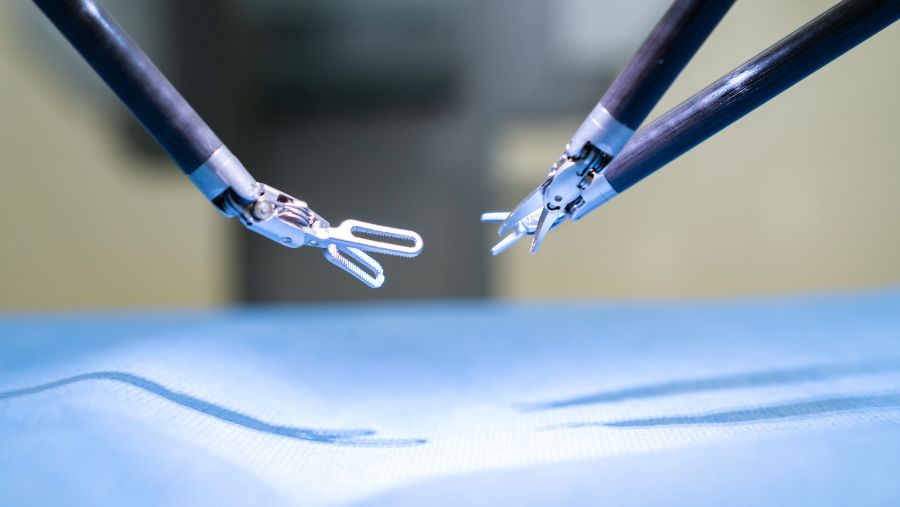
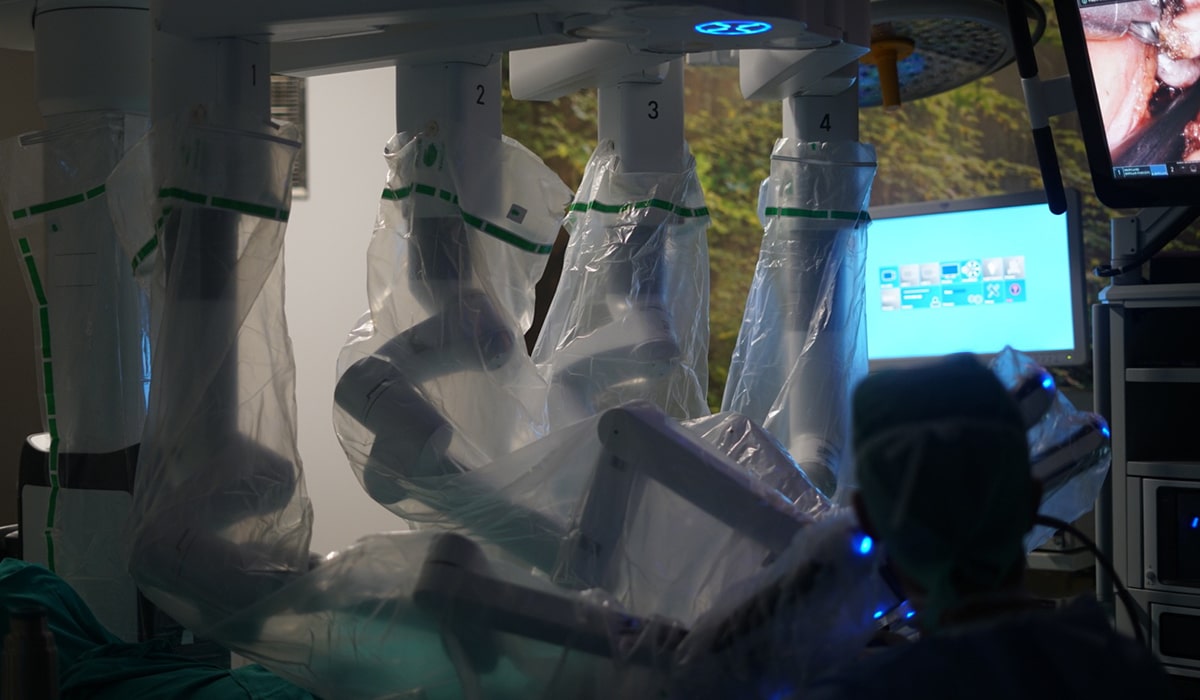
- Docking the robot: Thin tubes (trocars) are placed in the abdomen and the robotic arms are attached to them. The surgeon sits at a console in the same room and controls the instruments personally; the robot never moves on its own.
- In partial nephrectomy: The renal artery is located and temporarily clamped. The tumour is removed together with a thin layer of surrounding healthy tissue. The opened blood vessels and urinary channels are closed with two layers of sutures, then the artery is released to restore blood flow to the kidney.
- In radical nephrectomy: The renal artery and vein are closed separately. The kidney is freed together with its surrounding fat; lymph nodes are also removed if necessary.
- Removing the tissue: The removed tissue is placed in a closed bag and taken out by slightly enlarging one of the holes, then sent to pathology.
- Closure: Bleeding is checked, a drain is left in place if necessary, and the incisions are closed.
How Long Does Kidney Cancer Surgery Take?
Robotic partial nephrectomy usually takes 30–120 minutes and robotic radical nephrectomy 30–90 minutes. Including anaesthesia and waking up, the patient generally spends 1.5–3 hours in the operating theatre. The main factors that determine the duration are:
- The size of the tumour (under 4 cm, 4–7 cm, over 7 cm)
- Its location in the kidney (front or back surface, upper or lower pole)
- Whether it is embedded inside the kidney (endophytic) or grows outward (exophytic)
- The number of renal blood vessels and anatomical variations
- Previous abdominal surgery and the patient's body structure
For detailed durations by type of operation, see our article how many hours does kidney cancer surgery take.
Recovery After Surgery: How Many Days in Hospital?
After robotic surgery, patients are usually discharged within 2–3 days. A typical recovery progresses as follows:
- Day of surgery: A few hours later the patient sits up in bed, takes a short walk in the evening and starts drinking fluids.
- Day 1: The urinary catheter is usually removed and a normal diet is resumed.
- Days 2–3: Discharge from hospital.
- Around week 1: Return to desk work and daily life.
- Weeks 2–4: The pathology result is reviewed at the first follow-up visit.
- Weeks 4–6: Heavy lifting and intense exercise are resumed with the doctor's approval.
Patients whose entire kidney has been removed continue their normal lives with one kidney. Drinking plenty of fluids is important for these patients. Certain painkillers that put a strain on the kidney (NSAIDs) should not be used without consulting a doctor.
Risks of Kidney Cancer Surgery
As with any major operation, kidney cancer surgery carries risks. The robotic technique reduces these risks but does not eliminate them. The main risks are:
- Bleeding: Bleeding requiring intervention occurs in about 3% of patients after partial nephrectomy. In Prof. Dr. Binbay's series of more than 500 laparoscopic and robotic partial nephrectomies, no kidney has been lost due to bleeding.
- Urine leakage: Urine may leak into the abdomen from the sutured urinary channels. This is rare and is usually treated by placing a stent in the kidney.
- Conversion to open surgery: Rarely needed in case of unexpected bleeding or adhesions.
- Infection and injury to neighbouring organs: Uncommon thanks to the small incisions.
- Reduced kidney function: A condition that needs long-term monitoring, especially after radical nephrectomy.
The most important factors in reducing risk are careful planning before surgery, the surgeon's experience and an experienced anaesthesia team.
Preparing for Surgery
- Blood thinners are stopped a few days before surgery, according to the schedule your doctor gives you.
- Blood group, blood count and kidney function tests are performed.
- Nothing should be eaten or drunk after midnight on the night before surgery.
- If you smoke, stopping as early as possible speeds up recovery.
- Bring your previous CT and MRI images (on CD or as a link) and a list of the medicines you take.
Follow-up and Pathology Results After Surgery
The pathology report shows the subtype of the tumour (most commonly clear cell carcinoma), its grade and whether the surgical margin is clear. The follow-up plan is based on this report. In our clinic, patients are checked with imaging and blood tests every 6 months for the first 2 years and once a year thereafter.
In early-stage tumours confined to the kidney, additional treatment is usually not needed after surgery. In patients at high risk of recurrence, post-operative immunotherapy is evaluated together with medical oncology. Conventional chemotherapy is not effective in kidney cancer.
Advanced and Complex Kidney Cancer Operations
In some kidney cancers, the tumour can extend from the renal vein into the main vein (the vena cava) and even up to the heart. If there is no distant spread, the tumour-bearing kidney and the tumour thrombus inside the vessel are removed surgically in these patients. For a long time these operations could only be performed through a large open incision; in experienced centres they can now also be performed robotically.
| Operation | When is it performed? | Duration | Blood loss | Hospital stay | Intensive care |
|---|---|---|---|---|---|
| Robotic radical nephrectomy + vena cava thrombectomy | When the tumour extends into the main vein | 200–240 min | 300–500 cc | 3–4 days | 1 day |
| Surgery for renal fossa recurrence | When cancer recurs where the kidney was removed | 120–180 min | 100–200 cc | 3 days | Usually not needed |
| Robotic nephroureterectomy | When the tumour arises from the urinary tract (urothelial) | 90–150 min | ~50 cc | 2 days (catheter 4 days) | Usually not needed |
The values in the table are Prof. Dr. Binbay's clinical data. For more information on tumours arising from the urinary tract, see our upper urinary tract cancers page. In disease that has spread to distant organs, the tumour-bearing kidney is removed in selected patients (cytoreductive nephrectomy) and treatment continues with immunotherapy or targeted drugs.
What Determines the Cost of Kidney Cancer Surgery?
The cost of kidney cancer surgery differs for each patient. The main factors are:
- Technique: In robotic surgery, the disposable instruments renewed for every operation increase the cost.
- Scope of the operation: Partial, radical or vena cava tumour (thrombectomy) surgery.
- Length of hospital stay and need for intensive care.
- Insurance: Coverage varies according to the hospital and your insurance policy.
In operations where the advantage of the robotic technique is limited, laparoscopy can be offered as a more economical option. For general information, see our robotic surgery prices page.
Who Should Perform the Surgery? Why Experience Matters
In operations performed under time pressure, such as partial nephrectomy, the surgeon's experience is the most important factor in the outcome. Prof. Dr. Murat Binbay's experience in this field:
- More than 25 years of experience in urology
- More than 1,500 robotic operations
- More than 1,000 kidney cancer operations, over 500 of them laparoscopic or robotic partial nephrectomies
- Turkey's first robotic vena cava thrombectomy
Before deciding on surgery, you can ask your surgeon these questions:
- Is my tumour suitable for partial nephrectomy? If not, why?
- How many of these operations do you perform each year?
- What is your average warm ischaemia time (the time the kidney is without blood flow)?
- What are your conversion-to-open-surgery and bleeding rates?
- How can I reach you after surgery?
Frequently Asked Questions About Kidney Cancer Surgery
Is kidney cancer surgery risky?
Like any major operation, it carries risks; the main ones are bleeding and urine leakage. Serious complications are uncommon in robotic surgery performed by an experienced team.
What happens if I don't have surgery?
Untreated kidney cancer grows over time and can spread, most commonly to the lungs and bones. As the tumour grows, the chance of a kidney-sparing operation also decreases. Only for selected small masses is regular follow-up under medical supervision an option.
Can you live a normal life with one kidney?
Yes. If the other kidney is healthy, patients return to the life they had before surgery. Adequate fluid intake, blood pressure control and regular kidney function tests are recommended.
Is chemotherapy needed after surgery?
Additional treatment is usually not needed for tumours confined to the kidney. Conventional chemotherapy is not effective in kidney cancer. In patients at high risk of recurrence, immunotherapy is evaluated together with medical oncology.
Is every mass in the kidney cancer?
No. Benign masses such as angiomyolipoma and oncocytoma can also occur. The definitive diagnosis is usually made by pathological examination of the removed tissue.
Is a biopsy required before surgery?
Not for every patient. A biopsy is mainly performed for small masses planned for active surveillance or ablation, when imaging findings are atypical, or before drug therapy.
Can the cancer come back after surgery?
For early-stage tumours removed with a clear margin, the risk of recurrence is low but not zero. That is why regular imaging follow-up is carried out after surgery.
When can I go back to work?
Most patients return to desk work within 1 week. For heavy physical work and intense sport, a wait of 4–6 weeks is advised, with the doctor's approval.
Does the robot perform the operation?
No. The robot is a tool controlled by the surgeon from a console and never makes any movement on its own. The quality of the operation is determined by the surgeon's experience.
Will there be a scar?
Robotic surgery leaves a few small scars of about 1 cm. Depending on the size of the removed tissue, one of these holes is enlarged by a few centimetres.
Let Prof. Dr. Murat Binbay's team review your case
If you read this far, you probably have questions. Fill in the two-minute digital consultation form and we will get back to you within 24 hours.
- Answer within 24 hours
- Your data stays confidential


Yorumlar
Yorum Yazın
Henüz yorum yapılmamış. İlk yorumu siz yapın!