Publication Date: 19.04.2021 | Last Update: 04.09.2026
This content has been medically checked and updated by Prof. Dr. Murat Binbay.
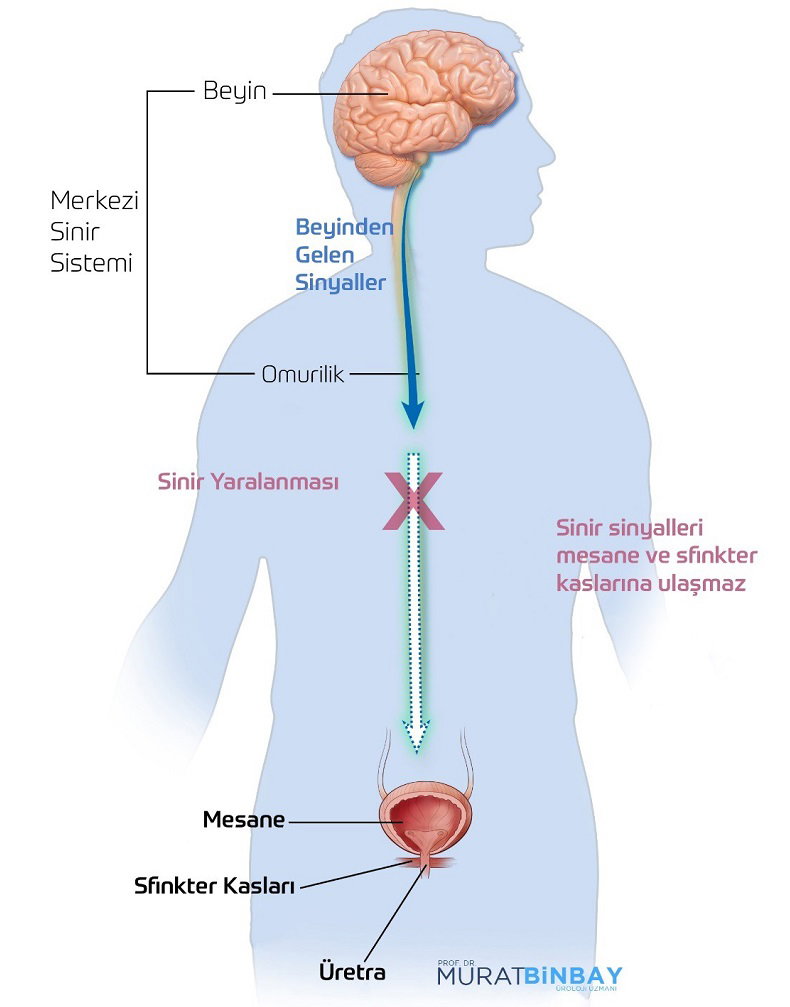
Neurogenic bladder arises when there is a problem not in the bladder itself but in the nerve network that governs it. Damage in the brain, the spinal cord or the peripheral nerves disrupts the delicate balance between the storage and the emptying of urine.
Patients generally present with the complaint of urinary incontinence or of being unable to urinate. However, in neurogenic bladder the real risk is not in the complaints the patient feels. When the bladder begins to work under high pressure, this pressure is reflected back to the kidneys through the urinary channels and can lead to kidney damage without giving any symptom. The first aim of treatment is therefore not to increase comfort but to protect the kidneys.
In modern urology practice this disease is now a manageable chronic condition. With correct evaluation and regular follow-up, the great majority of patients can protect their kidney functions for a lifetime and continue their social life in a normal manner.
How Does the Bladder Normally Work?
The bladder has two tasks and they are the opposite of each other: to store urine at low pressure and to empty it completely when desired.
During storage the bladder muscle (the detrusor) remains relaxed, while the sphincter muscles at the outlet remain closed. While urinating exactly the opposite happens: the detrusor contracts, the sphincter opens at the same moment. This coordination is governed together by the voiding centres in the spinal cord and the pons region in the brainstem.
The critical point here is the expression "low pressure". A healthy bladder keeps the pressure low by stretching its wall as it fills. When this elasticity (compliance) is lost, the pressure inside the bladder begins to be transmitted back from the ureters towards the kidneys.
Nerve damage can disrupt any point of this system, and where the damage is determines what picture will emerge.
Why Does Neurogenic Bladder Arise?
The causes are gathered in two groups as congenital and acquired.
Congenital causes:
- Spina bifida (myelomeningocele): The spine not closing completely in the early period of pregnancy. It is the most frequent cause of neurogenic bladder in childhood.
- Sacral agenesis: The lower spinal segments not developing.
- Cerebral palsy: A group of disorders affecting the motor areas of the brain.
- Tethered cord syndrome: The abnormal fixation of the lower end of the spinal cord.
Acquired causes:
- Spinal cord injuries: Traffic accidents, falls, sports injuries
- Multiple sclerosis (MS): In the great majority of MS patients a bladder complaint develops over the course of the disease
- Stroke (cerebrovascular event)
- Parkinson's disease and other neurodegenerative diseases
- Nerve damage due to diabetes (diabetic cystopathy): It develops insidiously in long-standing and uncontrolled diabetes
- Lumbar disc herniation, spinal stenosis, after spinal surgery
- Extensive pelvic surgeries: Damage to the pelvic nerves during rectal, uterine or bladder operations
- Central nervous system tumours
- Vitamin B12 deficiency, heavy metal exposure
The Site of the Nerve Damage Determines the Picture
The most practical way of understanding neurogenic bladder is to look at the level of the damage on the spinal cord. There are three basic patterns:
| Site of the damage | Typical causes | What happens in the bladder | Main complaint |
|---|---|---|---|
| Brain level (above the pons) |
Stroke, Parkinson's, dementia, MS | Detrusor overactive, but its coordination with the sphincter preserved | Urgency, frequent urination, urgency-type incontinence |
| Spinal cord level (between the pons and the sacrum) |
Spinal cord injury, MS, spinal tumour | Detrusor overactive and coordination with the sphincter disrupted (dyssynergia) | Incontinence + inability to empty completely; the group with the highest kidney risk |
| Sacral / peripheral level | Cauda equina, lumbar disc herniation, diabetes, pelvic surgery | The detrusor cannot contract | Inability to urinate, overflow-type incontinence, completely full bladder |
The middle row is especially important. In the condition we call detrusor-sphincter dyssynergia, while the bladder contracts the outlet valve also contracts at the same moment. That is, the bladder works against a closed door. This is the highest-pressure picture that can occur in the urinary system and, when untreated, can progress to kidney failure.
What Are the Symptoms of Neurogenic Bladder?
The symptoms vary according to the type of the damage and in most patients the two pictures are intertwined.
Symptoms due to storage problems:
- A sudden and non-postponable desire to urinate
- Frequent urination during the day (more than 8 times in 24 hours)
- Waking from sleep at night to urinate
- Urinary incontinence before reaching the toilet
Symptoms due to emptying problems:
- Difficulty in starting urination, the need to strain
- A thin and intermittent urine flow
- The feeling that the bladder is not emptying completely
- Being unable to urinate at all (retention)
- Incontinence in the form of continuous dribbling without being aware of it
Warning findings:
- Recurrent urinary tract infections. Most of the time this is the first sign of neurogenic bladder. In a person who has three or more urinary tract infections a year, especially one with a neurological disease, a bladder emptying problem must be investigated.
- Not feeling that the bladder is filling. When the nerve damage also affects sensation the patient does not receive a warning; this is the most risky picture in terms of silent high pressure.
- Autonomic dysreflexia. In patients with a spinal cord injury at the T6 level and above, a full bladder can lead to sudden and severe headache, flushing of the face, sweating and a rise in blood pressure. This is an emergency and requires immediate medical intervention.
The Real Risk: The Kidneys
In neurogenic bladder the priority of treatment is misunderstood. The patient wants to talk about urinary incontinence or using a catheter; what the physician is primarily concerned with is the pressure inside the bladder.
Why? Because when the bladder works constantly under high pressure the following chain operates:
- The pressure inside the bladder overcomes the one-way mechanism at the point where the ureters enter the bladder
- Urine leaks back towards the kidney (vesicoureteral reflux) or the flow from the kidney to the bladder is obstructed
- The kidney's collecting system dilates (hydronephrosis)
- The kidney tissue thins under pressure and loses function
The most dangerous aspect of this process is that it progresses silently. The patient has no pain, the colour of the urine does not change, most of the time no new complaint emerges at all. The picture may not be noticed until the kidney function deteriorates markedly.
In urodynamic examination this risk can be measured. Patients in whom it is determined that the bladder pressure exceeds a certain threshold or that the bladder elasticity is low are taken into the active treatment group even if their complaint is mild.
A high-pressure bladder that does not empty completely also prepares the ground for two further problems: the formation of bladder and kidney stones and chronic urinary tract infections. In patients with neurogenic bladder, stone development is markedly frequent both because of immobility and because the urine waits in the bladder for a long time. In these patients stone treatment is also planned differently from standard patients; the anatomical changes and the infection burden directly affect the choice of method. For detailed information you can look at our kidney stone treatment page.
How Is Neurogenic Bladder Diagnosed?
Rather than confirming the presence of a neurological disease, diagnosis aims to reveal how the bladder behaves and whether the kidneys are at risk.
History and examination
The type and duration of the neurological disease, current medicines, bowel habits and sexual function are questioned. Because the bowel and the bladder are supplied by the same nerves, a history of constipation is not coincidental; correcting the constipation alone can markedly reduce the bladder complaints.
Voiding diary
A chart in which the patient records the fluid taken, the amount of urine and the incontinence episodes over 2-3 days. It looks simple but it is one of the tools that gives the most information in treatment planning.
Post-void residual measurement
With ultrasound, the amount of urine remaining in the bladder after urinating is measured. A high residual is a direct indicator of an emptying problem and of infection risk.
Urodynamic examination
It is the test at the centre of the diagnosis of neurogenic bladder. While the bladder is filled in a controlled manner with a thin catheter, the pressure changes are recorded. This examination answers the following questions:
- Does the pressure rise as the bladder fills, is its elasticity preserved?
- Are there involuntary contractions (detrusor overactivity)?
- Does the sphincter open in coordination while urinating, or is there dyssynergia?
- Are pressure levels that threaten the kidneys being reached?
Even though the complaints resemble one another, the treatment is determined according to the result of this test. Neurogenic bladder treatment carried out without urodynamics is a treatment based on guesswork.
Upper urinary tract imaging
With kidney ultrasound, the presence of hydronephrosis and stones is evaluated. When the kidney function needs to be measured separately, scintigraphy is performed. In the blood test creatinine and GFR are followed up.
Cystoscopy
In patients who use a catheter long term, who have recurrent infections or in whose urine blood is seen, the inside of the bladder is examined directly. It is known that long-term indwelling catheter use increases the risk of bladder cancer; in this group regular evaluation is important. For detail about this examination you can look at our cystoscopy page.
Neurogenic Bladder Treatment
The treatment is stepwise and has two aims: to protect the kidneys and to bring the patient's social life as close to normal as possible. These two aims are most of the time compatible; when they conflict, the first has priority.
1. Bladder emptying management and clean intermittent catheterisation (CIC)
In patients who cannot empty their bladder completely this is the cornerstone of treatment, and most patients hesitate when they hear it. Yet CIC is a far safer and far more liberating method compared with an indwelling catheter.
The patient empties their bladder themselves, generally 4-6 times a day, with a thin and single-use catheter. The procedure takes a few minutes, is painless and is learned with a short training. Both a patient in adolescence and a patient of advanced age can apply it.
What they provide:
- Because the bladder empties regularly the pressure remains low, the kidneys are protected
- The chronic infection, stone and long-term cancer risk caused by an indwelling catheter disappears
- The patient does not carry a bag attached to their body; social life and sexuality are preserved
An indwelling catheter is preferred only in situations where CIC cannot be applied.
2. Drug treatment
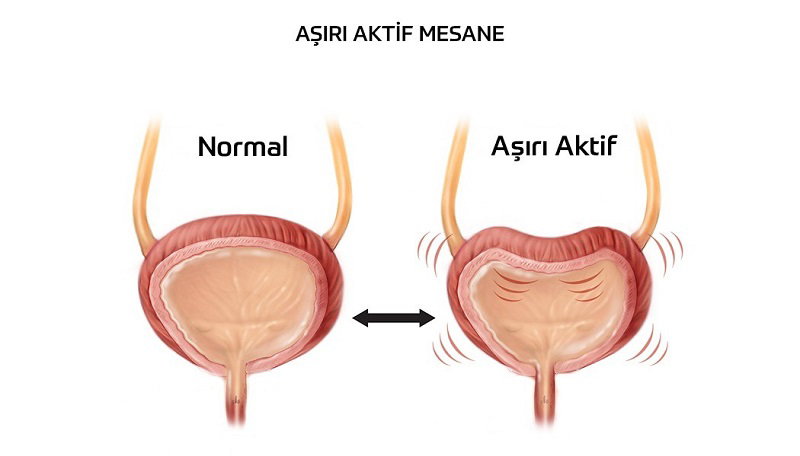
It is used to calm the overactive detrusor and to increase the storage capacity of the bladder.
- Antimuscarinic medicines reduce the involuntary contractions of the bladder muscle. Dry mouth and constipation are their most frequent side effects. At an advanced age careful selection is needed in terms of cognitive side effects.
- Beta-3 agonists relax the bladder muscle with a different mechanism; their side effect profile is generally better tolerated.
- Alpha blockers can make emptying easier by reducing the resistance at the bladder outlet.
In most patients drug treatment is carried out together with CIC: the drug lowers the pressure, CIC provides the emptying.
3. Intravesical botulinum toxin injection
It is a highly effective option in neurogenic detrusor overactivity in which a sufficient response to drug treatment cannot be obtained. Accompanied by cystoscopy, botulinum toxin is applied to the bladder wall from a large number of points. The procedure takes a short time and is generally done as a day case.
Its effect is not permanent; it needs to be repeated after 6-9 months on average. Because the emptying capacity of the bladder may decrease after the injection, the patient needs to be ready to perform CIC. For this reason catheterisation training is given to the patient before the procedure.
4. Neuromodulation, the "bladder pacemaker"
It is an option evaluated in patients who do not obtain sufficient benefit from drug and botox treatments but who are also not candidates for advanced surgery.
The logic of the method is different from the others. Instead of directly targeting the bladder or its muscle, continuous and low-intensity electrical stimulation is given to the sacral nerve roots that control the bladder. In this way an attempt is made to reorganise the disrupted communication between the brain and the bladder. Setting out from the analogy of the cardiac pacemaker, it is known among the public as the "bladder pacemaker".
An important advantage of the application is that it can be tried before making a permanent decision. First a temporary test period is applied; during this period the patient follows the change in their complaints with their own diary. If a meaningful benefit is seen, the permanent system is placed; if it is not seen, the procedure is terminated.
Sacral neuromodulation is a field requiring special experience in terms of patient selection and technical application. We direct our patients who want to evaluate this treatment to the assessment of my colleague Prof. Dr. Fatih Yanaral's sacral neuromodulation applications, with whom we work together in the same team and who has specialised in the field of functional urology and reconstructive urology.
5. Surgical treatments
If the bladder capacity has decreased to an advanced degree, it has lost its elasticity and the kidneys are at risk, surgery comes onto the agenda.
- Bladder augmentation (augmentation cystoplasty): A segment taken from the intestine is added to the bladder, increasing the capacity and lowering the pressure. It is an effective method in terms of protecting the kidneys. After the operation the great majority of patients continue with CIC and regular follow-up is needed in terms of bladder stones.
- Continent catheterisation channel (Mitrofanoff): In patients in whom catheter application through the urethra is not possible or who use a wheelchair, catheterisation is provided through a small channel opened onto the abdominal wall. It markedly increases the patient's independence.
- Interventions directed at the bladder outlet: In incontinence due to sphincter insufficiency, sling operations or an artificial urinary sphincter can be applied.
- Urinary diversion: In advanced cases in which the bladder cannot be preserved, the path of the urine is changed. It is the last-step option.
A portion of these operations can be performed with robotic surgery in suitable cases. The vision and the manoeuvring ability that the robotic approach provides in narrow and deep areas such as the pelvis offer an advantage in reconstructive procedures. For detail you can look at our robotic surgery page.
Why Is the Follow-Up After Treatment Lifelong?
Neurogenic bladder is treated but it does not "end". Because the underlying neurological disease continues, the behaviour of the bladder can change over the years. Even in a patient who has no complaint the bladder pressure can rise silently.
For this reason follow-up is done not according to the patient's complaint but according to the calendar:
- Kidney ultrasound: Generally once a year; more frequently in the risk group
- Kidney function tests: Follow-up of creatinine and GFR
- Post-void residual measurement: At the regular check-ups
- Urodynamics: When the picture changes, when a new complaint is added or at certain intervals
- Cystoscopy: In those using a catheter long term and when blood is seen in the urine
Patients who neglect their check-ups because they have no complaint are unfortunately the group in which loss of kidney function is seen most frequently.
Recommendations for Daily Life
- Do not restrict your fluid intake, distribute it. Drinking little water concentrates the urine; it increases the risk of infection and stones. Spread the intake throughout the day, reduce it in the evening hours.
- Take constipation seriously. A full bowel puts direct pressure on the bladder and markedly increases the complaints.
- Do not neglect the catheterisation times. Allowing the bladder to become excessively full is risky both in terms of pressure and of infection.
- Pay attention to skin care. Contact with urine disrupts the integrity of the skin; especially in patients with restricted mobility it prepares the ground for pressure sores.
- Distinguish the signs of infection. The growth of bacteria in a urine culture does not on its own require treatment. If there is fever, shivering, a marked change in the colour and smell of the urine or a sudden deterioration in the incontinence pattern, consult your physician. Unnecessary antibiotic use leads to the development of resistance.
Frequently Asked Questions
Does neurogenic bladder go away completely?
If the underlying nerve damage is permanent, the disease is permanent too. However this does not mean it is uncontrollable. With correct treatment and regular follow-up the kidney functions can be protected and the complaints can largely be managed. In reversible causes such as lumbar disc herniation, when the cause is eliminated the bladder function can partially or completely recover.
Do I have to use a catheter for life?
No. The method preferred today is not an indwelling catheter but clean intermittent catheterisation. The patient empties their own bladder a few times a day and carries nothing in between. An indwelling catheter is used only in situations where CIC cannot be applied.
Is it difficult to insert a catheter by myself?
This is the subject most patients worry about the most, but it is learned with a training of a few sessions. The procedure is painless and takes a few minutes. The great majority of our patients turn this into a routine task like brushing their teeth after a short time.
Does neurogenic bladder lead to kidney failure?
When it is not treated and follow-up is neglected, yes, this risk is real. A high-pressure bladder wears down the kidneys silently. In contrast, in patients who are followed up regularly the rate of preservation of kidney functions is high. The importance of follow-up comes exactly from this.
Can the bladder pacemaker be applied to everyone?
No. Sacral neuromodulation is effective in certain patient groups and suitability is determined according to the urodynamic findings and the type and level of the neurological damage. Applying a temporary test period before the permanent system is placed makes this evaluation concrete.
I have frequent urinary tract infections, could it be neurogenic bladder?
Recurrent infections are one of the most frequent signs that the bladder is not emptying completely. Especially if you have a neurological disease or if you have undergone an operation directed at the lumbar region, it would be appropriate for you to be evaluated with a post-void residual measurement.
Is pregnancy possible in neurogenic bladder?
It is possible, but urological follow-up is needed throughout the pregnancy. The growing uterus creates pressure on the bladder, the risk of infection increases and adaptation in the catheterisation regimen may be needed. It is recommended that patients planning a pregnancy be evaluated together with both the obstetrics and the urology team.
Clinical Note
This article was written and medically reviewed by Prof. Dr. Murat Binbay, a urologist with more than 25 years of experience and over 1,500 robotic operations. The assessments reflect current international guideline recommendations together with our own clinical practice.
The information here is for general guidance only. Because every patient's history, imaging findings and comorbidities differ, a treatment decision can only be made after an examination. You can reach us through our contact page, or read more about our physician on the about us page.
Sources
Last reviewed: 8 September 2026 · Reviewed by: Prof. Dr. Murat Binbay, Urology and Robotic Surgery Specialist
Let Prof. Dr. Murat Binbay's team review your case
If you read this far, you probably have questions. Fill in the two-minute digital consultation form and we will get back to you within 24 hours.
- Answer within 24 hours
- Your data stays confidential

Urology and Robotic Surgery Specialist · 25+ years of experience
Last medically reviewed:
 Önceki Yazı
What Is Ureteral Stricture?
Önceki Yazı
What Is Ureteral Stricture?
 Sonraki Yazı
What Is Retroperitoneal Fibrosis? Symptoms, Causes, and Treatment
Sonraki Yazı
What Is Retroperitoneal Fibrosis? Symptoms, Causes, and Treatment
Yorumlar
Yorum Yazın
Henüz yorum yapılmamış. İlk yorumu siz yapın!