After kidney stone treatment, many patients leave the hospital with a short note: “A double J stent has been placed and will be removed in a few weeks.” For most people this sentence raises several questions. What exactly is a stent, why is it needed, what does it feel like while it is in place, and when should you contact your doctor? In this article we answer the questions our patients ask most often about the double J stent, combining our clinical practice with current guideline recommendations in plain language.
What Is a Double J Stent?
A double J stent is a thin, flexible tube placed inside the ureter, the channel that carries urine from the kidney to the bladder. It is usually 24–28 cm long and about 2 mm in diameter. Its name comes from the curled shape at both ends: one end coils in the collecting system of the kidney and the other in the bladder, each forming a shape similar to the letter “J”, which keeps the stent from slipping out of position.
The job of the stent is simple: to make sure urine can flow from the kidney to the bladder. After stone treatment, the wall of the ureter may become temporarily swollen (oedema), small stone fragments may travel down the channel, or there may be a narrowing in the ureter. If urine flow is blocked in these situations, the kidney can swell (hydronephrosis), and severe pain and infection may follow. The stent keeps the channel open to reduce these risks.
The stent lies entirely inside the body; no part of it is visible from the outside. In some cases a thin string attached to the bladder end of the stent is left coming out through the urethra. This string allows the stent to be removed a few days later simply by pulling it, without any further procedure.
When Is a Stent Placed?
Not every stone treatment requires a stent. Current European Association of Urology (EAU) guidelines do not recommend routine stenting after uncomplicated ureteroscopy, because a stent can itself cause symptoms. The decision is made by the surgeon according to the findings during the procedure. The main situations in which a stent may be needed are:
- After ureteroscopy and RIRS: when the stone was large, the procedure was long, there is swelling or a small injury in the ureter wall, or stone fragments remain in the channel. You can read more about these procedures in our article on breaking up kidney stones with rigid ureteroscopy.
- After percutaneous nephrolithotomy (PNL): in patients without bleeding, the kidney can be drained with a double J stent instead of a tube coming out of the back (nephrostomy). Details are given in our article on kidney stone surgery.
- Obstruction and infection caused by a stone: when a stone in the ureter blocks the flow of urine and a feverish urinary tract infection develops, the priority is not to break the stone but to drain the kidney urgently. In this situation a stent (or nephrostomy) can be vital; stone treatment is planned once the infection has been brought under control.
- Ureteral stricture: in congenital or acquired narrowing, a stent may be used before or after treatment of the stricture to keep the channel open.
- Pregnancy and other special situations: stone-related obstruction during pregnancy, kidney transplantation, or compression of the ureter by certain tumours are other situations in which a stent is chosen as a temporary solution.
How Is a Stent Inserted and How Long Does It Stay?
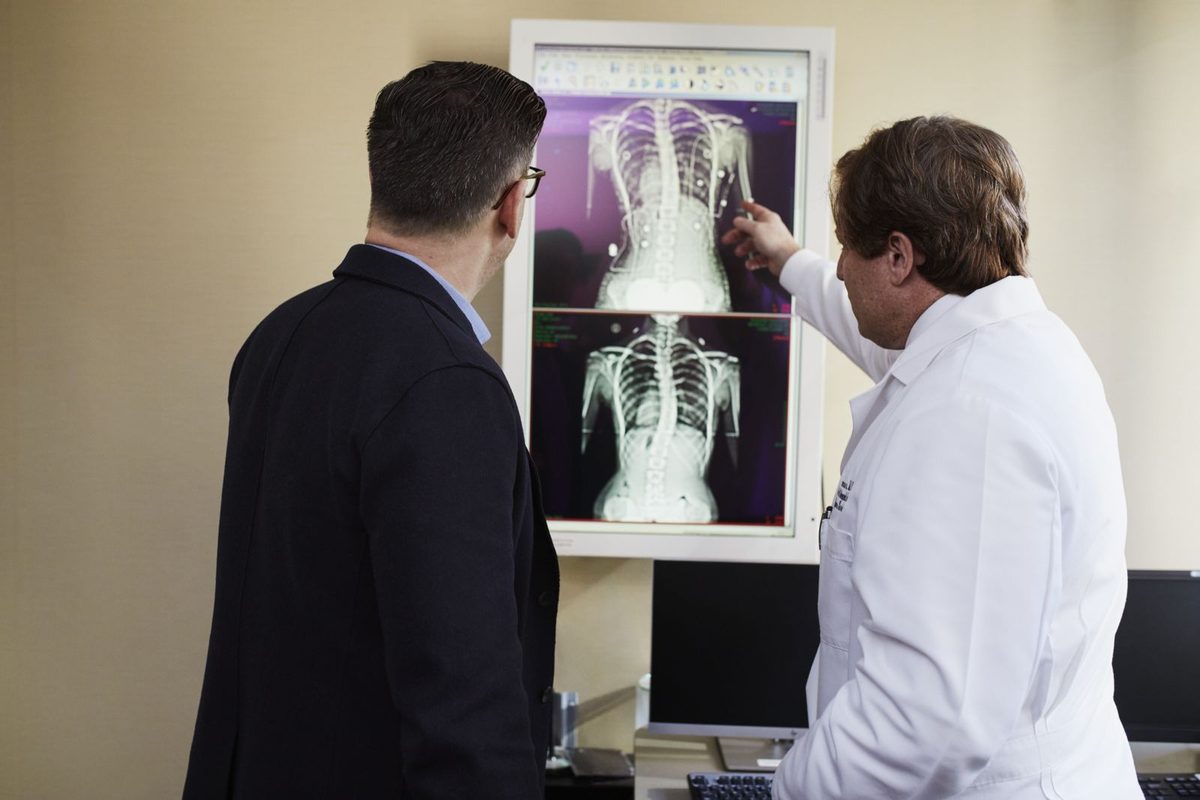
In most cases the stent is placed as the last step of stone treatment, under the same anaesthetic, by entering through the urethra; no skin incision is made. Correct positioning is checked with fluoroscopy (real-time X-ray). In urgent obstruction, a stent alone can be inserted under a short anaesthetic.
How long the stent stays in depends on why it was placed. After uncomplicated stone treatment, a few days to two or three weeks is often enough. After PNL, or when the ureter is swollen, this may be extended to four to six weeks. For long-term causes such as a stricture or external compression, the stent is replaced at regular intervals (usually every three to six months, depending on the type of stent used). Your doctor should tell you clearly at discharge how long your stent will remain.
Living With a Stent: Which Symptoms Are Normal?

A significant proportion of patients with a stent experience some symptoms. These are usually caused by the bladder end of the stent irritating the bladder wall, and by pressure in the bladder being transmitted up to the kidney along the stent during urination. Common symptoms that are usually considered normal include:
- Frequent urination and a sudden urge to pass urine,
- Burning or discomfort in the groin or bladder area during or at the end of urination,
- Brief pain in the flank on the side of the stent while passing urine,
- Pink or slightly red urine, especially after physical activity,
- In some patients, mild disturbance of sleep and daily activities.
The severity of these symptoms varies greatly from person to person; some patients barely notice the stent, while others feel more marked discomfort. Drinking plenty of fluids helps to lighten the colour of blood in the urine. If your doctor considers it necessary, medicines that relax the bladder muscle or the ureter (for example alpha-blockers) may be recommended; studies show that these medicines can reduce stent symptoms in some patients. However, every medicine has its own side effects, so the decision to use one should be made together with your doctor.
One point to keep in mind: blood in the urine is usually expected while a stent is in place, but bleeding that appears without a stent should always be investigated. We discuss this topic in detail in our article on blood in the urine.
Daily Life, Work, Sport and Sexual Activity
Most patients can return to their daily routine within a few days while the stent is in place. People with desk jobs can usually go back to work after a short time. Because heavy lifting, long drives and intense sport can increase symptoms, it is wise to take things gently in the first days. Light activity such as walking is encouraged.
Sexual activity is not forbidden because of a stent, although some patients may feel discomfort during or after intercourse. If a string has been left attached to the stent, care should be taken not to pull it accidentally. Patients who plan to travel should discuss the stent removal date with their doctor in light of their plans.
The period after stone treatment is also a good opportunity to review habits in order to prevent new stones. For advice on daily fluid intake and diet, see our article on measures to prevent kidney stones from forming again.
Which Symptoms Need Immediate Medical Attention?

Most stent-related symptoms are uncomfortable but harmless. Nevertheless, the following signs may indicate a problem and should be assessed without delay:
- A temperature of 38 °C or higher, shivering, or feeling generally unwell,
- Flank pain that is getting worse and is not relieved by painkillers,
- Dark red bleeding with clots that does not settle,
- Being unable to pass urine, or a marked fall in the amount of urine,
- The stent string coming out, or any suspicion that the stent has moved.
Fever in particular may be a sign of urinary tract infection or of the stent no longer working properly in a patient with a stent, and it requires urgent assessment.
How Is the Stent Removed?
A stent with a string is removed within a few seconds on the planned day, by the doctor or in the way the doctor has explained, by gently pulling the string. A stent without a string is removed with a short cystoscopy: a thin camera is passed through the urethra into the bladder, the bladder end of the stent is grasped and the stent is withdrawn. This is usually done under local anaesthesia and takes only a few minutes. You can find answers to common questions about this procedure in our article frequently asked questions about cystoscopy.
In the first hours after removal there may be brief flank pain; this is generally related to the ureter getting used to its own movement again and passes quickly. At the follow-up visit, imaging may be used if necessary to check whether any stone fragments remain in the kidney.
The Forgotten Stent: A Small Oversight, a Big Problem
Forgetting the removal date of a stent can have serious consequences. When a stent stays in the body for a long time, minerals from the urine build up on its surface (encrustation); the stent can become blocked, break, or turn into a source of infection. In that case it may no longer be possible to remove the stent with a simple cystoscopy, and additional operations may be required.
For this reason, in our clinic we give patients the removal date in writing at discharge and also track it in our own records. We also advise our patients to save the date as a reminder on their phones.
Frequently Asked Questions
Will I feel the stent?
Some patients feel nothing at all, while others have symptoms such as frequent urination and flank pain during urination. These symptoms disappear once the stent has been removed.
Can I have an MRI scan with a stent?
Most standard double J stents do not cause problems with MRI, but some special stents may contain metal. Always tell the imaging centre before the scan that you have a stent and what type it is.
Will stone fragments pass while the stent is in place?
Small stone fragments can pass around the stent into the bladder and be passed in the urine. The stent helps to prevent the channel from becoming blocked during this passage.
Does stent removal hurt?
Most patients feel brief discomfort during the procedure. Cystoscopy performed with a local anaesthetic gel is generally well tolerated.
Conclusion
The double J stent is a small but important device used to protect the kidney after kidney stone treatment or in stone-related obstruction. Whether a stent is needed, how long it stays and how it is removed are decided according to each patient's situation. The symptoms of living with a stent are usually temporary, but fever, increasing pain or being unable to pass urine require prompt attention. Most importantly, never forget the date your stent is due to come out. If you would like to know when stone treatment is necessary, our article when do kidney stones require surgery will be a helpful guide.
Clinical Note
This article was written and medically reviewed by Prof. Dr. Murat Binbay, a urologist with more than 25 years of experience and over 1,500 robotic operations. The assessments reflect current international guideline recommendations together with our own clinical practice.
The information here is for general guidance only. Because every patient's history, imaging findings and comorbidities differ, a treatment decision can only be made after an examination. You can reach us through our contact page, or read more about our physician on the about us page.
Sources
- Skolarikos A et al. EAU Guidelines on Urolithiasis. European Association of Urology, 2024 edition.
- Assimos D et al. Surgical Management of Stones: American Urological Association/Endourological Society Guideline, Part I. J Urol 2016;196:1153–1160.
- Ordonez M et al. Ureteral stent versus no ureteral stent for ureteroscopy in the management of renal and ureteral calculi. Cochrane Database Syst Rev 2019;2:CD012703.
- Joshi HB et al. Ureteral stent symptom questionnaire: development and validation of a multidimensional quality of life measure. J Urol 2003;169:1060–1064.
- Lamb AD et al. Meta-analysis showing the beneficial effect of α-blockers on ureteric stent discomfort. BJU Int 2011;108:1894–1902.
Last reviewed: 8 October 2026 · Reviewed by: Prof. Dr. Murat Binbay, Specialist in Urology and Robotic Surgery
Let Prof. Dr. Murat Binbay's team review your case
If you read this far, you probably have questions. Fill in the two-minute digital consultation form and we will get back to you within 24 hours.
- Answer within 24 hours
- Your data stays confidential

 Önceki Yazı
Who Is Single Port Robotic Surgery Suitable For and How Does It Differ From MultiPort?
Önceki Yazı
Who Is Single Port Robotic Surgery Suitable For and How Does It Differ From MultiPort?
 Sonraki Yazı
Bladder Cancer Stages: Why the Difference Between Muscle-Invasive and Non-Muscle-Invasive Tumours Matters
Sonraki Yazı
Bladder Cancer Stages: Why the Difference Between Muscle-Invasive and Non-Muscle-Invasive Tumours Matters
Yorumlar
Yorum Yazın
Henüz yorum yapılmamış. İlk yorumu siz yapın!