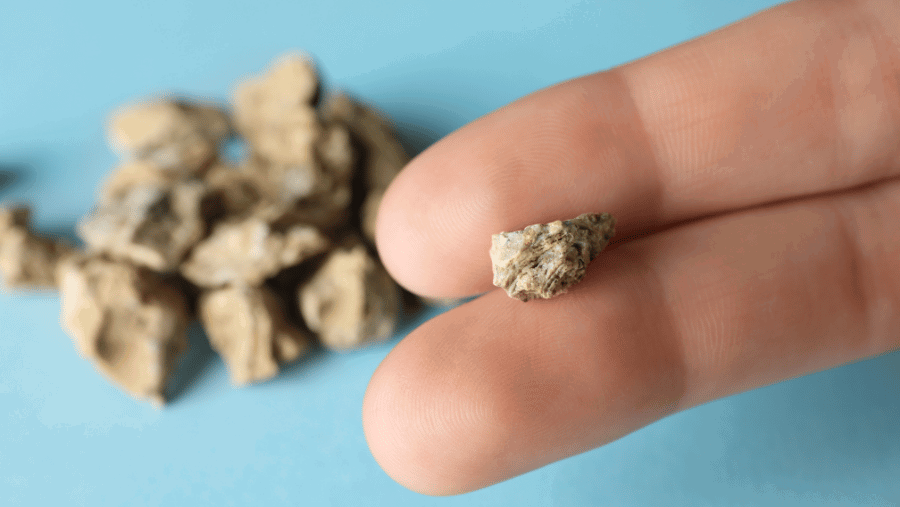
Kidney stones are hard masses formed by the crystallisation and combination of minerals that cannot dissolve in the urine. Once a stone has formed, the risk of recurrence is quite high, particularly if the necessary precautions are not taken.
Studies carried out show that in approximately 50% of people who have had a kidney stone, a stone develops again within 5 years. For this reason, as much as treatment, ensuring that the stone does not form again is also extremely important.
If you are wondering about the basic treatment methods relating to kidney stones, you can review our articles on our site entitled Breaking Up Kidney Stones: Answers to Frequently Asked Questions and Breaking Up Kidney Stones With Sound Waves (ESWL). In this article of ours we will focus on the steps that can be taken to prevent the recurrence of stone formation.
Why Do Kidney Stones Recur?
Genetic predisposition, inadequate fluid intake and eating habits play an important role in the formation of kidney stones. However, if these factors are not brought under control after treatment, the formation of the same stone again becomes unavoidable.
In some patients the reason for the recurrence of the stone is continuing imbalances in the chemical structure of the urine or metabolic disorders. For this reason, after the treatment process has been completed, an assessment aimed at the cause of the stone needs to be made with tests such as a 24-hour urine analysis.
The Importance of Water Consumption
The most common cause of kidney stone formation is not drinking enough water. When adequate fluid intake is not achieved during the day, urine density increases and crystals easily combine and form stones.
Specialists recommend that people with a history of kidney stones consume at least 2.5-3 litres of water a day.
- The colour of the urine should be pale yellow; dark-coloured urine indicates inadequate fluid intake.
- Water consumption must be increased in hot weather when there is increased sweating or during periods of exercise.
- Acidic, caffeinated and excessively sugary drinks must be avoided.
💡 For detailed information you can read our article entitled Foods That Kidney Stone Patients Should Stay Away From.
Establishing Balance in Nutrition
One of the most important factors triggering kidney stones is excessive consumption of salt and animal protein.
- Salt raises the risk of stones by increasing calcium excretion in the urine.
- Red meat, because it is rich in purine, can cause uric acid stones to form.
- The oxalate in green leafy vegetables (for example spinach, chard, beetroot) can support stone formation when consumed excessively.
For this reason:
- Keep daily salt consumption below 5 grams.
- Reduce animal protein and turn towards plant sources.
- Ensure adequate calcium intake - but do not use calcium supplements without a doctor's recommendation.
Urine Tests and Follow-Up
After surgery or stone breaking, regular laboratory tests must be carried out in order to determine the risk of the stone forming again.
- The 24-hour urine test, by measuring the levels of calcium, oxalate, uric acid and sodium in the body, shows which factors are increasing the risk of stones.
- Measurement of urine pH gives important clues in understanding the type of stone.
- If the calcium and parathyroid hormone level in the blood is high, this situation may indicate an underlying metabolic disorder.
These tests allow a personalised preventive treatment plan to be created according to the type of stone that may form in the future.
Follow-Up and Check-Ups After a Kidney Stone
Even after kidney stone treatment has been completed, patients need to be checked at specific intervals.
- The first check-up is generally after 3-6 months.
- Annual ultrasound or CT scans help to detect silent stone formations early.
- When necessary, procedures such as breaking up stones with sound waves (ESWL) can be applied again.
Prof. Dr. Murat Binbay emphasises that in kidney stone disease the risk of recurrence varies from person to person, and that for this reason every patient needs to be taken into a personalised follow-up programme.
In kidney stone disease, as much as treatment, preventing recurrence is also of critical importance for long-term success. Thanks to correct fluid intake, balanced nutrition and regular follow-up, the risk of a stone forming again can be seriously reduced.
Patients who have undergone stone treatment need to reshape their lifestyle in line with their doctors' recommendations.
Clinical Note
This article was written and medically reviewed by Prof. Dr. Murat Binbay, a urologist with more than 25 years of experience and over 1,500 robotic operations. The assessments reflect current international guideline recommendations together with our own clinical practice.
The information here is for general guidance only. Because every patient's history, imaging findings and comorbidities differ, a treatment decision can only be made after an examination. You can reach us through our contact page, or read more about our physician on the about us page.
Sources
Last reviewed: 8 September 2026 · Reviewed by: Prof. Dr. Murat Binbay, Urology and Robotic Surgery Specialist
Let Prof. Dr. Murat Binbay's team review your case
If you read this far, you probably have questions. Fill in the two-minute digital consultation form and we will get back to you within 24 hours.
- Answer within 24 hours
- Your data stays confidential

Urology and Robotic Surgery Specialist · 25+ years of experience
Last medically reviewed:
 Önceki Yazı
Fertility After Testicular Cancer and Sperm Preservation Methods
Önceki Yazı
Fertility After Testicular Cancer and Sperm Preservation Methods
 Sonraki Yazı
Active Surveillance in Prostate Cancer
Sonraki Yazı
Active Surveillance in Prostate Cancer
Yorumlar
Yorum Yazın
Henüz yorum yapılmamış. İlk yorumu siz yapın!