Testicular cancer is a rare cancer overall, but it is one of the most common solid tumours in young men aged 15 to 40. The good news is that testicular cancer, when noticed early, is among the cancers with the best treatment outcomes. The problem is that symptoms are often painless, and young men tend to put them off, thinking they will go away. In this article we describe the symptoms of testicular cancer, how to perform a self-examination, when you should see a urologist without delay and how the diagnostic process works.
Who Gets Testicular Cancer?

Most testicular cancers are “germ cell tumours” that develop from sperm-producing cells. These tumours are broadly divided into two main groups, seminoma and non-seminoma, and the treatment approach differs between them. The disease is most common between puberty and the age of 40, although it can occur outside this age range.
The main known risk factors are:
- A history of undescended testis (cryptorchidism): the risk is considered increased even if the testis was brought down surgically in childhood.
- Previous cancer in one testis: the likelihood of a tumour developing in the other testis is somewhat increased.
- A family history of testicular cancer: particularly testicular cancer in a father or brother increases the risk.
- Certain genetic conditions and infertility: conditions such as Klinefelter syndrome and some forms of infertility have also been linked to an increased risk.
Having risk factors does not mean that cancer will develop, and many patients have no risk factors at all. That is why recognising the symptoms matters for every young man, whether or not he has a risk factor.
Symptoms of Testicular Cancer
The most common symptom of testicular cancer is a painless lump or swelling in the testis. The lump is sometimes the size of a pea; at other times it appears as enlargement of the whole testis. Symptoms to watch for include:
- A hard lump or nodule in the testis, usually painless,
- Enlargement, swelling or a change in consistency of the testis (one testis feeling harder than the other),
- A feeling of heaviness in the scrotum,
- A dull ache in the groin or lower abdomen,
- A sudden collection of fluid in the scrotum,
- Less often, enlargement or tenderness of breast tissue (due to hormones secreted by some tumours),
- In advanced stages, back pain, cough or shortness of breath (due to spread).
Not every swelling in the testis is cancer. Epididymal cysts, hydrocele (fluid around the testis), varicocele (enlarged veins) and infections are much more common. If you would like to learn about varicocele, see our article what is varicocele: symptoms, treatment and surgery. However, it is not possible to tell these conditions apart without an examination and ultrasound, so every newly noticed swelling should be assessed by a specialist.
How to Perform a Testicular Self-Examination
A testicular self-examination is a simple way to get to know your own body and notice any unusual change early. There is no strong evidence that regular self-examination in men without symptoms saves lives, and guideline recommendations on this topic differ. Nevertheless, knowing what your testes normally feel like makes it easier to notice a change, especially for men with risk factors. The examination can be done once a month and takes only a few minutes:
- Choose the right moment: examine yourself after a warm shower or bath; the scrotal skin is relaxed, so the testes are easier to feel.
- Examine each testis separately: gently roll the testis between your thumb and fingers. A normal testis has a smooth surface, is egg-shaped and feels firm.
- Get to know the epididymis: at the back and top of the testis you will feel a soft, coiled structure. This is the epididymis, which is normal and should not be mistaken for a lump.
- Compare: it is normal for the two testes to be slightly different in size and for one to hang lower. What matters is a new change compared with what is normal for you.
- Make a note: if you notice a hard nodule, a change in size or consistency, or a feeling of heaviness, note the date and see a urologist within a few days.
When Should You See a Urologist?
Any newly noticed lump, swelling or change in consistency in the testis should be assessed, even if it is painless. The belief that “if it doesn't hurt, it isn't important” is the most common reason for delayed diagnosis of testicular cancer. If a swelling treated with antibiotics has not improved within two to three weeks, it must be re-evaluated with ultrasound.
Sudden, very severe testicular pain, on the other hand, may be a sign of a different condition: testicular torsion (twisting of the testis). Torsion is an emergency that requires intervention within hours; in this case go to the emergency department without waiting. For general information about which complaints should be seen by a urologist, see our article what is a urology specialist and what do they do.
How Is the Diagnosis Made?
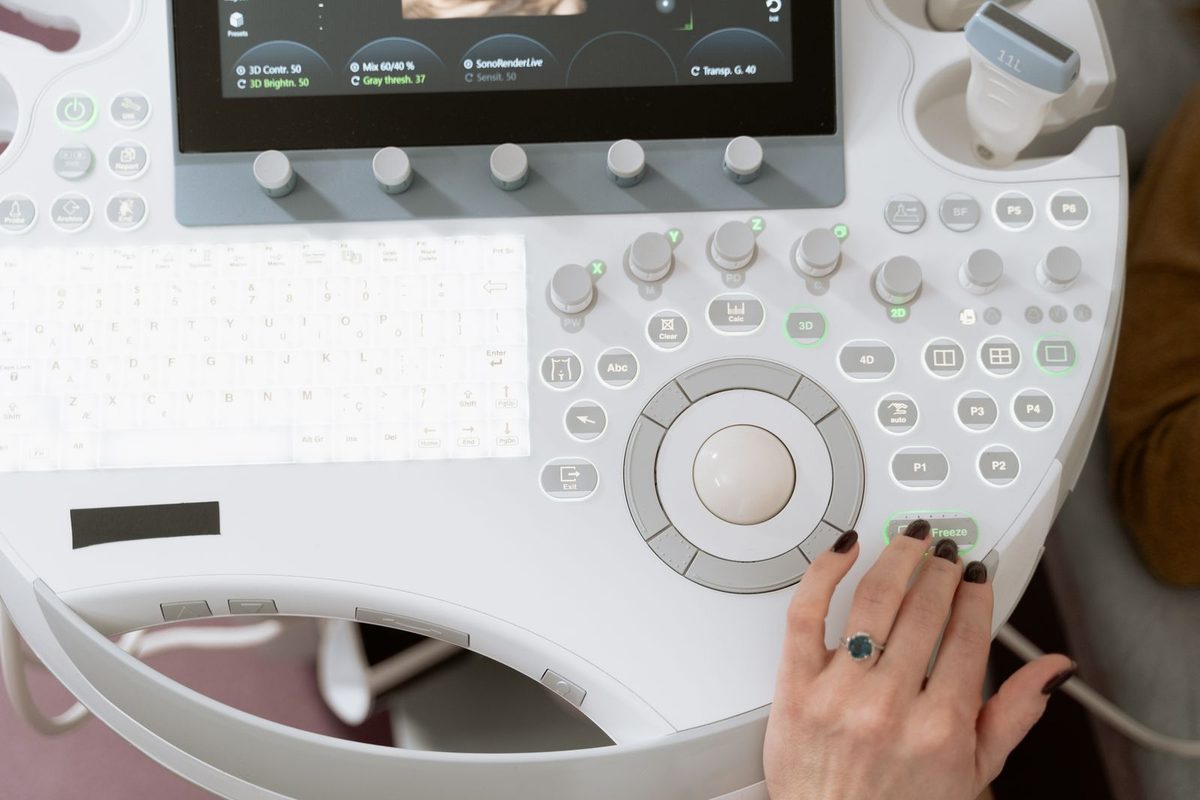
The first step in diagnosis is a physical examination, followed by a scrotal ultrasound. Ultrasound shows with high accuracy whether a swelling lies inside or outside the testis and whether it is solid or filled with fluid; a solid mass inside the testis is regarded as a tumour until proven otherwise.
Blood tumour markers — alpha-fetoprotein (AFP), beta-hCG and LDH — help with diagnosis, staging and follow-up after treatment. Normal markers do not rule out cancer, because some tumours do not raise them.
When testicular cancer is suspected, unlike many other cancers, a needle biopsy through the scrotum is not performed. The definitive diagnosis is made by removing the affected testis through an incision in the groin (radical inguinal orchiectomy), and this operation is also the first step of treatment. If desired, a testicular prosthesis can be placed for cosmetic reasons during the same operation or later. After surgery, CT scans of the abdomen, pelvis and chest are performed to see whether the disease has spread.
After Treatment: Follow-Up and Fertility
After orchiectomy, treatment is planned according to the tumour type, marker levels and stage. In a significant proportion of early-stage patients close surveillance alone is sufficient, while others may need chemotherapy, radiotherapy or removal of the lymph nodes at the back of the abdomen. For information on this operation, see our article on retroperitoneal lymph node dissection in testicular cancer.
With one remaining testicle, hormone production and fertility usually continue at an adequate level. However, because chemotherapy and radiotherapy can affect sperm production, patients who plan to have children should always be told about sperm banking before treatment begins. We cover this topic in detail in our article on fertility after testicular cancer and sperm preservation methods.
Frequently Asked Questions
I found a painless lump in my testis. Could it be cancer?
Most lumps in the testis are benign, but a painless hard mass is the most typical symptom of testicular cancer. The distinction is made by examination and ultrasound, so we recommend seeing a urologist within a few days.
Can a blow to the testis cause cancer?
Injury has not been shown to cause cancer. However, an existing lump is sometimes discovered by chance during an examination after an injury.
Can a varicocele or hydrocele turn into cancer?
No. These conditions do not turn into cancer, but because they can cause similar complaints, they need to be distinguished with ultrasound at the first assessment.
Can I return to normal life after testicular cancer treatment?
The great majority of patients return to normal life after treatment in terms of work, sport, sexual life and family planning. Regular follow-up visits are an important part of this process.
Conclusion
Testicular cancer is a disease of young men with high treatment success when noticed early. The most important symptom is a painless lump or swelling, and it should never be put off. Knowing your own body, seeing a urologist without delay when you notice a new change and completing the recommended tests are the way to reach the right treatment as quickly as possible.
Clinical Note
This article was written and medically reviewed by Prof. Dr. Murat Binbay, a urologist with more than 25 years of experience and over 1,500 robotic operations. The assessments reflect current international guideline recommendations together with our own clinical practice.
The information here is for general guidance only. Because every patient's history, imaging findings and comorbidities differ, a treatment decision can only be made after an examination. You can reach us through our contact page, or read more about our physician on the about us page.
Sources
- Patrikidou A et al. EAU Guidelines on Testicular Cancer. European Association of Urology, 2024 edition.
- Stephenson A et al. Diagnosis and Treatment of Early Stage Testicular Cancer: AUA Guideline. J Urol 2019;202:272–281.
- Cheng L et al. Testicular cancer. Nat Rev Dis Primers 2018;4:29.
- U.S. Preventive Services Task Force. Screening for testicular cancer: U.S. Preventive Services Task Force reaffirmation recommendation statement. Ann Intern Med 2011;154:483–486.
Last reviewed: 8 October 2026 · Reviewed by: Prof. Dr. Murat Binbay, Specialist in Urology and Robotic Surgery
Let Prof. Dr. Murat Binbay's team review your case
If you read this far, you probably have questions. Fill in the two-minute digital consultation form and we will get back to you within 24 hours.
- Answer within 24 hours
- Your data stays confidential

 Önceki Yazı
Bladder Cancer Stages: Why the Difference Between Muscle-Invasive and Non-Muscle-Invasive Tumours Matters
Önceki Yazı
Bladder Cancer Stages: Why the Difference Between Muscle-Invasive and Non-Muscle-Invasive Tumours Matters
 Sonraki Yazı
Active Surveillance, Focal Therapy and Surgery in Prostate Cancer: Which Path for Which Patient?
Sonraki Yazı
Active Surveillance, Focal Therapy and Surgery in Prostate Cancer: Which Path for Which Patient?
Yorumlar
Yorum Yazın
Henüz yorum yapılmamış. İlk yorumu siz yapın!