Varicocele is the widening of the veins surrounding the testicles and their acquiring a tortuous structure. This condition, which develops in a way similar to the varicose vein disease seen in the legs, is one of the most frequently encountered urological diseases in men. It is accepted as one of the most frequently detected correctable causes especially in investigations of not being able to have children (male infertility).
Varicocele may not give symptoms in every man. While in some people it is noticed only during a routine examination, in some patients it can lead to problems such as testicular pain, shrinkage of the testicle or deterioration in sperm quality. Today, thanks to microsurgical techniques, varicocele treatment can be applied with high success rates.
What Is Varicocele and Why Does It Occur?
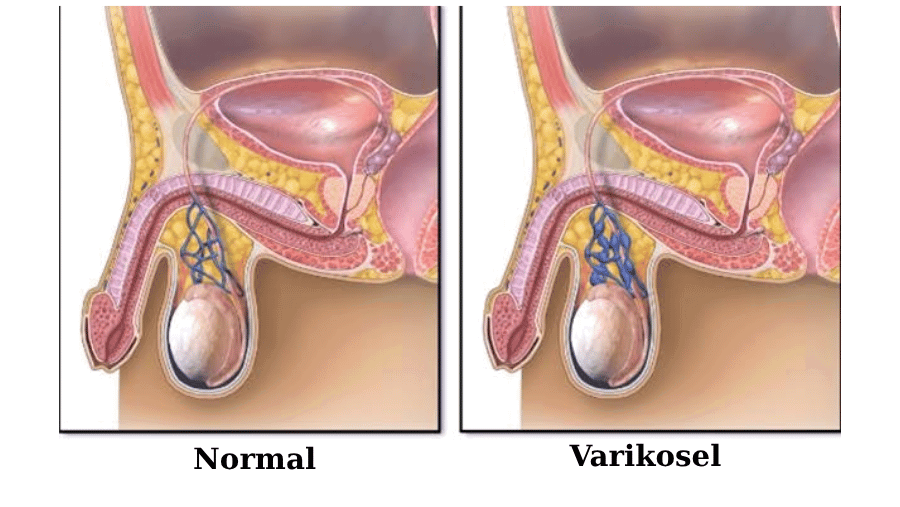
Varicocele occurs as a result of the widening of the veins (the pampiniform plexus) that carry the used blood from the testicle. Because the valves located in the veins do not work sufficiently, the blood leaks backwards and accumulates inside the vessel. This situation causes the vessels to widen and a varicose-like appearance to form around the testicle.
Approximately 85-90% of the cases are seen on the left side. The main reason for this is that the left testicular vein anatomically connects to the kidney vein at a different angle and the pressure inside the vessel is higher. More rarely it can be seen on the right side or in both testicles together.
The factors that may facilitate the development of varicocele are the following:
- The valves of the veins being congenitally insufficient
- Genetic predisposition
- Vessel widening during the adolescent period
- Conditions that cause the intra-abdominal pressure to increase
- Rarely, kidney or intra-abdominal masses
Varicocele Symptoms
Many men with varicocele may not have any complaint. When it does give symptoms, the most frequently seen complaints are the following:
- Dull or dragging pain in the testicle
- A feeling of discomfort that increases when standing for a long time
- Testicular pain that increases at the end of the day
- The vessels becoming prominent in the scrotum
- A "bag of worms" appearance
- Shrinkage of the testicles (atrophy)
- Sperm disorder in the examinations carried out because of infertility
While the pain generally decreases when resting, standing for a long time, heavy exercise and hot environments can increase the complaints.
How Is Varicocele Diagnosed?
The physical examination carried out by an experienced urology specialist forms the basis of the diagnosis. The examination is done both lying down and standing. When necessary the patient is asked to perform the Valsalva manoeuvre (straining).
To support the diagnosis and to determine the degree of the disease, the following methods are made use of:
- Urological physical examination
- Colour Doppler ultrasonography
- Semen (sperm) analysis
- Hormone tests when necessary
- Evaluation of the testicular volume
Ultrasound is quite valuable in showing the vessel diameter and the backward blood flow called reflux. In men who cannot have children, sperm analysis holds an important place in treatment planning.
Varicocele Treatment and Surgery
Not every varicocele requires surgery. The treatment decision is made according to the patient's age, their complaints, the sperm analysis results, the testicular volume and their plan to have children.
Treatment can generally be recommended in the following situations:
- Infertility and impaired sperm parameters
- Chronic testicular pain due to varicocele
- The development of shrinkage in the testicle
- The testicular development being affected in adolescents
In many patients who do not give symptoms and whose sperm values are normal, only regular follow-up may be sufficient.
Microsurgical Varicocelectomy
Microsurgical varicocelectomy is the surgical method accepted today as the gold standard in varicocele treatment. During the operation, while the widened veins are tied off using a surgical microscope, the arteries and the lymph vessels that feed the testicle are preserved.
The vessels being able to be seen more clearly thanks to microscopic magnification;
- Can reduce the recurrence rate.
- Can lower the risk of hydrocele developing.
- Helps in the preservation of the testicular vessels.
- Can provide more successful sperm improvement.
Embolisation
One of the methods alternative to surgery in varicocele treatment is embolisation. By entering through the groin or neck vein, an interventional radiology specialist places special coils or sclerosing substances inside the widened vessel.
Not every patient is suitable for embolisation. The appropriate method is determined by evaluating the anatomical structure, previously undergone operations and the vessel structure.
How Is Varicocele Surgery Performed?
The operation is mostly applied under general or spinal anaesthesia. A small incision of approximately 2-3 cm is made in the groin region. While the widened veins are tied off one by one with the help of a microscope, the vessels feeding the testicle are preserved.
The operation generally takes 45-90 minutes. The great majority of patients can be discharged the same day or the next day.
Post-operative recommendations:
- Resting in the first days
- Avoiding heavy exercise for a few weeks
- Using scrotal support
- Not neglecting the follow-up examinations
Because the sperm production cycle takes approximately 72-90 days, the improvements in the sperm analysis are mostly evaluated within 3-6 months after the operation.
The Benefits of Varicocele Surgery
Varicocele surgery performed in the appropriate patient group can provide benefit in many respects.
- An increase in the sperm count
- Improvement in sperm motility
- A decrease in sperm DNA damage
- Preservation of the testicular functions
- Improvement in testicular pain
- An increase in the chance of natural pregnancy
- A contribution to the success of assisted reproductive treatments
However the same level of improvement is not expected in every patient. The results can vary according to age, the degree of the varicocele and the initial sperm quality.
The Possible Risks and Complications of Varicocele Surgery
As in every surgical procedure, some complications can be seen after varicocelectomy as well.
- Bleeding
- Infection
- The development of hydrocele
- Recurrence of the varicocele
- Temporary pain
- Rarely, damage to the testicular vessel
When the microsurgical technique is used, the frequency of these complications is lower compared with the classic methods.
Frequently Asked Questions About Varicocele
Does varicocele go away on its own?
No. A varicocele that has formed does not correct itself. However cases that do not give symptoms can be followed up for many years.
Does varicocele cause infertility?
Not every varicocele creates infertility. However it is one of the most frequent correctable causes of male infertility.
Does varicocele surgery increase sperm quality?
In suitable patients a meaningful improvement can be seen in the sperm count, motility and quality parameters. The evaluation is generally carried out within 3-6 months after the operation.
Can one have children after varicocele surgery?
In many patients the possibility of natural pregnancy can increase. However the success of pregnancy is also affected by the woman's age, the sperm quality and other causes of infertility.
Does varicocele surgery relieve the pain?
In a significant proportion of suitable patients who have pain due to varicocele, the pain can decrease markedly after the operation.
Does varicocele recur?
In operations performed with the microsurgical method the recurrence rate is quite low. Nevertheless, in no surgical method is the risk of recurrence completely zero.
When can one return to normal life after the operation?
The great majority of patients can return to their daily life within a few days. For heavy physical activities and intense sport it is generally recommended to wait 2-4 weeks.
Clinical Note
This article was written and medically reviewed by Prof. Dr. Murat Binbay, a urologist with more than 25 years of experience and over 1,500 robotic operations. The assessments reflect current international guideline recommendations together with our own clinical practice.
The information here is for general guidance only. Because every patient's history, imaging findings and comorbidities differ, a treatment decision can only be made after an examination. You can reach us through our contact page, or read more about our physician on the about us page.
Sources
- European Association of Urology — Sexual and Reproductive Health Guidelines
- NIDDK (NIH) — Erectile Dysfunction
Last reviewed: 8 September 2026 · Reviewed by: Prof. Dr. Murat Binbay, Urology and Robotic Surgery Specialist
Let Prof. Dr. Murat Binbay's team review your case
If you read this far, you probably have questions. Fill in the two-minute digital consultation form and we will get back to you within 24 hours.
- Answer within 24 hours
- Your data stays confidential

Urology and Robotic Surgery Specialist · 25+ years of experience
Last medically reviewed:
 Önceki Yazı
Robotic Surgery Operation Prices
Önceki Yazı
Robotic Surgery Operation Prices
 Sonraki Yazı
What Is Urinary Incontinence? Its Causes, Types and Treatment
Sonraki Yazı
What Is Urinary Incontinence? Its Causes, Types and Treatment
Yorumlar
Yorum Yazın
Henüz yorum yapılmamış. İlk yorumu siz yapın!