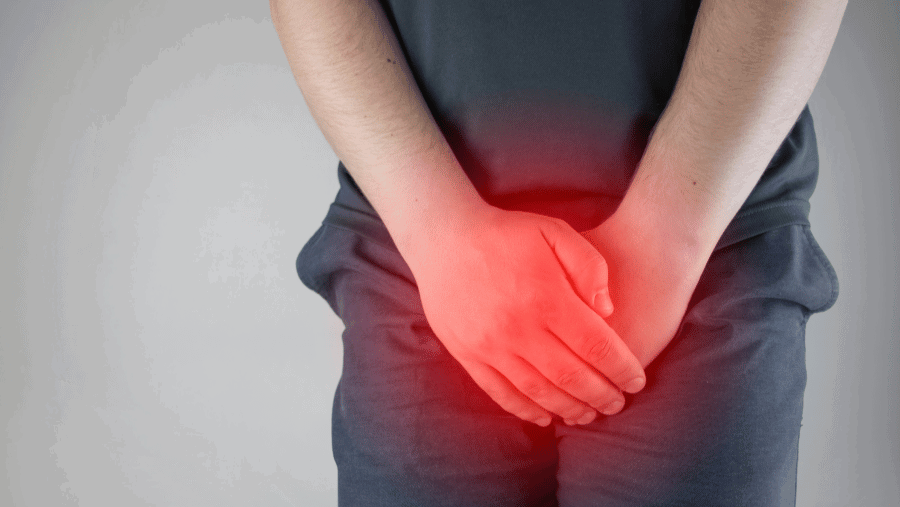
Urinary incontinence is the condition in which a person experiences leakage of urine outside their control. It can be seen at different severities, from a leak of a few drops to the marked loss of control of the bladder. Although it is encountered more frequently in women, it can also arise in men especially because of prostate diseases, prostate operations, changes developing with age and some neurological diseases.
Urinary incontinence should not be accepted as an unavoidable result of ageing. Because incontinence is not a single disease; it has different types and different treatment options according to the underlying cause. While lifestyle changes and pelvic floor exercises may be sufficient in some patients, in some patients drug treatment, interventional methods or surgery may be needed.
If there are complaints such as urinary incontinence especially while coughing or laughing, suddenly being unable to reach the toilet in time, frequent urination at night, urinary incontinence after prostate surgery or the need to constantly use pads, determining which type of incontinence the problem originates from is the first step of treatment.
What Is Urinary Incontinence?
Under normal conditions the urine produced in the kidneys is stored in the bladder. As the bladder fills, the bladder muscle needs to be relaxed and the sphincters controlling the urinary channel and the pelvic floor structures need to be functional. When the appropriate time to urinate comes, the bladder contracts, the structures controlling the urine outlet relax and the urine is emptied.
A functional disorder in any part of this system can affect urinary control. Involuntary contraction of the bladder, insufficiency of the sphincter mechanism, weakening of the pelvic floor muscles, disorders in the nervous system or some diseases in the urinary tract can cause incontinence.
Why Does Urinary Incontinence Occur?
The cause of urinary incontinence can differ in women and men. In some situations more than one factor can be effective at the same time.
The main conditions that may be associated with incontinence are the following:
- Weakening of the pelvic floor muscles
- Pregnancy and birth
- Changes related to menopause
- Prostate operations
- Benign prostate enlargement and the bladder changes related to it
- Overactive bladder
- Urinary tract infections
- Urinary system diseases such as bladder stones
- Neurological problems such as Parkinson's disease, multiple sclerosis, spinal cord diseases or stroke
- Diabetes
- Chronic constipation
- Obesity
- Some medicines that can affect bladder function
Some habits such as excessive caffeine or alcohol consumption can also increase especially the complaints of urgency and frequent urination. For this reason the evaluation must focus not only on the bladder but also on the patient's general health status and daily habits.
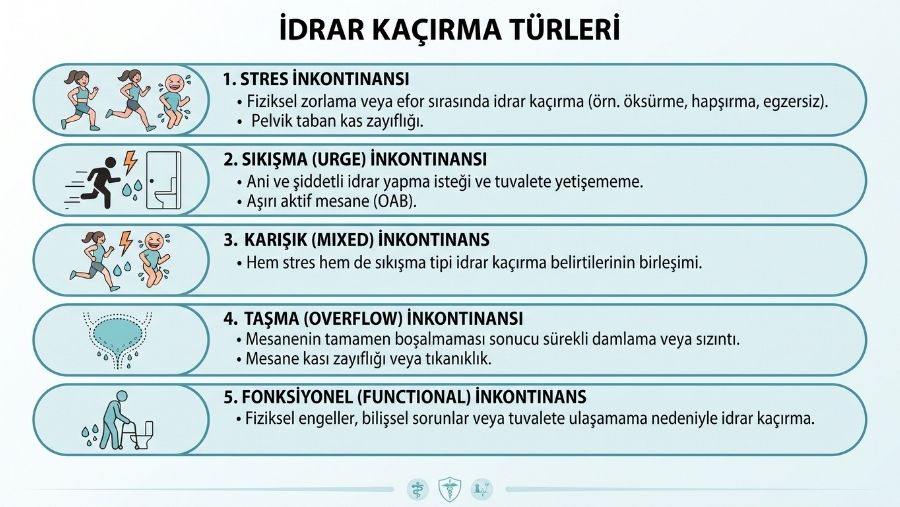
What Are the Types of Urinary Incontinence?
The correct classification of urinary incontinence is important because the treatment of every type of incontinence is not the same.
Stress-Type Urinary Incontinence: It is the leakage of urine in situations that increase intra-abdominal pressure such as coughing, sneezing, laughing, running, exercising or lifting heavy weights. Especially in women it can be associated with birth and pelvic floor weakness. In men it can be seen after prostate surgeries.
Urgency-Type Urinary Incontinence: It is the person feeling a sudden and strong need to urinate and leaking urine before reaching the toilet. It can be seen together with an overactive bladder. Patients frequently complain of going to the toilet very often during the day and of not being able to postpone urination.
Mixed-Type Urinary Incontinence: It is the presence of stress-type and urgency-type incontinence together. For example the patient may both leak urine when they cough and be unable to reach the toilet during a sudden urgency.
Overflow-Type Urinary Incontinence: It is the leakage of urine drop by drop as a result of the bladder not being able to empty sufficiently and becoming excessively full. In men it can be seen for reasons such as bladder outlet obstruction due to advanced-degree prostate enlargement or the bladder muscle not being able to contract sufficiently.
Functional Urinary Incontinence: It arises as a result of the person not being able to reach the toilet in time because of restricted mobility, cognitive problems or environmental reasons, although the bladder function is largely normal.
Why Is Urinary Incontinence Seen More Frequently in Women?
In women pregnancy, vaginal birth, changes in the pelvic floor muscles, menopause and ageing can play a role in the development of incontinence. Especially stress-type incontinence, which arises during coughing, sneezing and exercise, is seen frequently in women.
The causes and symptoms of incontinence in women and the treatment options specific to women should be evaluated separately under the heading urinary incontinence in women.
Why Does Urinary Incontinence Occur in Men?
In men incontinence can be associated with prostate diseases, prostate surgery, overactive bladder, neurological diseases or problems affecting the emptying of the bladder.
Especially after radical prostatectomy carried out because of prostate cancer, it is possible for the urinary control mechanism to be affected temporarily or for a longer period. While the control improves over time in a significant proportion of patients, the recovery period can vary from person to person.
Why Does Urinary Incontinence Occur After Prostate Surgery?
Urinary incontinence after prostate surgery is one of the subjects patients wonder about the most, especially after radical prostatectomy applied because of prostate cancer. After the removal of the prostate, the sphincter that provides urinary continence and the anatomical structures around it need to adapt to the new situation.
Urinary incontinence after prostate surgery can be more marked in the first periods. It can be seen at different levels, from leaking a few drops of urine during coughing, standing up, walking or physical activity to more marked incontinence.
The recovery period can vary according to the patient's age, the urinary control before the operation, the sphincter function, the surgical technique, the preservation of the nerves and the surrounding tissues and the patient's rehabilitation process.
How Is Urinary Incontinence After Prostate Surgery Prevented?
There is no single answer applicable to everyone to the question how is urinary incontinence after prostate surgery prevented? The preservation of the anatomical structures as far as possible during surgery, appropriate patient selection and post-operative rehabilitation are important.
Learning the pelvic floor muscles correctly before the operation and working them after the operation at the time deemed appropriate by the physician can contribute to regaining continence.
Urinary Incontinence Exercises After Prostate Surgery
When urinary incontinence exercises after prostate surgery are mentioned, pelvic floor or Kegel exercises primarily come to mind. In these exercises the aim is to work correctly the pelvic floor muscles that contribute to urinary control.
However more exercise does not always mean a better result. Working the wrong muscles or exercising more than necessary can lead to fatigue in the pelvic floor. For this reason, especially after prostate surgery, it can be useful for the exercise programme to be arranged with the recommendation of a physician or a physiotherapist experienced in the pelvic floor.
Does Urinary Incontinence Occur After Cystoscopy?
Urinary incontinence after cystoscopy is one of the situations some patients worry about. After cystoscopy, short-term frequent urination, burning while urinating or a sudden feeling of urgency can be seen. These complaints can be accompanied by a temporary feeling of leakage in some people.
However permanent urinary incontinence is not an expected result of simple diagnostic cystoscopy. If there is marked urinary incontinence newly starting or continuing after the procedure, fever, severe pain, inability to urinate or marked bleeding, a urology specialist should be consulted.
Are Night-Time Urinary Incontinence and Frequent Urination at Night the Same Thing?
No. Night-time urinary incontinence and nocturia are different concepts from one another. Nocturia is the person waking from their night sleep one or more times for the purpose of urinating. In night-time urinary incontinence the person may experience an involuntary loss of urine while asleep.
Getting up at night to go to the toilet can have many causes, from age-related changes to prostate enlargement, from overactive bladder to excessive urine production at night. The causes of this situation should be evaluated separately within the scope of frequent urination at night and nocturia.
How Is Urinary Incontinence Diagnosed?
The diagnosis should not be made only on the basis of the complaint "I am leaking urine". First of all, under which conditions the leakage occurs and the underlying cause are investigated.
The following methods can be made use of in the evaluation:
- Detailed patient history
- Physical and urological examination
- Urine test
- Voiding diary
- Pad test
- Measurement of the amount of urine remaining in the bladder after voiding
- Uroflowmetry
- Ultrasonography
- Urodynamic examination in patients where necessary
- Cystoscopy in certain situations
The voiding diary in particular is quite useful. The patient recording over a few days how much fluid they consume, when they urinate, at which hours the leakage occurs and which situations trigger the leakage can help in understanding the type of incontinence.
How Is Urinary Incontinence Treated?
Urinary incontinence treatment is planned according to the patient's sex, the type and severity of the incontinence and the underlying cause. For this reason applying the same treatment to every patient is not correct.
Lifestyle Arrangements
Losing excess weight, controlling constipation, reducing excessive caffeine and alcohol consumption and distributing fluid consumption in a balanced way throughout the day can help reduce the complaints in some patients.
Restricting fluid consumption excessively, however, is not correct. Insufficient fluid consumption can cause the urine to become concentrated and bladder irritation to increase.
Bladder Training
Especially in urgency-type incontinence, with planned toilet intervals and techniques directed at controlling the feeling of urgency, the bladder can be helped to store urine for a longer time.
Pelvic Floor Exercises
Pelvic floor exercises, also known as Kegel, aim at the strengthening of the muscles that contribute to urinary control and the development of their coordination. They can be one of the important components of rehabilitation in stress-type incontinence in women and after prostate surgery in men.
Drug Treatments
In patients with urgency-type urinary incontinence and overactive bladder, medicines directed at reducing the involuntary contractions of the bladder can be made use of. The medicine to be used is determined by taking into consideration the patient's age, their other diseases, the medicines they use and the side effect profile.
Botulinum Toxin Application to the Bladder
In selected overactive bladder patients who do not respond sufficiently to drug treatment, a botulinum toxin injection can be applied to the bladder muscle. The aim is the reduction of the involuntary bladder contractions. The procedure is not suitable for every patient and the urination function needs to be evaluated before the treatment.
Urinary Incontinence Operations
Surgical treatment can come onto the agenda especially in patients whose stress-type incontinence is marked and who do not obtain sufficient benefit from conservative methods.
In women, methods such as sling operations can be applied in suitable patients. In men, especially in permanent urinary incontinence after prostate surgery, male slings or an artificial urinary sphincter can be evaluated according to the degree of the incontinence.
What Is an Artificial Urinary Sphincter?
The artificial urinary sphincter is one of the systems that can be used in the surgical treatment of moderate-to-advanced-degree permanent stress-type urinary incontinence developing especially after prostate surgery. The cuff placed around the urethra helps prevent urine from leaking involuntarily. When the patient wants to urinate, they temporarily open the cuff by using the control mechanism of the system.
An artificial sphincter is not applied to every patient. The severity of the urinary incontinence, the sphincter function, previously applied radiotherapy and surgeries and the patient's ability to use the device are evaluated together.
When Should Urinary Incontinence Be Taken Seriously?
Even if the amount of urinary incontinence is small, if it is recurring it is useful for it to be evaluated. It is necessary to consult a urology specialist especially in the following situations:
- If the urinary incontinence has newly started
- If the complaint is gradually increasing
- If blood is seen in the urine
- If there is burning, fever or a recurrent urinary tract infection
- If there is difficulty in urinating or a feeling of not being able to empty the bladder
- If the expected improvement in urinary control after prostate surgery is not occurring
- If the urinary incontinence is affecting daily life, social life or sleep
Hiding urinary incontinence or trying to manage it only by using pads can cause a delay in the diagnosis of the underlying problem. Determining the type of the incontinence makes it easier to find the treatment option suitable for the person.
Frequently Asked Questions About Urinary Incontinence
Is urinary incontinence a normal result of ageing?
No. As age advances the risk of incontinence can increase, but urinary incontinence is not an unavoidable result of ageing. Treatable causes need to be investigated.
Does urinary incontinence go away completely?
This depends on the cause and type of the incontinence. While in some patients marked improvement can be provided with lifestyle arrangements, exercise or drug treatment, in some patients surgical treatment may be needed.
Why does one leak urine when coughing?
During coughing the intra-abdominal pressure increases. If the urine-holding mechanism cannot create sufficient resistance against this pressure, urine leakage can occur. This situation is one of the typical characteristics of stress-type urinary incontinence.
How long does urinary incontinence after prostate surgery last?
The recovery period varies from patient to patient. After radical prostatectomy leakage can be seen in the first weeks and months and in many patients it gradually decreases over time. Continuing or severe incontinence needs to be evaluated urologically.
When are urinary incontinence exercises after prostate surgery started?
The timing of pelvic floor exercises should be determined according to the operation performed and the patient's condition. In some patients it can be useful for the muscles to be learned before the operation. After the operation, the surgeon's recommendation about when to start exercising should be followed.
Is urinary incontinence after cystoscopy normal?
After cystoscopy short-term urgency, frequent urination and burning can be seen. Permanent urinary incontinence is not an expected result of routine diagnostic cystoscopy. If the complaint continues, urological evaluation should be carried out.
Which doctor does one go to for urinary incontinence?
Women and men with a complaint of urinary incontinence can consult a urology specialist. In women, if there are pelvic floor disorders and accompanying gynaecological problems, evaluation together with different branches may be needed.
Is it correct to reduce drinking water to prevent urinary incontinence?
Generally excessive fluid restriction is not correct. Instead, the total fluid consumption, the distribution of the fluid throughout the day and drinks such as caffeine that can increase bladder complaints should be evaluated.
Is an operation essential in urinary incontinence?
No. The treatment is determined according to the type and severity of the incontinence. Pelvic floor rehabilitation, bladder training, lifestyle arrangements and medicines can be evaluated before surgery in many patients. Surgery comes onto the agenda in suitable patients and when it is necessary.
Can permanent urinary incontinence in men be treated?
Yes. Especially in stress-type urinary incontinence continuing after prostate surgery, different treatment options such as rehabilitation, male sling operations or an artificial urinary sphincter can be evaluated according to the patient's condition.
Clinical Note
This article was written and medically reviewed by Prof. Dr. Murat Binbay, a urologist with more than 25 years of experience and over 1,500 robotic operations. The assessments reflect current international guideline recommendations together with our own clinical practice.
The information here is for general guidance only. Because every patient's history, imaging findings and comorbidities differ, a treatment decision can only be made after an examination. You can reach us through our contact page, or read more about our physician on the about us page.
Sources
- European Association of Urology — Urinary Incontinence Guidelines
- NIDDK (NIH) — Bladder Control Problems
Last reviewed: 8 September 2026 · Reviewed by: Prof. Dr. Murat Binbay, Urology and Robotic Surgery Specialist
Let Prof. Dr. Murat Binbay's team review your case
If you read this far, you probably have questions. Fill in the two-minute digital consultation form and we will get back to you within 24 hours.
- Answer within 24 hours
- Your data stays confidential

Urology and Robotic Surgery Specialist · 25+ years of experience
Last medically reviewed:
 Önceki Yazı
What Is Varicocele? Its Symptoms, Treatment and Varicocele Surgery
Önceki Yazı
What Is Varicocele? Its Symptoms, Treatment and Varicocele Surgery
 Sonraki Yazı
What Is Ureteral Stricture?
Sonraki Yazı
What Is Ureteral Stricture?
Yorumlar
Yorum Yazın
Henüz yorum yapılmamış. İlk yorumu siz yapın!