A hydrocele is a usually painless, benign swelling in the scrotum caused by fluid collecting between the thin layers that surround the testicle. It can appear on one or both sides, feels soft like a water balloon and in adults rarely goes away on its own. Treatment is not always needed; if the swelling is uncomfortable, keeps growing or is linked to another problem, it can be corrected with a straightforward operation.
The first question most men ask when they notice a swelling in the scrotum is whether it could be cancer. A hydrocele itself is not cancer and does not turn into cancer. In adults, however, fluid can also build up next to an infection or a tumour of the testicle, so the cause of the swelling should be confirmed with an ultrasound scan. November, the month dedicated to men's health awareness, is a good time to have this kind of postponed swelling checked.
Why does a hydrocele form?
As the testicle descends from the abdomen into the scrotum before birth, it leaves behind a channel made of the lining of the abdominal cavity. How a hydrocele develops depends on whether this channel closes and on the balance of fluid around the testicle. That is why the causes differ between babies and adults.
In babies and children
Hydroceles are common in newborns. If the channel does not close after the testicle descends, fluid from the abdomen passes down into the scrotum and causes swelling. MedlinePlus, the patient encyclopaedia of the US National Library of Medicine, notes that most hydroceles in babies disappear within a few months of birth (MedlinePlus, hydrocele). A swelling that grows and shrinks during the day suggests that the channel is still open and that an inguinal hernia may also be present.
In adults
In adult men a hydrocele usually develops because the normal fluid around the testicle is produced in excess or is not absorbed well, and it becomes more common with age. Sometimes there is an identifiable cause: inflammation of the epididymis or testicle, an injury to the scrotum, previous surgery in the groin or, less often, a testicular tumour. This second group is called a "reactive hydrocele", and what needs treating is the underlying cause rather than the fluid itself.
Symptoms of a hydrocele
The most typical feature of a hydrocele is a slowly growing swelling that is usually painless. Symptoms depend on the amount of fluid, and a small hydrocele can go unnoticed for years. Patients most often describe:
- A round or oval, soft swelling on one side of the scrotum, sometimes on both
- A feeling of heaviness that gets worse in the evening or after standing for a long time
- Discomfort when walking, sitting or getting dressed if the hydrocele is large
- Being unable to feel the testicle separately with the fingers
Sudden severe pain, redness, fever or nausea are not part of the usual picture of a hydrocele. These symptoms can point to an emergency such as testicular torsion or a serious infection and should be assessed without delay.
Is every scrotal swelling a hydrocele?
No. Many conditions can cause swelling in the scrotum, and from the outside they may look alike. Before deciding on treatment, it is important to know which structure the swelling comes from. The conditions most often confused with a hydrocele are:
- Inguinal hernia: bowel or fatty tissue slipping from the groin into the scrotum; it may get bigger when straining and smaller when lying down.
- Varicocele: enlarged veins of the testicle that feel like a "bag of worms". You can read more in our article on varicocele.
- Epididymal cyst (spermatocele): a small fluid-filled sac above and behind the testicle that can be felt separately from it.
- Epididymitis: a painful, red inflammation that is often accompanied by fever.
- Testicular tumour: a firm, usually painless lump in the testicle itself. For symptoms and self-examination, see our article on testicular cancer symptoms.
How is a hydrocele diagnosed?

A hydrocele is usually suspected on examination and confirmed with ultrasound. The whole process is normally completed in a single outpatient visit and needs neither needles nor a hospital stay.
Examination and the light test
The urologist first checks the consistency of the swelling, whether the testicle can be felt and whether the swelling connects with the groin. When a bright light is held behind the scrotum in a dark room, a hydrocele filled with clear fluid glows; this is called transillumination. A swelling that does not let light through suggests solid tissue, blood or a hernia. The test is useful but not enough on its own.
Scrotal ultrasound
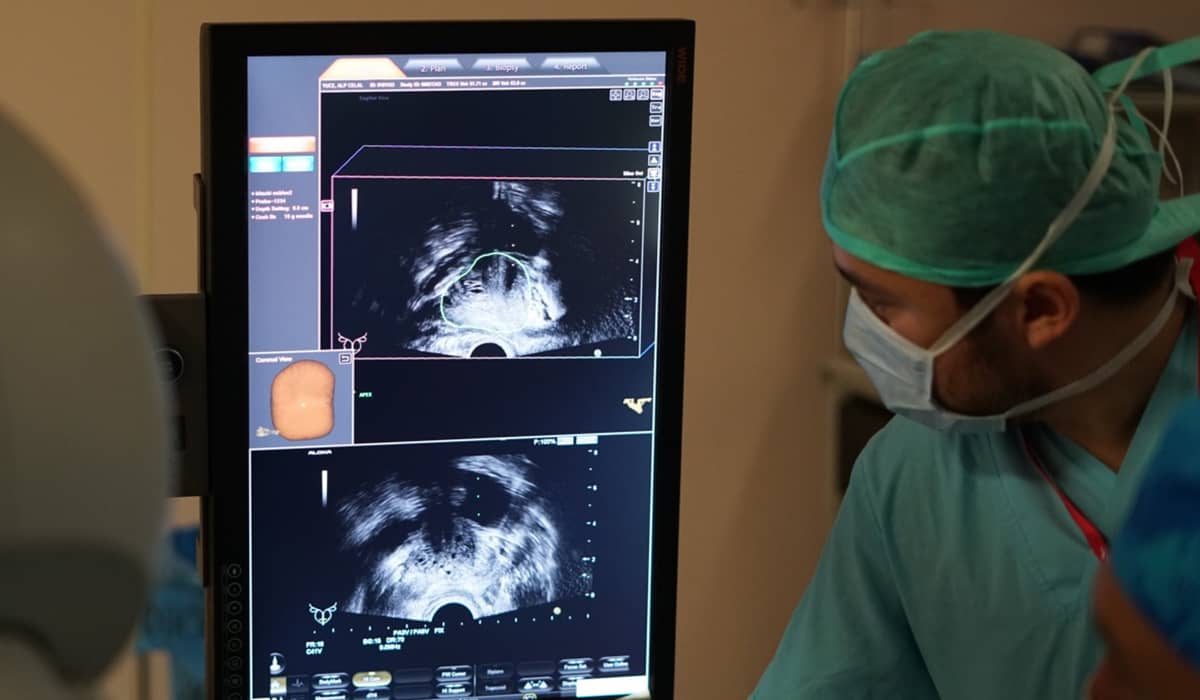
In adults, a scrotal ultrasound is requested almost every time a hydrocele is suspected. It shows how much fluid there is and, more importantly, assesses the testicle hidden behind the fluid. If there is a suspicious area inside the testicle, signs of inflammation or an associated hernia, the treatment plan changes accordingly. The scan is painless, involves no radiation and takes about ten minutes.
Hydrocele treatment

A small hydrocele that causes no symptoms does not have to be treated. The decision depends on the size of the swelling, how fast it is growing, how much it affects daily life and what the ultrasound shows. MedlinePlus also stresses that hydroceles are usually harmless and are treated when they cause discomfort or another problem.
Watchful waiting
For adults whose testicle looks normal on ultrasound and whose swelling is small and stable, regular follow-up is a reasonable option. If the swelling grows noticeably, pain starts or a new hard area is felt in the testicle during this time, the situation is reassessed. In babies, because the channel may close by itself, doctors usually wait until the age of one to two years.
Needle drainage
The fluid can be drained with a fine needle and the swelling goes down straight away. However, because the lining that produces the fluid stays in place, the hydrocele fills up again in most patients. This method is usually reserved for patients who are not suitable for surgery, for example because other illnesses make anaesthesia risky. Some centres inject a medicine into the sac after drainage to reduce fluid production (sclerotherapy); this can lower the chance of recurrence but does not remove it.
Hydrocele surgery (hydrocelectomy)
The permanent treatment is to open the sac that produces the fluid and either turn its edges inside out or remove most of it so that it cannot fill again. The procedure is usually done through a small cut in the skin of the scrotum, under general or regional anaesthesia, as a day case, and it normally takes less than an hour. In babies and in patients who also have an inguinal hernia, the operation is done through the groin so that the open channel can be closed as well.
Recovery after surgery and possible risks
Swelling and bruising of the scrotum are expected in the first days after the operation and settle over a few weeks. Supportive underwear, short periods of cold compresses in the first days and the painkiller your doctor recommends are enough for most patients. People with desk jobs can usually return to work within a few days; for heavy lifting, cycling and intense sport you need to wait for the period your doctor advises, often several weeks.
Like any operation, hydrocelectomy carries some risks. The possible problems listed by MedlinePlus include bleeding and blood collection (haematoma), infection, injury to the scrotum and the hydrocele coming back. Damage to the blood supply of the testicle or to the sperm duct is rare but possible, which is why the operation should be performed by a urologist who knows the anatomy of this area well.
Fertility and sex life
A simple hydrocele generally does not affect sperm or hormone production by the testicle. Because the fluid collects outside the testicle, between its coverings, sexual function does not change either; the discomfort of a large hydrocele is mostly mechanical. When surgery is planned for young men who want children, particular care is taken to protect the sperm duct (epididymis). If you have concerns about fertility, it is worth discussing them with your doctor before the operation and, if needed, having a semen analysis to record your starting point.
If you have noticed a new swelling in your scrotum, even a painless one, a urological examination and ultrasound to find its cause is the right next step. You can reach Prof. Dr. Murat Binbay's team through the digital consultation page. If you are wondering which complaints a urologist deals with, our article on what a urology specialist does may also help.
Frequently Asked Questions
Can a hydrocele turn into cancer?
No, a hydrocele does not turn into cancer. It is simply fluid that has collected around the testicle. Because fluid can occasionally build up next to a testicular tumour, an ultrasound of the testicle itself is recommended in adults.
Can a hydrocele be cured with medicine or herbal remedies?
No, there is no medicine or herbal remedy proven to clear a hydrocele in adults. If an infection is behind it, treating the infection may reduce the fluid. For a simple hydrocele, the options are follow-up, needle drainage or surgery.
Can I exercise with a hydrocele?
In most cases yes; if the swelling does not bother you, there is no reason to avoid sport. Supportive underwear makes running and cycling more comfortable. In contact sports, use a protective cup and see a doctor if sudden pain develops.
Can a hydrocele come back after surgery?
It can, though not often. When the sac is properly turned inside out or removed, the risk of recurrence is low. After needle drainage, on the other hand, the fluid returns much more frequently.
Do I need to stay in hospital for hydrocele surgery?
Usually not. Most patients have the operation as a day case and go home the same day. An overnight stay may be advised for patients with other medical conditions or a very large hydrocele that needs a more extensive procedure.
Clinical note: This article was prepared and medically reviewed by Prof. Dr. Murat Binbay, who has more than 25 years of experience in urology and has performed over 1,500 robotic operations. The information here is for general guidance only; treatment decisions can only be made after an examination. You can reach us through our contact page.
References
- MedlinePlus Medical Encyclopedia. Hydrocele. U.S. National Library of Medicine.
- European Association of Urology. Guidelines on Paediatric Urology: Hydrocele, 2024 edition.
- Campbell-Walsh-Wein Urology, 12th edition. Surgery of the scrotum and seminal vesicles.
Last reviewed: 19 November 2026 · Reviewed by: Prof. Dr. Murat Binbay, Urology and Robotic Surgery Specialist
Let Prof. Dr. Murat Binbay's team review your case
If you read this far, you probably have questions. Fill in the two-minute pre-consultation form and we will get back to you within 24 hours.
- Answer within 24 hours
- Your data stays confidential

Urology and Robotic Surgery Specialist · 25+ years of experience
Last medically reviewed:
 Önceki Yazı
What Causes Urinary Retention? Cold Medicines and the Enlarged Prostate
 Sonraki Yazı
What Is Urodynamic Testing? How It Is Done and How to Prepare
Yorumlar
Yorum Yazın
Henüz yorum yapılmamış. İlk yorumu siz yapın!