Last updated: 13.10.2026
This content has been medically reviewed and updated by Prof. Dr. Murat Binbay.
“This content is for informational purposes only; diagnosis and treatment are planned after a medical examination.”
Cystectomy is the surgical removal of the bladder. Removing the whole bladder together with the surrounding lymph nodes and nearby organs is called radical cystectomy. Radical cystectomy is the standard surgical treatment for bladder cancer that has invaded the muscle layer. We explain which bladder cancer patients need closed surgery (TURBT) and which need radical cystectomy in detail on our bladder cancer surgery page.
In men, radical cystectomy involves removing the prostate and seminal vesicles together with the bladder. In women, the uterus, ovaries and part of the front wall of the vagina are usually removed as well; in selected patients these organs can be preserved.
Because the bladder is removed, a new route must be created for urine to be stored and leave the body. This is called urinary diversion.
Our article on the new bladder >> Surgery to Create a New Bladder from the Intestine
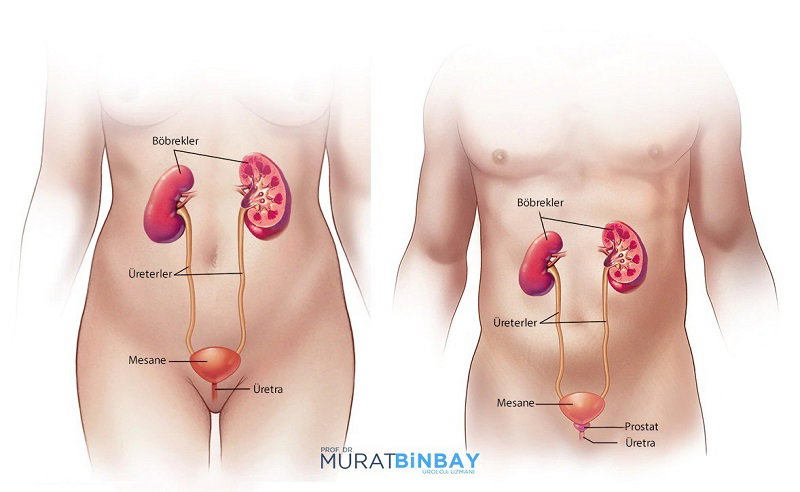
The urinary system consists of the kidneys, ureters, bladder and urethra. The kidneys filter waste and excess fluid from the blood to produce urine. Urine travels through the ureters to the bladder, where it is stored until it is passed.
Why Is Cystectomy Performed?
Radical cystectomy is most often performed to treat bladder cancer:
- Muscle-invasive bladder cancer: The standard treatment for tumours that have invaded the muscle but not spread to distant organs. In suitable patients, cisplatin-based chemotherapy is given before surgery.
- High-risk superficial bladder cancer: Recommended for tumours that recur or progress despite TURBT and BCG therapy into the bladder, or for very high-risk tumours.
Less often, cystectomy may be performed for pelvic tumours involving the bladder, such as advanced colon, prostate or uterine cancers, and for some benign conditions that leave the bladder unusable (such as severe radiation damage or a bladder that has lost its function).
The type of cystectomy and urinary diversion depends on factors such as the reason for surgery, the extent of the cancer, your general health and your preferences. Discuss the options with your urologist.
For detailed information and appointments, call us: +90 530 100 90 85
Risks of Cystectomy
Radical cystectomy involves many organs in the abdomen and is one of the most extensive operations in urology. Its complication rate is higher than that of other urological operations, so it is important that it is performed by an experienced surgical and anaesthesia team. General risks include:
- Bleeding and the need for blood transfusion
- Blood clots in the leg veins and clots travelling to the lungs
- Heart and lung problems (heart attack, pneumonia)
- Wound and urinary tract infections
- Rarely, death related to surgery
Because cystectomy involves not only removing the bladder but also creating a new urinary route using the bowel, it carries these additional risks:
- Delayed return of bowel function or bowel obstruction
- Urine leakage where the ureters are connected to the bowel, or later narrowing (ureteral obstruction)
- Fluid loss (dehydration) and disturbances in blood salt balance
- Recurrent urinary tract infections
Some complications can be serious and may require another operation. Robotic surgery reduces blood loss and wound problems, but every method carries risks. Be sure to discuss your individual risks with your surgeon before the operation.
The Cystectomy Procedure in Detail
Preparing for Cystectomy
Before surgery, tell your doctor about the medicines you take, especially blood thinners, and habits such as alcohol use. Some of your medicines may need to be changed to support recovery.
If you smoke, the best thing you can do for your health is to stop before surgery. Smoking is the most important risk factor for bladder cancer and also increases the risk of lung and wound problems after surgery.
When your operation is scheduled, you will receive specific instructions about diet, bowel preparation and the morning of surgery. If anything is unclear, ask your surgeon.
Complete Removal of the Bladder (Radical Cystectomy)
During the operation, the bladder is removed together with the lymph nodes in the pelvis. Removing the lymph nodes is important both for staging the cancer accurately and for clearing any possible spread. In men the prostate and seminal vesicles, and in women usually the uterus, ovaries and part of the vagina, are removed as well. In suitable patients, the erectile nerves in men and the uterus, ovaries and vagina in women can be preserved.
There are three surgical approaches:
| Approach | How is it done? |
|---|---|
| Open surgery | The pelvis and bladder are reached through a single long incision extending below the navel. |
| Laparoscopic surgery | Performed with special instruments inserted through several small holes in the abdomen. |
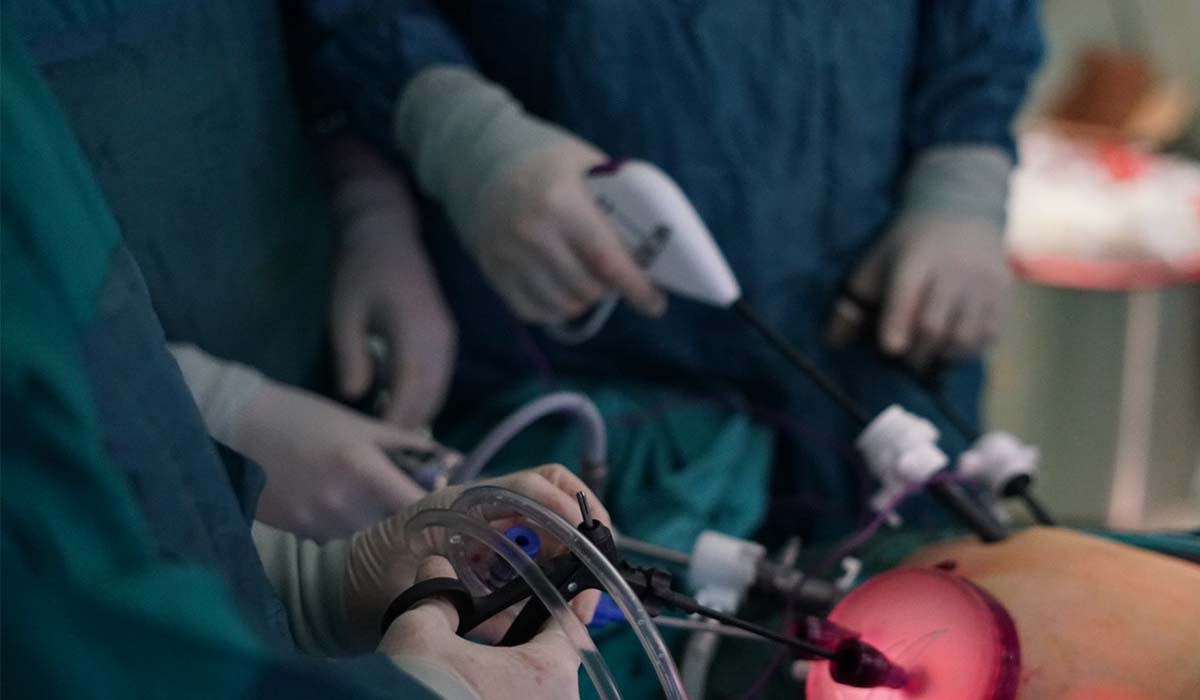
| Robotic surgery | Performed through 6 holes of about 1 cm in the abdomen. The surgeon sits at a console in the same room and controls every movement of the robotic arms. Thanks to the magnified 3D view, there is less blood loss and pain. |
During the Procedure
The operation is performed under general anaesthesia. In open surgery a single large incision is made in the abdomen; in robotic and laparoscopic surgery several small holes are made.
The bladder is removed together with the lymph nodes and any necessary nearby organs. A new route is then created for urine to leave the body (urinary diversion). The aim of this stage is to allow urine to be stored and passed safely while preserving quality of life. The main options are:
| Ileal conduit (stoma with a bag) | Neobladder (orthotopic new bladder) | Continent urinary reservoir | |
|---|---|---|---|
| How is it made? | A short section of small intestine is connected to the ureters and its other end is brought out through the skin of the abdomen (stoma) | A spherical new bladder is made from 45–50 cm of small intestine and connected to the urethra | A small pouch is made from bowel inside the abdomen and connected to the skin through a small opening |
| How is urine passed? | Urine flows continuously into a bag stuck to the skin; the bag is emptied when full | Through the normal route, via the urethra | The pouch is emptied several times a day by passing a thin catheter through the opening |
| External bag | Yes; changed every 2–3 days | None | None |
| Things to know | Shorter operation; stoma care is needed | Daytime leakage about 4%, night-time leakage in about 20–30% of patients; some patients may occasionally need to empty it with a catheter | Regular catheter use is essential; used less often today |
Because it does not require an external bag, a neobladder is the first choice in suitable patients. However, an ileal conduit is a safer option for patients at risk of tumour in the urethra, with insufficient kidney function or who cannot follow a regular voiding schedule.
After the Procedure
Patients usually stay in hospital for 5–6 days after surgery.
The bowel is the last organ to start working again after surgery. You will therefore be monitored in hospital until your bowel is ready to take fluids and food.
After general anaesthesia you may have a sore throat, shivering, drowsiness, dry mouth, nausea and vomiting. These symptoms pass within a few days.
From the morning after surgery, you will be asked to get up and walk often. Walking speeds up bowel recovery, improves circulation and helps prevent blood clots.
You may feel pain or discomfort around the incisions for a few weeks after surgery. The pain gradually eases as you heal.
Changes in Urine After Cystectomy and Return to Normal
With an ileal conduit, urine flows from the stoma into the bag from the first days. In some patients, fluid that collects in the pelvis may seep from the urethra (from the vagina in women) for a while in the first weeks; its colour gradually changes from red to pink and then yellow.
With a neobladder, urine may be bloody for a while after surgery; it returns to its normal colour within a few weeks. A catheter stays in place for a few weeks while the new bladder heals.
With both methods, mucus is expected in the urine because the section of bowel used continues to produce mucus. The mucus decreases over time but never disappears completely. Drinking plenty of fluids helps it pass.
Returning to Daily Activities
For the first 6–8 weeks after surgery, you may need to limit activities such as heavy lifting, driving, taking baths and returning to work or school. Your strength and energy will return over time.
Ask your doctor when it is safe to resume sexual activity. Waiting about 6 weeks is usually recommended.
Results
Cystectomy is a major operation that can affect quality of life. Nevertheless, most patients lead a fairly normal life after the recovery period.
A neobladder is small at first and gradually expands over the first months. Initially you will need to urinate every few hours during the day; over time this interval increases to up to 4 hours.
Sexual changes may occur after cystectomy. Men no longer ejaculate, and damage to the erectile nerves can make erections difficult. A nerve-sparing technique can be used in suitable patients; even with this technique, it may take time for erections to return. Ask your doctor whether a nerve-sparing technique can be used in your operation.
In women, changes in the vagina can make intercourse less comfortable, and nerve damage can affect arousal and orgasm. Organ-sparing surgery reduces these effects. If you experience sexual difficulties after surgery, be patient and share your concerns with your doctor.
You can read about our patients' experiences on the bladder cancer patient reviews page.
Book an Appointment with Urologist Prof. Dr. Murat Binbay
Clinical Note
This article was prepared and medically reviewed by Prof. Dr. Murat Binbay, who has more than 25 years of experience in urology and more than 1,500 robotic operations. The assessments in the text reflect current international guideline recommendations together with the practice in our clinic.
The information here is for general information only. Because every patient's history, imaging findings and other medical conditions are different, treatment decisions can only be made after an examination. For your questions, you can reach us through our contact page.
References
- European Association of Urology — Non-muscle-invasive Bladder Cancer Guidelines
- European Association of Urology — Muscle-invasive and Metastatic Bladder Cancer Guidelines
- National Cancer Institute (NIH) — Bladder Cancer
Last reviewed: 13 October 2026 · Reviewed by: Prof. Dr. Murat Binbay, Urology and Robotic Surgery Specialist
Let Prof. Dr. Murat Binbay's team review your case
If you read this far, you probably have questions. Fill in the two-minute digital consultation form and we will get back to you within 24 hours.
- Answer within 24 hours
- Your data stays confidential

Urology and Robotic Surgery Specialist · 25+ years of experience
Last medically reviewed:
 Önceki Yazı
Surgery to Create an Artificial Bladder From the Intestine
Önceki Yazı
Surgery to Create an Artificial Bladder From the Intestine
 Sonraki Yazı
Retroperitoneal Lymph Node Dissection in Testicular Cancer
Sonraki Yazı
Retroperitoneal Lymph Node Dissection in Testicular Cancer
Yorumlar
Yorum Yazın
Henüz yorum yapılmamış. İlk yorumu siz yapın!