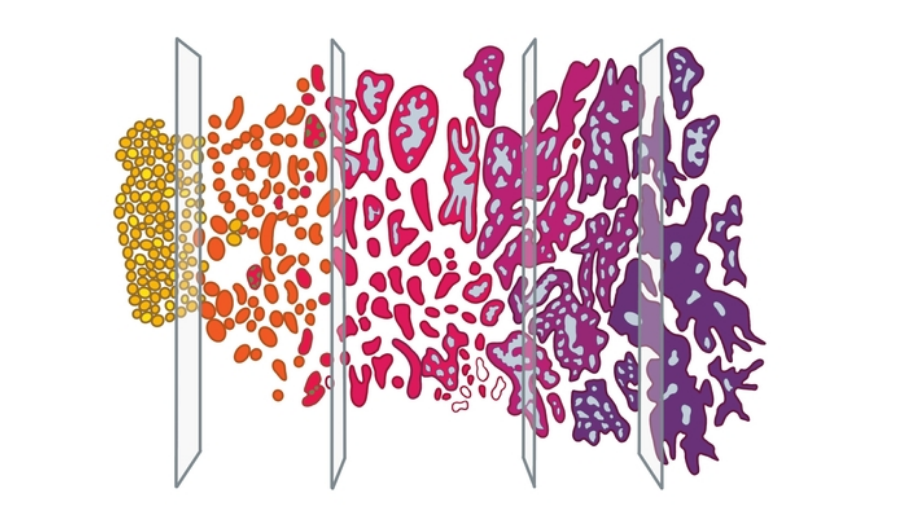
The Gleason score is a system used to determine the aggressiveness and spreading potential of prostate cancer. This system, developed by Dr Donald Gleason in 1966, makes a grading based on how the cancer cells look under the microscope. For patients diagnosed with prostate cancer, the Gleason score is a critical factor in determining the treatment plan.
The Gleason score classification is used for the following purposes:
- To determine the aggressiveness of the cancer: it assesses how abnormal the cells look.
- To help with treatment planning: a higher score means a more aggressive cancer and can affect the treatment options.
- To predict the course of the disease: the lower the score, the higher the likelihood that the cancer will progress slowly.
How Is the Gleason Score Calculated?
The Gleason score is calculated by grading two different cellular patterns. The pathologist examines the tissues taken from the prostate biopsy under the microscope and subjects the cells to a grading between 1 and 5:
- The first grade (primary score): this is the score given to the most commonly seen cell pattern in the tissue sampled.
- The second grade (secondary score): this is the score given to the second most frequently seen cell pattern.
- The total Gleason score: this is obtained by adding these two scores together (for example, 3+4=7 or 4+5=9).
The Gleason Grading Scale
- 1 and 2: very similar to normal cells, but no longer used clinically.
- 3: moderately differentiated cells.
- 4: cells that look abnormal and tend towards aggressive growth.
- 5: completely disorganised, rapidly growing and spreading cancer cells.
The Meanings of the Gleason Scores
The total Gleason score generally varies between 6 and 10 and is interpreted as follows:
Gleason 6 (3+3) → Low-grade cancer
- The cells are quite similar to normal cells.
- The cancer grows slowly and generally does not spread outside the prostate.
- In most cases active surveillance (close follow-up) is recommended; surgery or radiotherapy may not be necessary.
Gleason 7 (3+4 or 4+3) → Intermediate-grade cancer
- 3+4 = 7: considered more low-intermediate risk.
- 4+3 = 7: may be more aggressive; the treatment options must be assessed more carefully.
- Patient-specific surgery, radiotherapy or drug treatment options may be considered.
Gleason 8 (4+4) → High-grade cancer
- The cancer can grow more rapidly and its spreading potential is high.
- Generally surgery, radiotherapy and systemic treatments (hormone treatment, etc.) are necessary.
Gleason 9-10 (4+5, 5+4, 5+5) → Very high-grade cancer
- It is the most aggressive form and the likelihood of metastasising is high.
- Multiple treatment options may be necessary.
- Methods such as hormone treatment and immunotherapy may come into play.
Factors Affecting the Gleason Score
- The stage and size of the tumour: prostate cancers detected at an early stage have a better prognosis.
- Genetic and biological factors: some patients may respond better to targeted treatments.
- The patient's general state of health: additional conditions such as cardiovascular diseases and diabetes can affect the treatment process.
- Adherence to treatment: regular follow-up and adherence to treatment protocols increase treatment success.
Why Is the Gleason Score Important?
The Gleason score is one of the most important determinants in the diagnosis of prostate cancer. Correct assessment allows the most appropriate treatment plan to be determined. If you have been diagnosed with prostate cancer, it is important that you have a detailed discussion with your doctor about your Gleason score and assess the best treatment options.
With early diagnosis and correct treatment, prostate cancer can be brought under control and a healthy life can be maintained.
Clinical Note
This article was written and medically reviewed by Prof. Dr. Murat Binbay, a urologist with more than 25 years of experience and over 1,500 robotic operations. The assessments reflect current international guideline recommendations together with our own clinical practice.
The information here is for general guidance only. Because every patient's history, imaging findings and comorbidities differ, a treatment decision can only be made after an examination. You can reach us through our contact page, or read more about our physician on the about us page.
Sources
- European Association of Urology — Prostate Cancer Guidelines
- National Cancer Institute (NIH) — Prostate Cancer
- Türk Üroloji Derneği — Güncel Kılavuzlar
Last reviewed: 8 September 2026 · Reviewed by: Prof. Dr. Murat Binbay, Urology and Robotic Surgery Specialist
Let Prof. Dr. Murat Binbay's team review your case
If you read this far, you probably have questions. Fill in the two-minute digital consultation form and we will get back to you within 24 hours.
- Answer within 24 hours
- Your data stays confidential

Urology and Robotic Surgery Specialist · 25+ years of experience
Last medically reviewed:
 Önceki Yazı
RCC (Renal Cell Carcinoma) Survival Time
Önceki Yazı
RCC (Renal Cell Carcinoma) Survival Time
 Sonraki Yazı
What Is MRI-TRUS Fusion Prostate Biopsy?
Sonraki Yazı
What Is MRI-TRUS Fusion Prostate Biopsy?
Yorumlar
Yorum Yazın
Henüz yorum yapılmamış. İlk yorumu siz yapın!