Bladder cancer, particularly in its superficial (non-muscle-invasive) types, is managed with therapies targeting the immune system in terms of an early response to treatment and reducing the risk of the disease recurring. In this context, Bacillus Calmette-Guérin (BCG) treatment has been used for many years as a standard approach.
Recently, adenovirus-based gene therapies have taken their place among the promising alternatives, particularly in BCG-resistant cases.
BCG Treatment
BCG is a strain of Mycobacterium bovis, a weakened tuberculosis bacterium. Applied directly into the bladder, it activates the immune system and creates a response against the cancer cells. This treatment is effective in reducing the risk of the tumour recurring in superficial bladder cancers. It is generally applied after transurethral resection (TUR), weekly for 6 weeks, and in some cases can continue as maintenance treatment.
The Advantages of BCG Treatment:
- Effectiveness: it reduces the risk of recurrence in superficial bladder cancers.
- Immune activation: it mobilises the body's natural defence mechanisms.
Possible Side Effects:
- A burning sensation when urinating
- Frequent urination
- Mild fever
- Systemic infections in rare cases
Adenovirus-Based Gene Therapies
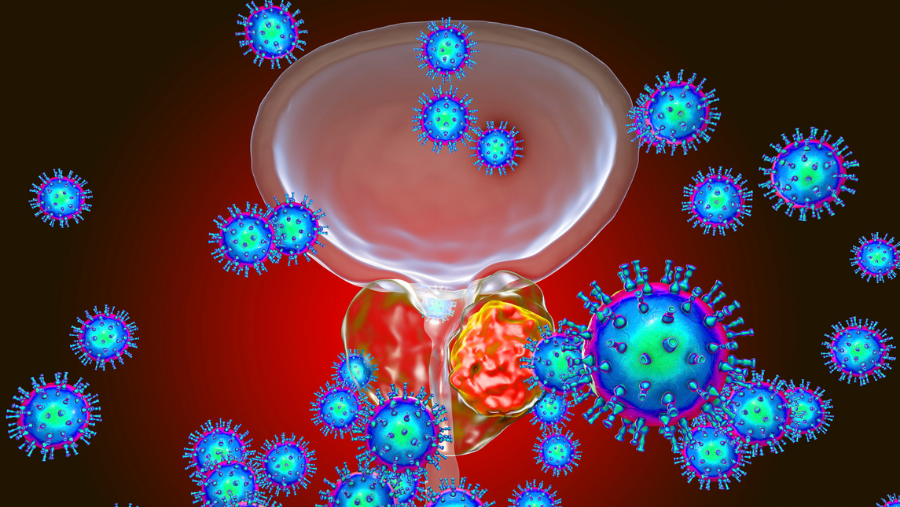
In cases of superficial bladder cancer that do not respond to BCG treatment or that recur, adenovirus-based gene therapies have emerged as a new option. These treatments, using adenovirus vectors that carry genetic material into the cancer cells, enable the production of proteins that trigger the death of tumour cells.
Nadofaragene firadenovec (Adstiladrin): approved by the US Food and Drug Administration (FDA) in December 2022, nadofaragene firadenovec is an adenovirus vector-based gene therapy. It has been developed for adult patients with BCG-resistant, high-risk, non-muscle-invasive bladder cancer. The efficacy of the drug was assessed in a clinical study in which 157 patients participated. In this study, 75 mL (3 x 10¹¹ viral particles/mL) of nadofaragene firadenovec was instilled into the bladder of the patients every three months. The results showed that a complete response was obtained in 51% of the patients and that the median duration of this response was 9.7 months.
The Advantages of Adenovirus-Based Treatments:
- Targeted effect: it specifically targets cancer cells.
- An alternative option: it offers a new treatment route in BCG-resistant cases.
Possible Side Effects:
- Discomfort when urinating
- Bladder spasms
- Fatigue
- Risk of infection
In the treatment of superficial bladder cancers, BCG is an immunotherapy method whose effectiveness has been proven over many years. However, for patients who do not respond to BCG, adenovirus-based gene therapies offer promising alternatives. Both treatment options must be assessed taking into consideration the patient's condition, the characteristics of the tumour and previous treatment responses.
Treatment planning must without fail be carried out by a specialist oncologist and urologist, and patients must be followed up regularly.
Clinical Note
This article was written and medically reviewed by Prof. Dr. Murat Binbay, a urologist with more than 25 years of experience and over 1,500 robotic operations. The assessments reflect current international guideline recommendations together with our own clinical practice.
The information here is for general guidance only. Because every patient's history, imaging findings and comorbidities differ, a treatment decision can only be made after an examination. You can reach us through our contact page, or read more about our physician on the about us page.
Sources
- European Association of Urology — Non-muscle-invasive Bladder Cancer Guidelines
- European Association of Urology — Muscle-invasive and Metastatic Bladder Cancer Guidelines
- National Cancer Institute (NIH) — Bladder Cancer
Last reviewed: 8 September 2026 · Reviewed by: Prof. Dr. Murat Binbay, Urology and Robotic Surgery Specialist
Let Prof. Dr. Murat Binbay's team review your case
If you read this far, you probably have questions. Fill in the two-minute digital consultation form and we will get back to you within 24 hours.
- Answer within 24 hours
- Your data stays confidential

Urology and Robotic Surgery Specialist · 25+ years of experience
Last medically reviewed:
Yorumlar
Yorum Yazın
Henüz yorum yapılmamış. İlk yorumu siz yapın!