Publication Date: 19.04.2021 | Last Update: 03.09.2026
This content has been medically checked and updated by Prof. Dr. Murat Binbay.
"This content is for informational purposes; diagnosis/treatment is planned with a physician's examination."
Kegel exercises are a series of movements performed by systematically contracting and relaxing the pelvic floor muscles. These muscles play a critical role in supporting the pelvic organs such as the bladder, the bowels and the vagina. Besides holding these organs in the correct position, the pelvic floor muscles also have an important function in basic bodily functions such as urinating, defecating and sexual functions.
The basic aim of Kegel exercises is to tighten the muscles in the pelvic floor by strengthening them and to release these muscles at regular intervals. These exercises can be applied by both women and men and no side effects are known.
Especially in women, Kegel exercises are done to strengthen the vaginal muscles located around the vagina. The vaginal muscles are also called the pubococcygeus (PC) muscles, the pelvic floor muscles, the pubic muscles or the love muscles. These terms point to the same muscle group.
Applying Kegel exercises requires you to recognise your pelvic floor muscles. These muscles are the muscle group you use to stop the flow while urinating in the toilet. Strengthening these muscles with regular exercise is of great importance in terms of pelvic health
What Is the Pelvis and What Are Pelvic Floor Exercises?
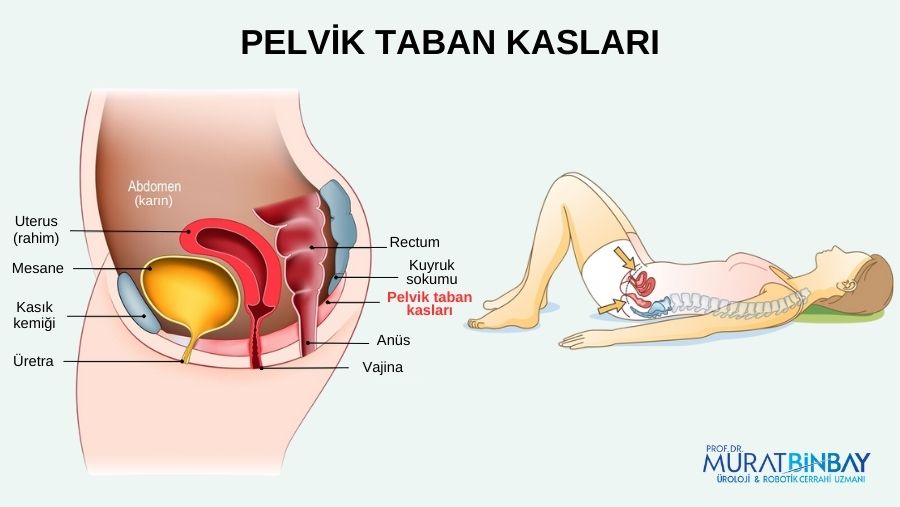
The pelvis is an area located in the lower part of the abdominal region and containing a series of important organs. This region covers the uterus, the ovaries, the vagina, the anus, the lower parts of the large intestine, the bladder and the lower urinary tract. These organs are supported by the pelvic floor muscles. These muscles can be associated with various conditions that cause pelvic pain.
Kegel or pelvic floor exercises are methods of strengthening and tightening these muscles. For women, while these exercises target the vaginal muscles, in men they have positive effects on the penile region and urinary control. These exercises can help prevent unwanted urinary incontinence and the leakage of gas or stool.
In English the term "pelvic floor muscle" is used to define these muscles. While "pelvis" refers to the hip bone, "pelvic" means belonging to or related to the hip bone.
Pelvic floor exercises (otherwise known as Kegel exercises) do not only help prevent your urine from leaking. Strengthening these muscles helps prevent urinary leakage, prevent the accidental passage of gas or stool and even improve orgasm. Keeping these muscles 'fit' helps prevent your uterus, your bladder and your bowel from prolapsing towards the vagina.
The Position of the Pelvic Floor Muscles
Your pelvic floor muscles are a group of muscles extending from your pubic bone at the front of your body to your tailbone (the end of your spine) at the back.
Finding your pelvic floor muscles is quite simple. While sitting on the toilet, try to stop the flow of your urine. The muscles you feel contracting between your legs while trying this are your pelvic floor muscles.
Why Are Kegel Exercises Done?
Kegel exercises are applied for the purpose of strengthening the pelvic floor muscles for both men and women. These exercises are important for overcoming problems in men such as urinary and faecal incontinence, premature ejaculation and supporting prostate health. In women, they are an effective method in repairing pelvic muscles that have weakened or prolapsed because of conditions such as pregnancy, the post-partum period, old age and obesity.
General Situations of Application:
- In those experiencing urinary incontinence, that is, incontinence problems.
- In conditions that put pressure on the pelvic floor such as chronic coughing.
- In obesity patients, because of increased abdominal pressure.
- During pregnancy and after birth, to support and improve the pelvic floor.
- To bring weakened pelvic muscles to a fit and healthy structure.
Additional Research Findings:
- Improvement of Sexual Functions: Kegel exercises can improve sexual functions for women and men. They show effects such as tightening of the vaginal muscles in women and increasing the quality of erection in men.
- Post-Partum Recovery: For women, strengthening the pelvic floor muscles after birth contributes to a faster and more effective recovery.
- Problems Related to Ageing: During the ageing process, the weakening of the pelvic floor muscles is a natural process. Kegel exercises help strengthen these muscles and prevent the pelvic floor problems that may arise during the ageing process.
Pelvic Organ Prolapse
The uterus, bladder and bowels located in the cavity between the inside of the abdomen and the hip bone, called the pelvis, can prolapse downwards. This condition is called pelvic organ prolapse. If you experience pelvic organ prolapse, leakage of your urine and stool may occur. You may also lose the sexual sensitivity in your vagina.
Any health condition that puts pressure on the muscles of your pelvic floor and causes them to weaken can cause pelvic organ prolapse. These include the following:
- Pregnancy and childbirth by normal means.
- Being overweight.
- Having undergone an operation on your pelvic region (including caesarean section).
- Certain genetic characteristics.
- The natural ageing process. (the muscles of your pelvic floor and the muscles in the rectum and anus naturally weaken with age)
- Frequent bouts of sneezing, coughing, laughing.
- Certain exercises. (especially jumping, running and other 'jarring' exercises; lifting excessive weight)
How Are Kegel Exercises Done?
Before starting Kegel exercises it is necessary to recognise the pelvic floor muscles correctly. The simplest method may be to try to stop the flow for a moment while urinating. The muscles you work at that moment are the pelvic floor muscles. However this method is only for recognising the muscle; stopping the urine is not recommended as an exercise routine.
Preparation and Finding the Correct Muscles:
- Empty your bladder and take a comfortable sitting or lying position.
- To find the muscles, try stopping the urine flow for a short time in the toilet. This helps you feel the muscles you need to use.
- Sensations such as preventing the act of passing gas also provide the activation of the correct muscles.
- For women it is useful to squeeze the vaginal muscles, and for men to squeeze the muscles around the anus.
Exercises:
- Squeeze your pelvic floor muscles and hold them in this state for 3-5 seconds.
- Then relax the muscles and rest for 3-5 seconds.
- Start by doing this squeeze and relax movement at least twice a day, with 10 repetitions each time.
- Over time you can gradually increase the intensity of the exercises by increasing the squeezing duration and the number of repetitions.
Progression and Routine:
- At the beginning start by squeezing for 3 seconds and relaxing for 3 seconds, and increase this duration over time to 4, 5 seconds.
- Aim to do at least 3 sets during the day (morning, afternoon and evening).
- When done regularly, improvement in problems such as urinary incontinence may be observed within a few weeks to a few months.
- For long-term benefits make these exercises a part of your daily routine.
Biofeedback And Other Techniques
If you are having trouble doing Kegel exercises, two techniques can help you: biofeedback training and electrical stimulation of your pelvic floor muscles. Biofeedback is done to help determine whether the correct muscles are being squeezed. Electrical stimulation (NMES) shows how a properly performed Kegel exercise should feel.
Biofeedback training (performed by a health professional) involves placing a probe into the vagina. When the instruction is given to do a Kegel exercise, a monitor shows whether the correct muscles are being squeezed.
With electrical stimulation, the pelvic floor muscles are touched with a small, painless electric current. This causes these muscles to contract. This sensation imitates how a Kegel muscle exercise should feel when done correctly.
Kegel exercise tips
- You can do Kegel exercises lying down, sitting or standing. If your pelvic muscles are weak, you may want to do them lying down first.
- When starting out, do only a number of Kegel exercises that is quite easy for you (for example, five Kegels for three seconds twice a day). Increase these numbers slowly as you gain strength and endurance.
- Do not hold your breath while doing the exercises. Also, be careful not to bear down on or squeeze the muscles of your inner thigh, back, buttocks or stomach. Squeezing these muscles means you are not doing the exercise correctly.
What Is the Kegel Exercise Good For?
The question of what the Kegel exercise is good for comes up frequently because of the wide benefits provided by strengthening the pelvic floor muscles. These exercises play an important role in the prevention and treatment of various health problems for both men and women.
It Improves Urinary Control: Kegel exercises are effective in reducing urinary incontinence problems. The weakening of the pelvic floor muscles is seen frequently especially in post-partum women and in elderly individuals. This situation can lead to the loss of bladder control and involuntary urinary incontinence. Kegel exercises done regularly improve the control over the bladder and the urethra by increasing muscle tone. As a result, the urinary incontinence events experienced during coughing, sneezing or laughing are considerably reduced.
It Supports Sexual Health: The Kegel exercise contributes to the improvement of sexual functions in male individuals. Strengthening the pelvic floor muscles can increase the quality of erection and help in the management of premature ejaculation problems. In women, Kegel exercises increase sexual pleasure by providing the tightening of the vaginal muscles and make it easier to reach orgasm. In addition, these exercises provide more control and satisfaction during sexual intercourse.
It Protects Pelvic Floor Health: Strong pelvic floor muscles are needed for the pelvic organs to be held in the correct position. Kegel exercises protect pelvic floor health by preventing the prolapse of organs such as the uterus, the bladder and the bowel. They reduce the risk of pelvic organ prolapse especially in women who have given birth and in elderly individuals. In this way, serious health problems that could negatively affect daily quality of life can be prevented.
It Improves Bowel Control: Weakness of the pelvic floor muscles can cause faecal incontinence and difficulties in gas control. Kegel exercises provide better control of bowel movements by strengthening the rectal muscles. This plays an important role in the management of bowel control problems that negatively affect social life and personal self-confidence.
It Contributes to Prostate Health: In the period after prostate surgery in men, the Kegel exercise can help reduce urinary incontinence problems. In addition, strengthening the pelvic floor muscles contributes to the improvement of sexual functions. These exercises can speed up the post-operative recovery process and increase quality of life.
It Makes the Birth Process Easier: For pregnant women, Kegel exercises increase the muscle control and flexibility needed during birth. Strong pelvic floor muscles can make the birth process easier and speed up post-partum recovery. In addition, they help prevent the urinary incontinence problems that can arise during and after pregnancy.
It Increases General Quality of Life: Strengthening the pelvic floor muscles enables individuals to carry out their daily life activities more comfortably and with self-confidence. Being able to participate in social activities without fear of urinary or faecal incontinence, increased satisfaction in sexual life and the improvement of general health status are among the important benefits offered by Kegel exercises.
Most women say that they notice less urinary leakage within 12 weeks after starting a Kegel exercise routine and sticking to it.
Frequently Made Mistakes and Things to Pay Attention To
The most frequent problem in Kegel exercises is that different muscle groups come into play instead of the target muscle. Pay attention to the following points:
- Do not hold your breath; continue breathing normally.
- Try not to squeeze the abdominal, buttock and leg muscles.
- Relaxing is as important as "squeezing". Remaining constantly contracted can increase complaints in some people.
- Do not make a habit of doing the exercises while urinating.
Can doing the Kegel exercise too much be harmful? Yes. Excessive repetition and holding the contraction for a long time can lead to muscle fatigue, spasm and pain in the pelvic floor. If complaints are increasing, the programme must be reorganised.
The Benefits of Kegel Exercises for Men
Kegel exercises offer important benefits not only for women but also for men with certain health problems. These exercises can help men improve the following health conditions:
Reduction of Incontinence: Kegel exercises are an effective method for men with a urinary incontinence problem. By strengthening the pelvic floor muscles, they contribute to better control of these muscles and thus to the reduction of incontinence.
Support of Prostate Health: In conditions of prostatitis (inflammation of the prostate) and benign prostatic hyperplasia (BPH), Kegel exercises can help manage prostate pain and swelling. These exercises can be used to improve prostate health and alleviate the related symptoms.
Increasing Sexual Performance: Kegel exercises can increase men's sexual pleasure by providing more control over ejaculation and strengthening the sensation of orgasm. Regular application can improve sexual performance and enrich the sexual experience between partners.
Kegel After Prostate Surgery
In men, complaints of urinary incontinence can be seen after surgeries such as radical prostatectomy. In this process, strengthening the pelvic floor muscles in a controlled manner can be planned as a part of rehabilitation.
In some clinical approaches, teaching the correct muscle in the pre-operative period (prehabilitation) and continuing the programme after the operation may be recommended. However the starting time and the exercise dose may vary according to the surgical technique and the person's condition; for this reason the recommendation of the physician or physiotherapist following up is important.
These benefits of Kegel exercises can be obtained with regular and correct application. Strengthening the pelvic floor muscles and increasing the control of these muscles is of critical importance for male health and well-being.
Who Are Kegel Exercises Suitable For and Things to Pay Attention To While Doing Them
Suitable Group
- Those with complaints of stress-type urinary incontinence
- Women who want to strengthen the pelvic floor support in the post-partum period
- Those seeking a supportive approach in the risk of pelvic organ prolapse
- Men who want to support urinary control after prostate surgery
- Those seeking supportive exercise in gas/stool control problems (after physician evaluation)
Things to Pay Attention To
- Do not hold your breath during the exercises; continue breathing normally.
- Make sure that you are targeting the correct muscles. Avoid squeezing your abdomen, your legs or your buttocks.
Kegel exercises are a simple and effective method that you can easily integrate into your daily life. Now that you have found the answers to the questions of what the Kegel exercise is, how it is done and what its benefits are, you can apply these exercises regularly to protect your pelvic floor health. By including these exercises in your daily routine you can lead a healthier life in the long term. In the event that you experience any problem it is important that you consult a specialist.
Frequently Asked Questions
My abdominal muscles tighten while I am doing the Kegel exercise. Is this normal?
The target is to work the pelvic floor, not the abdominal or buttock muscles. If your abdominal muscles are noticeably coming into play, the technique should be reviewed; if necessary, physiotherapist support should be obtained.
Is it correct to do Kegel exercises while urinating?
The movement of stopping the urine flow can only be used for a short time to find the correct muscle. Applying the routine exercises while urinating is not recommended.
What happens if I do the Kegel exercise too much?
Excessive repetition and remaining contracted for a long time can cause muscle fatigue, spasm, pelvic pain or an increase in complaints. The exercise dose must be adjusted according to the person.
Can men do the Kegel exercise?
Yes. In men too the pelvic floor muscles play a role in urinary control and pelvic functions. It can be planned with a physician's recommendation especially in rehabilitation after prostate surgeries.
Is the Kegel exercise suitable for everyone?
Not always. In people whose pelvic floor muscles are excessively contracted, exercises focused on "only squeezing" can increase complaints. In such situations relaxation and coordination work may be a priority.
What is biofeedback, does it really work?
Biofeedback aims to teach working the correct muscle by measuring the pelvic floor muscle activity and giving feedback to the person. It can be useful in people who have difficulty finding the muscle correctly or who need special rehabilitation.
When should I consult a doctor?
If the complaint of urinary incontinence is affecting your quality of life, if there is pelvic pain, if defecation problems have become pronounced or if a rehabilitation plan is needed after prostate/pelvic surgery, specialist evaluation is recommended.
Clinical Note
This article was written and medically reviewed by Prof. Dr. Murat Binbay, a urologist with more than 25 years of experience and over 1,500 robotic operations. The assessments reflect current international guideline recommendations together with our own clinical practice.
The information here is for general guidance only. Because every patient's history, imaging findings and comorbidities differ, a treatment decision can only be made after an examination. You can reach us through our contact page, or read more about our physician on the about us page.
Sources
- European Association of Urology — Urinary Incontinence Guidelines
- NIDDK (NIH) — Bladder Control Problems
Last reviewed: 8 September 2026 · Reviewed by: Prof. Dr. Murat Binbay, Urology and Robotic Surgery Specialist
Let Prof. Dr. Murat Binbay's team review your case
If you read this far, you probably have questions. Fill in the two-minute digital consultation form and we will get back to you within 24 hours.
- Answer within 24 hours
- Your data stays confidential

Urology and Robotic Surgery Specialist · 25+ years of experience
Last medically reviewed:
 Önceki Yazı
Symptoms and Treatment of Retroperitoneal Fibrosis
Önceki Yazı
Symptoms and Treatment of Retroperitoneal Fibrosis
 Sonraki Yazı
Prostate Cancer Treatment Period
Sonraki Yazı
Prostate Cancer Treatment Period
Yorumlar
4Yorum Yazın
Merhaba hocam bende taharetten sonra dışkı kaçırma oluyor tedavisi varmı neden olabilir kendim evde ne yapmam gerekir hangi doktora gitmeliyim
Merhaba, taharetten sonra dışkı kaçırma sorunu genellikle kas zayıflığı, sinir hasarı veya bağırsak sorunları gibi çeşitli sebeplerden kaynaklanabilir. Evde bazı önlemler alarak durumu hafifletmeye çalışabilirsiniz, örneğin lifli gıdalar tüketmek ve bol su içmek sindirim sisteminizi düzenleyebilir. Ancak bu sorunun kesin nedenini anlamak ve uygun tedavi yöntemini belirlemek için bir gastroenteroloji uzmanına veya bir genel cerrahi uzmanına başvurmanız önemlidir. Bu tür sorunlar bazen daha ciddi sağlık problemlerinin belirtisi olabilir, bu yüzden profesyonel bir değerlendirme ve tedavi önerisi almak için bir doktora başvurmanızı öneririm.
Merhaba ben 20 yaşındayım be ikitane çocuğum var vajinamda bir sarkma his etim ve belim birde karnım çok ağrıyordu doktora gittim muayene eti bağırsak ve mesane sarkması dedi. Seni ameliyat etsek çocuk olmaz dedi bende yaşın küçük dedi sadece kegel egzersizleri iyi gelir dedi yani çok korkuyorum ameliyattan yani mesanenin çocuk olmamasıyla ne ilgisi var onu merak ediyorum bide bana yardımcı olursanız sevinirim çok zor durumdayım belim ve karnım ağrıyor yürüyemiyorum lütfen bana bir akıl verin teşekkürler.
Merhaba. Mesane sarkması ameliyatının doğurganlık üzerinde her hangi bir etkisi yoktur. Ama ileri tetkik tedavi için muayene etmeden yorum yapmak doğru olmaz. Randevu alarak muayeneye gelmenizi tavsiye ederim.