Date of publication: 18.03.2026 | Last updated: 18.03.2026
This content has been medically reviewed and updated by Prof. Dr. Murat Binbay.
"This content is for information purposes; diagnosis/treatment is planned through examination by a physician."
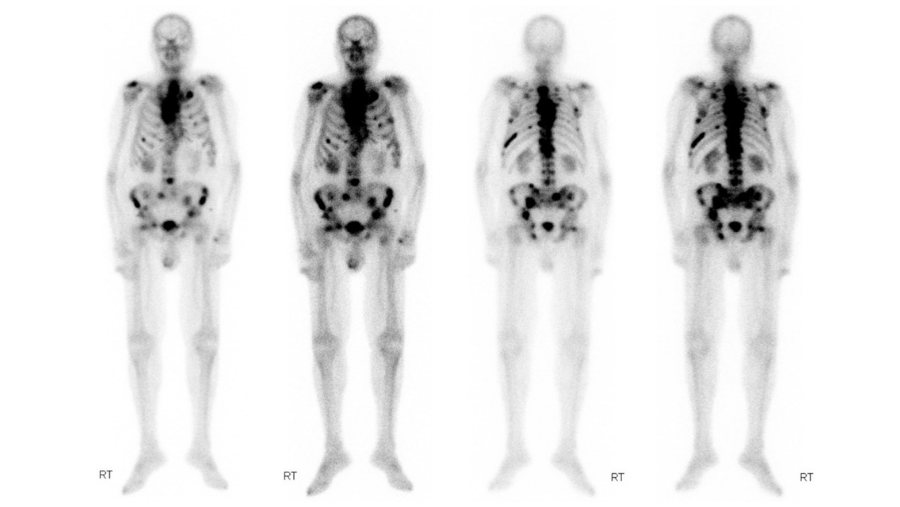
When prostate cancer is not detected and treated at an early stage, over time it can move outside the prostate gland and spread to different regions of the body. This situation is called metastatic prostate cancer.
Prostate cancer most frequently spreads to the bones. The spine, ribs and pelvic bones in particular are the regions where this spread is most frequently seen. As the disease progresses, spread to organs such as the lung, liver and rarely the brain can also be seen.
When there is spread to the bones, particularly the spine, in patients:
- Severe back pain
- Spontaneously developing bone fractures
- Loss of strength and numbness due to nerve or spinal cord compression
serious complaints such as these can emerge.
Lung involvement, on the other hand, can most of the time manifest itself with symptoms such as a long-lasting and persistent cough and shortness of breath.
For this reason, as much as early diagnosis, correctly assessing the spread of the disease and timely treatment planning are of great importance in prostate cancer.
Is It Enough to Treat Only the Metastases?
Metastatic prostate cancer, that is situations in which the disease has spread to different regions in the body, was for many years managed only with systemic treatments (hormone treatment, chemotherapy, etc.). However, large-scale studies carried out in recent years and particularly the current data announced in 2026 show that this approach is changing.
Today we now know that treating not only the metastases but also the prostate gland itself, which is the point of origin of the disease, can provide important advantages.
To better understand metastatic disease you can first review basic information about prostate cancer.
Why Is the Main Tumour Important in Metastatic Prostate Cancer?
In the past, intervention in the primary tumour in metastatic disease was mostly carried out only for symptom control (palliative purposes). However, today this approach is changing.
Data presented at the European Association of Urology (EAU) Congress in 2026 have revealed that radiotherapy applied to the prostate itself can be effective not only on local control but also on the overall course of the disease.
Its Effect on Survival: Which Patients Benefit More?
Large analyses such as STAMPEDE and STOPCAP show that radiotherapy applied to the primary tumour can increase survival, particularly in patients with a low metastatic burden.
According to current 2026 assessments:
- In patients with low spread this approach has now become one of the standard treatment options
- The period of disease control is lengthening
- In some patients a direct contribution to survival time is being provided
However, in patients with a high metastatic burden this benefit may be more limited and patient selection is of critical importance.
The Effect of Delaying Treatment Resistance
One of the most important breaking points in prostate cancer is the disease developing resistance to hormone treatment (castration resistance).
Current studies show that:
- Radiotherapy applied to the prostate
- Can slow the progression process of the disease
- Can lengthen the time to the transition to castration resistance
This means that patients benefit from existing treatments for a longer period.
Quality of Life: At Least as Important as Survival
In metastatic prostate cancer not only survival time but also quality of life is one of the most critical goals.
When the primary tumour is not brought under control:
- Urinary tract obstruction
- Bleeding
- Pain
- The need for additional surgical intervention
serious problems such as these can emerge.
Radiotherapy can delay the development of these complications or prevent them completely.
The Modern Treatment Approach: A Combined and Personalised Strategy
Today the treatment of metastatic prostate cancer is no longer limited to a single method.
The modern approach includes the following:
- Hormone treatment (ADT)
- New-generation hormonal agents
- Chemotherapy
- Radiotherapy
- Surgery in selected patients
The correct combination of all these treatment options must be planned specifically for the patient.
Surgical and Local Treatment Options
Although surgery in metastatic disease is not suitable for every patient, in selected cases it can provide important advantages.
It can be considered particularly with the aim of:
- Reducing the risk of local complications
- Lowering the tumour burden
- Being part of multimodal treatment
The 2026 Perspective: Personalised Oncology
As of 2026, one of the most important concepts in prostate cancer treatment is:
👉 Personalised treatment
The new data clearly reveal the following:
- Not every metastatic patient is the same
- The same treatment must not be applied to everyone
- Biomarkers and disease burden determine the treatment decision
The Clinical Reality: There Are Still Shortcomings
Real-life data show that many patients are still being followed with hormone treatment alone.
Yet today:
- Combined treatments
- Local + systemic approaches
- Multidisciplinary planning
can markedly improve patient outcomes.
The paradigm in the treatment of metastatic prostate cancer has changed.
The approach is now: instead of treating only the metastases, to create a multifaceted and personalised plan that also includes the main tumour
This approach:
- A longer survival time
- Later disease progression
- Better quality of life
can mean these things.
For this reason, the treatment plan of every patient with metastatic prostate cancer must be created by a multidisciplinary team, taking their individual characteristics into consideration.
References
- EAU 2026 Congress – Prostate Radiotherapy to Primary Tumor (urotoday.com/conference-highlights/eau-2026/eau-2026-prostate-cancer/167455-eau-2026-rt-to-primary-tumor-what-for.html)
- STOPCAP Meta-analysis – Radiotherapy in metastatic prostate cancer (europeanurology.com/article/S0302-2838%2819%2930111-3/fulltext)
- STAMPEDE Trial data and subgroup analyses (mdpi.com/2072-6694/17/2/297)
- Bhandari et al., 2026 – Management of metastatic prostate cancer (pmc.ncbi.nlm.nih.gov/articles/PMC12896833/)
- ASCO GU 2026 – Personalized treatment strategies (cancernetwork.com/view/elucidating-treatment-selection-for-metastatic-hspc-at-asco-gu-2026)
Clinical Note
This article was written and medically reviewed by Prof. Dr. Murat Binbay, a urologist with more than 25 years of experience and over 1,500 robotic operations. The assessments reflect current international guideline recommendations together with our own clinical practice.
The information here is for general guidance only. Because every patient's history, imaging findings and comorbidities differ, a treatment decision can only be made after an examination. You can reach us through our contact page, or read more about our physician on the about us page.
Sources
Last reviewed: 8 September 2026 · Reviewed by: Prof. Dr. Murat Binbay, Urology and Robotic Surgery Specialist
Let Prof. Dr. Murat Binbay's team review your case
If you read this far, you probably have questions. Fill in the two-minute digital consultation form and we will get back to you within 24 hours.
- Answer within 24 hours
- Your data stays confidential

Urology and Robotic Surgery Specialist · 25+ years of experience
Last medically reviewed:
 Önceki Yazı
A New-Generation Minimally Invasive Approach With Single Port Robotic Surgery
Önceki Yazı
A New-Generation Minimally Invasive Approach With Single Port Robotic Surgery
 Sonraki Yazı
Why Does Frequent Urination at Night (Nocturia) Occur?
Sonraki Yazı
Why Does Frequent Urination at Night (Nocturia) Occur?
Yorumlar
Yorum Yazın
Henüz yorum yapılmamış. İlk yorumu siz yapın!